
Why Shirt Material Matters for Print Quality
June 24, 2026

Why Shirt Material Matters for Print Quality
Shirt material is the single most important variable in custom apparel printing because fabric fiber type determines how ink bonds, absorbs, and survives repeated washing. Whether you’re ordering team uniforms or branded merchandise, the fabric you choose controls whether your print looks sharp after one wash or fifty. Cotton, polyester, and blended fabrics each behave differently under screen printing, direct-to-garment (DTG), and sublimation processes. Understanding why shirt material matters for printing is the difference between a print that lasts and one that fades, bleeds, or peels within weeks.
Why does shirt material affect print quality?
Material compatibility is the foundational cause of most printing quality issues. Cotton suits water-based inks, and polyester suits sublimation dye bonding. These are not preferences. They are chemical realities built into the fiber structure of each fabric.
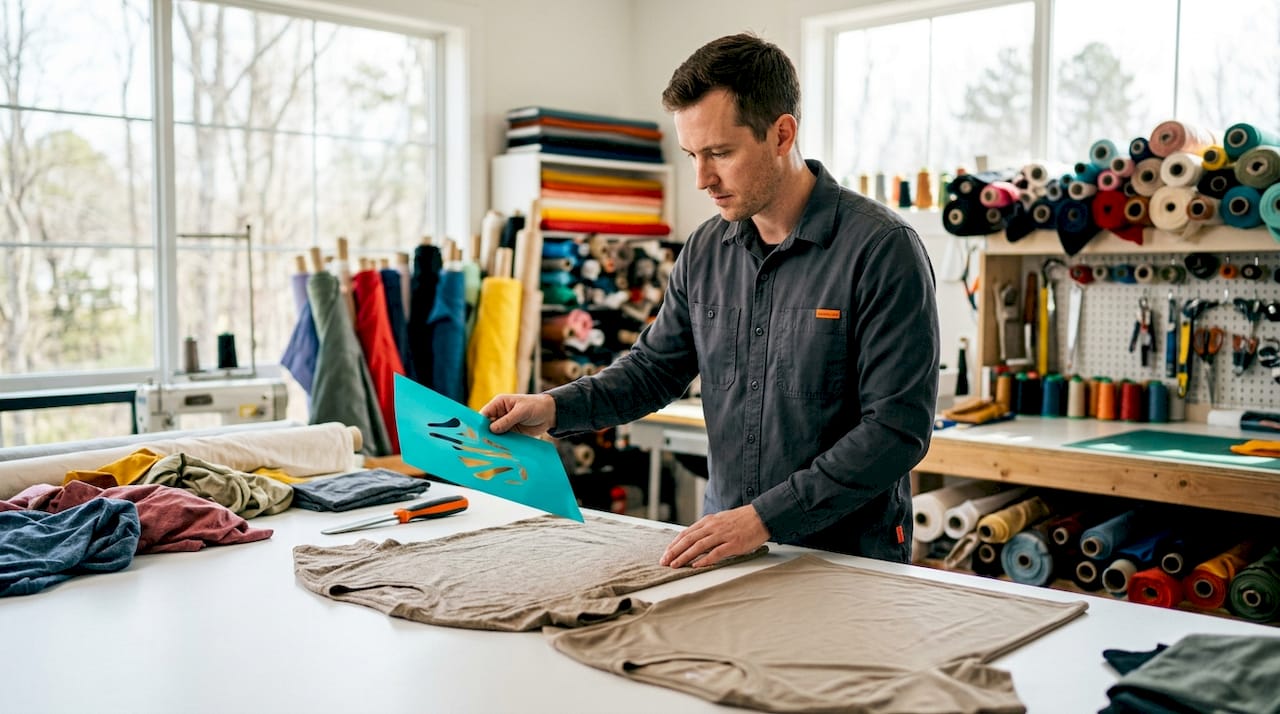
Cotton is made of cellulose fibers. Cellulose readily absorbs water-based inks, which is exactly what DTG printers and screen printing shops use. The ink soaks into the fiber and bonds at a molecular level, producing sharp edges and vivid color. Polyester, by contrast, is a synthetic fiber that repels water-based inks. Apply a standard DTG ink to a polyester shirt and the ink sits on the surface, never bonding properly. The result is poor adhesion, color that fades fast, and prints that crack or peel.
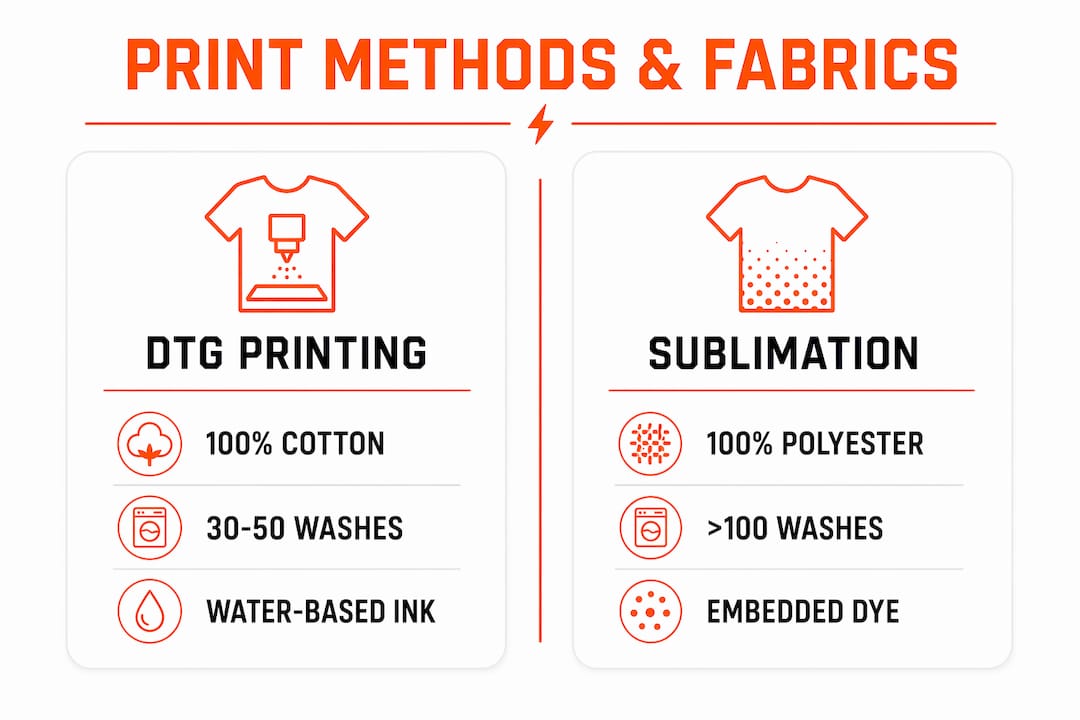
Sublimation dye works the opposite way. Under heat, sublimation dye converts to a gas and embeds directly inside polyester fibers. The dye becomes part of the fabric itself. Apply sublimation to cotton and the process fails entirely because cotton lacks the bonding mechanism that polyester provides. The dye sits on the surface and washes out after just a few cycles.
- Cotton: Best for DTG, screen printing, and water-based inks. Absorbs ink deeply for vivid, sharp prints.
- Polyester: Best for sublimation. Bonds dye inside fibers for long-lasting, full-color prints.
- Blends: Introduce uneven absorbency. Require tailored pretreatment and careful ink selection.
- Ring-spun and combed cotton: Produce smoother print surfaces and finer detail than standard open-end cotton.
Pro Tip: If you’re ordering shirts for a complex, full-color design, always confirm the fabric content before placing your order. A shirt labeled “athletic fit” is often polyester or a blend, which will reject DTG ink.
How do different printing methods compare by fabric type?
Choosing the wrong fabric for a print method does not just reduce quality. It can make the print unwearable after a handful of washes. Each method has a clear fabric preference, and the durability numbers reflect that.
| Print Method | Best Fabric | Durability | Key Risk |
|---|---|---|---|
| DTG | 100% cotton | 30–50 wash cycles | Poor adhesion on polyester |
| Screen printing | 100% cotton | 50–75 wash cycles | Ink cracking on stiff blends |
| Sublimation | 100% polyester | 100+ wash cycles | Fails completely on cotton |
| DTF transfer | Cotton, polyester, blends | Varies by adhesive | Heat sensitivity on thin fabrics |
Sublimation on polyester survives more than 100 wash cycles because the dye is embedded inside the fiber, not sitting on top of it. DTG on cotton delivers 30–50 wash cycles under normal care conditions. That gap matters for businesses ordering workwear or uniforms that go through industrial laundering. Screen printing on cotton lands in the middle at 50–75 cycles, making it a reliable choice for event shirts and team apparel.
Dye migration is a specific risk when using ink-based methods on polyester. During curing, the polyester dye bleeds upward into the ink layer. White inks turn pinkish or gray. The fix requires low-bleed specialty inks and tightly controlled curing temperatures. Skipping that step ruins the print.
Pro Tip: For high-volume team orders that need to survive a full season of washing, sublimation on 100% polyester is the most durable option. For retail-quality feel and complex artwork, 100% cotton with DTG or screen printing is the better call.
What role does pretreatment play in fabric printing?
Pretreatment is not a cleaning step. Pretreatment is essential for dark fabric DTG printing, serving as an adhesion and absorption control layer that determines whether white ink sits sharp on the surface or soaks into the fibers and disappears.
Without pretreatment on a dark cotton shirt, white DTG ink absorbs directly into the fabric. The result is a dull, washed-out print with blurry edges. Pretreatment chemically seals the fibers so the white underbase ink sits on top, creating a bright foundation for the colors printed above it. The difference in vibrancy between a pretreated and untreated dark shirt is visible to the naked eye.
The application process follows a specific sequence:
- Apply 30–50 mL of pretreatment fluid per shirt, measured by weight for consistency.
- Spread the fluid evenly across the print area using a spray applicator or roller.
- Heat press the shirt at 165°C for 60 seconds to cure the pretreatment and dry the fabric.
- Allow the shirt to cool before loading it into the DTG printer.
- Print immediately after cooling. Waiting too long after curing reduces adhesion.
Getting the amount right is critical. Too little pretreatment produces dull prints. Too much creates a stiff hand feel that customers notice and dislike. Measuring by weight rather than volume is the standard in professional shops because it removes guesswork from a process that directly affects product quality.
Fabric thickness adds another variable. Heavyweight fabrics need more pretreatment fluid and longer heat exposure during curing because the denser weave requires deeper penetration. A lightweight 4.2 oz shirt and a heavyweight 6.1 oz shirt need different pretreatment protocols even when both are 100% cotton.
Pro Tip: Always test pretreatment on a sample shirt before running a full production batch. Fabric dye lots and moisture content vary, and a quick test print saves you from reprinting an entire order.
How do you choose the right shirt material for your printing goals?
The right fabric choice depends on four factors: your print method, your design complexity, your durability requirements, and how the shirt will be worn and washed. Getting all four right before you order prevents the most common and costly printing mistakes. You can also review common ordering mistakes to avoid fabric-related errors before they happen.
- For DTG with complex, full-color artwork: Choose 100% ring-spun or combed cotton. The smooth fiber surface produces the sharpest detail and the most accurate color reproduction.
- For sublimation with all-over prints: Choose 100% polyester at 65 polyester or higher. Lower polyester content produces washed-out color because fewer fibers bond with the dye.
- For screen printing with bold, simple designs: Choose 100% cotton or a high-cotton blend. Cotton absorbs plastisol and water-based inks consistently across the print area. Understanding screen printing ink types helps you match the ink to the fabric correctly.
- For blended fabrics: Expect compromises. Cotton-poly blends introduce uneven absorbency that causes spread and dull underbases even with correct artwork. They require tailored pretreatment amounts and curing times.
- For workwear and uniforms: Prioritize durability over print vibrancy. Polyester or high-polyester blends with sublimation printing outlast cotton-based methods in industrial wash conditions.
Care instructions also affect print longevity. Washing in cold water and turning shirts inside out before washing extends print life regardless of method. Customers who follow care labels consistently get more washes out of their prints. Shirts printed with proper fabric selection and correct technique hold their color and detail far longer than those where the fabric was an afterthought.
Fabric weight matters too. A 4.5 oz shirt feels light and breathable but provides less ink surface area than a 6.0 oz shirt. Heavier shirts generally produce more consistent prints because the denser weave holds ink more evenly across the surface.
Key Takeaways
Fabric fiber type is the primary determinant of print quality and durability, making material selection the first decision in any custom apparel order.
| Point | Details |
|---|---|
| Cotton for water-based inks | Use 100% cotton for DTG and screen printing to get proper ink absorption and sharp prints. |
| Polyester for sublimation | Sublimation dye bonds inside polyester fibers, surviving 100+ wash cycles on 100% polyester. |
| Pretreatment is mandatory | DTG on dark shirts requires pretreatment at 30–50 mL per shirt, cured at 165°C for 60 seconds. |
| Blends add complexity | Cotton-poly blends cause uneven absorbency and require adjusted pretreatment and curing protocols. |
| Durability varies by method | Screen printing on cotton lasts 50–75 washes; DTG on cotton lasts 30–50 washes under normal care. |
What I’ve learned from watching fabric choice make or break a print run
The most expensive mistake I see businesses make is treating the shirt as an afterthought. They spend weeks perfecting a logo, choose a print method, and then order whatever blank is cheapest. The fabric never enters the conversation until the prints come back wrong.
A 50/50 cotton-poly blend shirt ordered for a DTG job is a common example. The polyester content resists the water-based ink. The white underbase spreads unevenly. Colors look muddy. The customer blames the artwork or the printer, but the real problem was decided the moment someone clicked “add to cart” on the wrong blank.
The other misconception I run into constantly is that pretreatment is optional on dark shirts. It is not optional. Skipping it on a black cotton shirt does not save time. It produces a print that looks acceptable fresh off the press and terrible after the first wash. Businesses that skip pretreatment to cut costs end up reprinting orders, which costs far more than the pretreatment fluid they saved.
Fabric knowledge is not a technical detail reserved for print shop operators. If you are ordering custom apparel for your team, school, or brand, knowing that cotton takes DTG ink and polyester takes sublimation dye is the same kind of basic knowledge as knowing your size. It takes five minutes to learn and saves you from print failures that cost real money and damage your brand’s appearance.
The businesses that get custom apparel right consistently are the ones who ask about fabric before they ask about price.
— Adam
Jam4apparel matches your fabric to the right print method
Choosing the right shirt material for your print method is a decision that affects every order you place. Jam4apparel brings in-house expertise to that decision, matching fabric type, print method, and pretreatment protocol to your specific design and durability needs.

Jam4apparel’s production team in Lake in the Hills, Illinois works with high-quality blanks selected for their compatibility with screen printing, embroidery, and DTF transfers. Whether you need 12 shirts for a local sports team or 500 pieces for a company event, Jam4apparel handles fabric selection, pretreatment, and production under one roof. Contact Jam4apparel at jam4apparel.com to get a quote and talk through the right fabric and print method for your next order.
FAQ
What is the best fabric for DTG printing?
100% ring-spun or combed cotton is the best fabric for DTG printing. Cotton’s cellulose fibers absorb water-based inks deeply, producing sharp edges and vivid color that holds through 30–50 wash cycles.
Can you use sublimation on cotton shirts?
Sublimation does not work on cotton shirts. Cotton lacks the fiber chemistry needed to bond sublimation dye, so the dye sits on the surface and washes out after just a few cycles.
Why do dark shirts need pretreatment for DTG printing?
Dark shirts need pretreatment because white DTG ink soaks into uncoated cotton fibers, producing a dull, blurry print. Pretreatment seals the fibers so white ink sits on top and creates a bright, sharp underbase for colors.
How long do screen-printed shirts last?
Screen printing on 100% cotton typically survives 50–75 wash cycles under normal care conditions. Washing in cold water and turning shirts inside out before washing extends that lifespan.
Do fabric blends work for custom printing?
Cotton-poly blends work for custom printing but require adjusted pretreatment amounts and curing times. Uneven absorbency between cotton and polyester fibers can cause spread and dull underbases, making 100% cotton or 100% polyester the cleaner choice for most print methods.
Recommended
Ready to print your design?
Screen print, embroidery, and DTF — no minimums on many styles.