
Why Clubs Order Custom T-Shirts: Benefits and Strategy
June 26, 2026
Why Clubs Order Custom T-Shirts: Benefits and Strategy
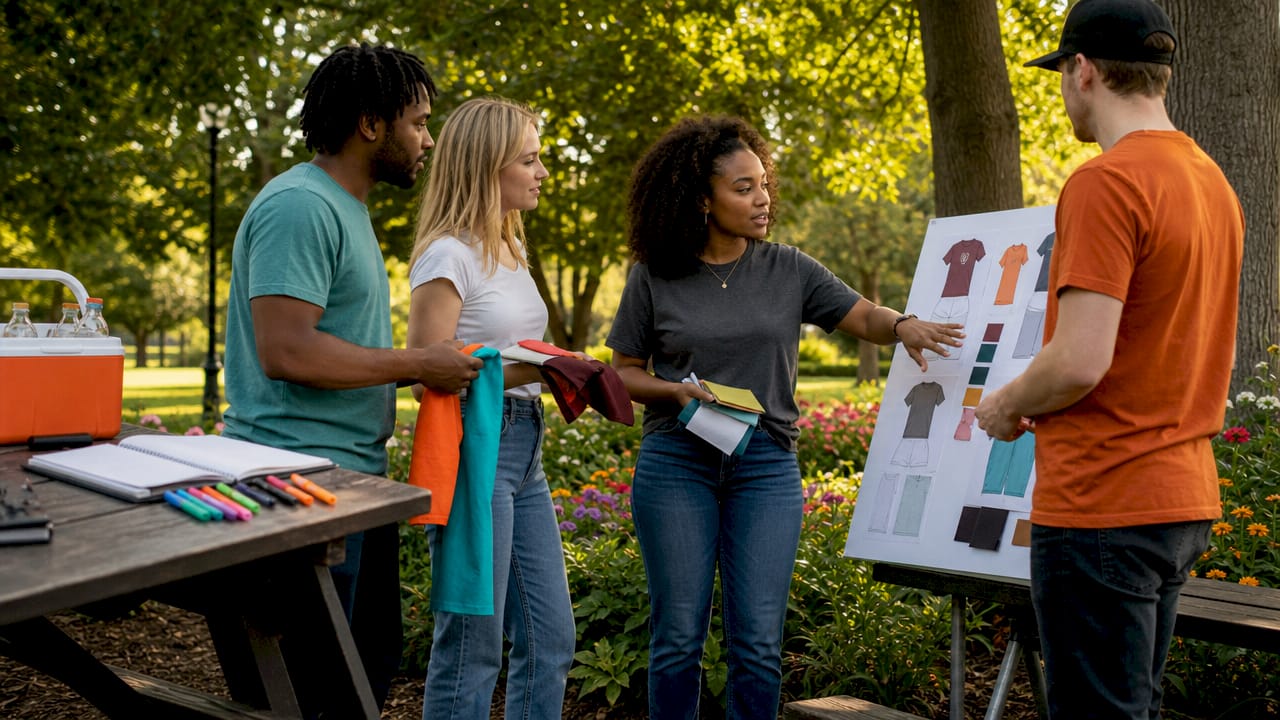
Custom t-shirts are the most cost-effective branded apparel a club can order, serving as uniforms, fan merchandise, event giveaways, and promotional tools all at once. The reason why clubs order custom t-shirts goes beyond simple aesthetics. Research from the ASI 2026 Ad Impressions Study shows that 80% of recipients keep promotional tees for at least one year, generating roughly 3,500 impressions per shirt at less than one-third of a cent per impression. A 2026 Frontiers in Psychology study links uniform cues directly to improved group belonging and psychological capital. From youth soccer clubs in the Chicagoland area to Bundesliga fan programs, custom shirts deliver identity, promotion, and community in a single garment.
Why clubs order custom t-shirts: identity and belonging
Custom t-shirts are the fastest way to signal that a group of people shares a common purpose. A 2026 Frontiers in Psychology study found that uniform cues improve psychological capital and group recognition among members. That means a well-designed shirt does not just look good. It actively makes members feel more connected to the club and to each other.
The effect goes beyond feelings. Clubs using personalized shirts also project a professional image to sponsors, opponents, and the public. Perceived organizational cohesion increases when members wear consistent apparel, which raises the club’s credibility in the eyes of outside observers. A martial arts academy whose students wear matching shirts looks more established than one where everyone shows up in random gym clothes.

The design itself carries the identity work. Logos, color palettes, and typography are not decorations. They are a system of signals that tells people who you are and what you stand for. Trackhouse Racing’s branding approach demonstrates this: consistent visual elements across apparel create a unified identity system rather than isolated logo placements. Clubs that apply this thinking to their t-shirt programs build recognition that compounds over time.
Pro Tip: Design your club shirt around one core visual element, such as a mascot or a color combination, and repeat that element across every apparel item you order. Consistency across shirts, hats, and hoodies builds recognition faster than any single standout design.
Key identity signals to build into your club shirt design:
- Club logo in a prominent, readable position
- Primary and secondary brand colors used consistently
- A short tagline or founding year that adds meaning
- Member name or number for personalized runs
- Event or season year for limited edition versions
What promotional benefits do clubs gain from custom shirts?
Custom t-shirts are a promotional tool that keeps working long after the event ends. ASI’s 2026 data shows that 90% of recipients wear promotional tees monthly. Each shirt generates approximately 3,500 impressions over its lifetime at a cost-per-impression that no digital ad channel can match.
The math is straightforward. A shirt that costs $12 to produce and generates 3,500 impressions delivers a cost-per-impression well under one cent. A Facebook ad campaign targeting the same local audience costs far more per view and disappears the moment the budget runs out. The shirt keeps circulating.
“Promotional apparel drives brand impressions because recipients keep and wear well-designed, comfortable shirts repeatedly over time.” — ASI 2026 Ad Impressions Study
Custom t-shirts for events also serve multiple functions within a single order. A club can use the same design for team warm-ups, sell extras as merchandise, hand them out as sponsor gifts, and give them away at community events. That multi-use flexibility makes the per-unit cost even more efficient.
| Use case | Promotional value |
|---|---|
| Team warm-ups | Builds visual identity at every practice and game |
| Event giveaways | Generates impressions in the community long after the event |
| Club merchandise | Creates a revenue stream and deepens member loyalty |
| Sponsor gifts | Increases sponsor visibility and strengthens partnerships |
| Volunteer shirts | Unifies staff and signals organizational professionalism |
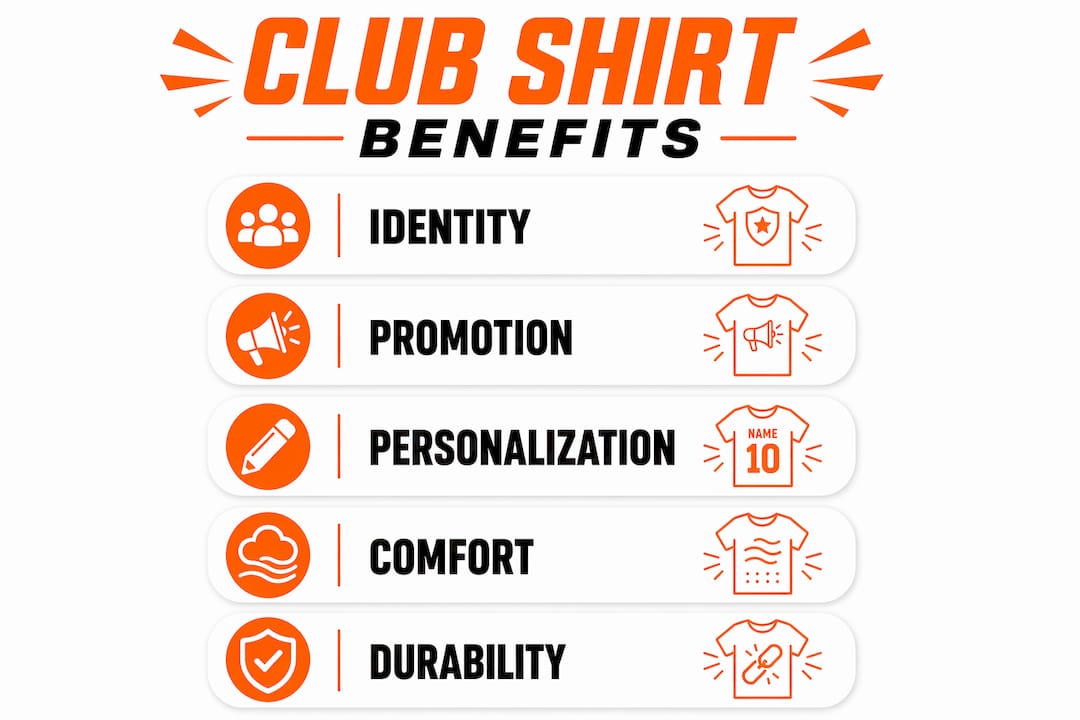
Clubs that treat custom shirts as a one-time purchase miss most of this value. The clubs that get the most out of their apparel budget plan multiple touchpoints across a season, using the same core design with small variations for different purposes.
Why do clubs use personalized and limited edition shirts?
Personalization turns a standard club shirt into something a member or fan will never throw away. Hamburger SV’s fan-worn kit campaign inscribed motivational messages inside badge areas on match kits, creating an emotional connection between the club and individual supporters. The shirts became keepsakes, not just apparel.
That principle scales down to any club. A youth baseball team that prints player names and jersey numbers on their shirts creates a sense of ownership that a generic shirt never achieves. A nonprofit that prints volunteer names on event shirts makes contributors feel recognized rather than interchangeable. The belonging mechanism here is not the name itself. It is the signal that the club sees each person as an individual.
Limited edition runs add another layer. Scarcity increases perceived value. A shirt made for a championship season, a club anniversary, or a specific tournament becomes a collectible. Members hold onto it because it marks a moment, not just a membership. Milestone shirts that teams keep forever are a well-documented phenomenon in club apparel programs.
Pro Tip: For limited edition runs, print the edition number or event date inside the collar or along the hem. That small detail transforms a standard shirt into a documented piece of club history.
Personalization works best when it connects to a story or a role rather than a generic name tag. Consider these approaches:
- Player name and number for athletic teams
- Volunteer role or department for nonprofit events
- Founding member designation for anniversary shirts
- Season record or championship year for milestone editions
- Fan message or dedication for supporter campaigns
How can clubs design custom shirts for maximum impact?
Design and comfort are the two factors that determine whether a shirt gets worn or sits in a drawer. ASI research confirms that design attractiveness and physical comfort directly drive wear frequency. A shirt that feels good and looks good gets worn. A shirt that does neither generates zero impressions regardless of how much the club spent on it.
The printing method affects both outcomes. Screen printing delivers vivid, durable colors on bulk orders and is the standard for athletic programs ordering 24 or more pieces. DTF (Direct-to-Film) transfers handle complex, full-color artwork on smaller runs without minimum order requirements. For clubs comparing options, a DTF vs. screen printing guide breaks down the cost and quality tradeoffs by order size.
| Method | Best for | Minimum order | Color complexity |
|---|---|---|---|
| Screen printing | Bulk orders, athletic programs | Typically 12–24 pieces | Limited spot colors per design |
| DTF transfers | Small runs, complex artwork | No strict minimum | Full color, photographic detail |
| Embroidery | Polos, hats, premium apparel | Varies by vendor | Thread-based, not photographic |
Planning the order timeline is as important as the design itself. Clubs should plan design direction and finalize quantities at least 6–8 weeks before the season starts. Standard production runs take 4–5 weeks. Rush options exist but add cost and reduce design flexibility.
A numbered checklist for clubs ordering custom shirts:
- Lock in your design concept and color palette before requesting quotes.
- Confirm your size breakdown across the full order before production starts.
- Request a digital proof and approve it before any shirts are printed.
- Order 10–15% more than your current need to cover growth and replacements.
- Plan your timeline with at least 6 weeks of lead time before your first event.
Clubs that treat the shirt as a season-long asset rather than a one-time purchase get far more value from each order. A single design, ordered in quantity, can cover warm-ups, merchandise, giveaways, and sponsor gifts across an entire year.
Key Takeaways
Custom t-shirts deliver the highest return of any club apparel investment when designed for comfort, identity, and multi-use across a full season.
| Point | Details |
|---|---|
| Identity and belonging | Uniform cues improve psychological capital and group recognition among club members. |
| Promotional ROI | Each shirt generates roughly 3,500 impressions at under one cent per impression. |
| Personalization drives loyalty | Milestone and personalized shirts create emotional attachment that generic apparel cannot match. |
| Design determines wear frequency | Comfort and attractive design directly control how often a shirt gets worn and how many impressions it generates. |
| Plan 6–8 weeks ahead | Standard production takes 4–5 weeks; early planning protects design quality and avoids rush costs. |
What I’ve learned from watching clubs get this right and wrong
Working in custom apparel, I see the same mistake repeat itself. A club orders shirts two weeks before their season opener, picks a design in a rush, and ends up with something no one wants to wear past the first game. The shirts sit in a bag in the equipment room. That is not a printing problem. It is a planning problem.
The clubs that get real value from their apparel treat the shirt order as a program decision, not a last-minute errand. They think about who will wear it, where it will be seen, and what it needs to communicate. They ask whether the design will still feel relevant at the end of the season. They order enough to cover growth. Those clubs end up with shirts that members actually wear in public, which is the entire point.
The other thing I see underused is personalization. Most clubs stop at a logo on the chest. The clubs that add a player name, a season year, or a founding member designation create something people keep for years. That retention is what turns a $12 shirt into 3,500 impressions. The shirt has to be worth wearing. Good design and a personal connection make it worth wearing.
— Adam
How Jam4apparel helps clubs create shirts that get worn
Jam4apparel specializes in custom screen printing and embroidery for clubs, teams, schools, and nonprofits throughout the Chicagoland area. Whether your club needs 12 shirts for a small tournament or 500 pieces for a full season program, Jam4apparel handles production in-house for fast turnaround and consistent quality.
The team at Jam4apparel works with clubs from design concept through final delivery, helping you choose the right printing method, fabric, and sizing mix for your specific use case. You can browse the full product catalog or contact Jam4apparel directly for a quote. Clubs in the Lake in the Hills area and across Chicagoland can also visit in person to review samples before committing to an order.
FAQ
Why do clubs order custom t-shirts instead of buying retail?
Custom t-shirts carry the club’s logo, colors, and identity, which retail shirts cannot provide. They also serve multiple functions at once, covering team wear, merchandise, and event giveaways from a single order.
How many shirts should a club order at once?
Clubs typically order 50–500 pieces depending on their size and use case, with no strict minimums for DTF printing. Ordering 10–15% above current need covers growth and replacements without a reorder.
What printing method works best for club t-shirts?
Screen printing is the standard for bulk athletic orders of 24 or more pieces with simple artwork. DTF transfers work better for small runs or designs with complex, full-color graphics.
How do custom shirts build club identity?
A 2026 Frontiers in Psychology study found that uniform cues improve psychological capital and group recognition. Consistent apparel signals shared purpose and makes members feel they belong to something real.
How far in advance should a club order custom shirts?
Clubs should finalize design and quantities at least 6–8 weeks before the season. Standard production takes 4–5 weeks, and early ordering protects design quality and avoids rush fees.
Recommended
Ready to print your design?
Screen print, embroidery, and DTF — no minimums on many styles.