Why Businesses Order Custom Hats for Branding
July 11, 2026
Why Businesses Order Custom Hats for Branding
Custom hats are the most effective wearable marketing tool a business can deploy, placing a logo at eye level and turning every wearer into a mobile brand ambassador. The reason why businesses order custom hats goes beyond aesthetics. A well-made hat travels into daily routines, social settings, and public spaces where no billboard or digital ad can follow. Jam4apparel works with businesses across the Chicagoland area to produce custom headwear that functions as both a uniform element and a long-term branding asset. This article breaks down exactly what makes custom hats worth the investment.
Why businesses order custom hats: the core branding case
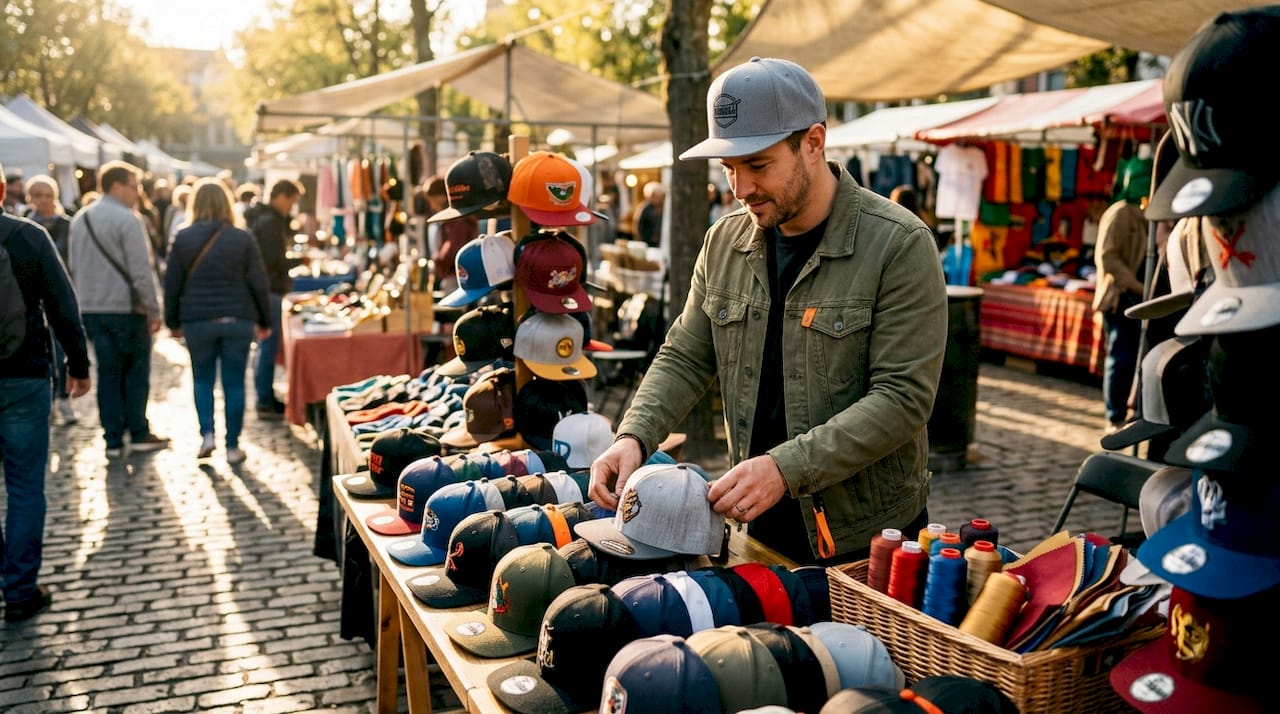
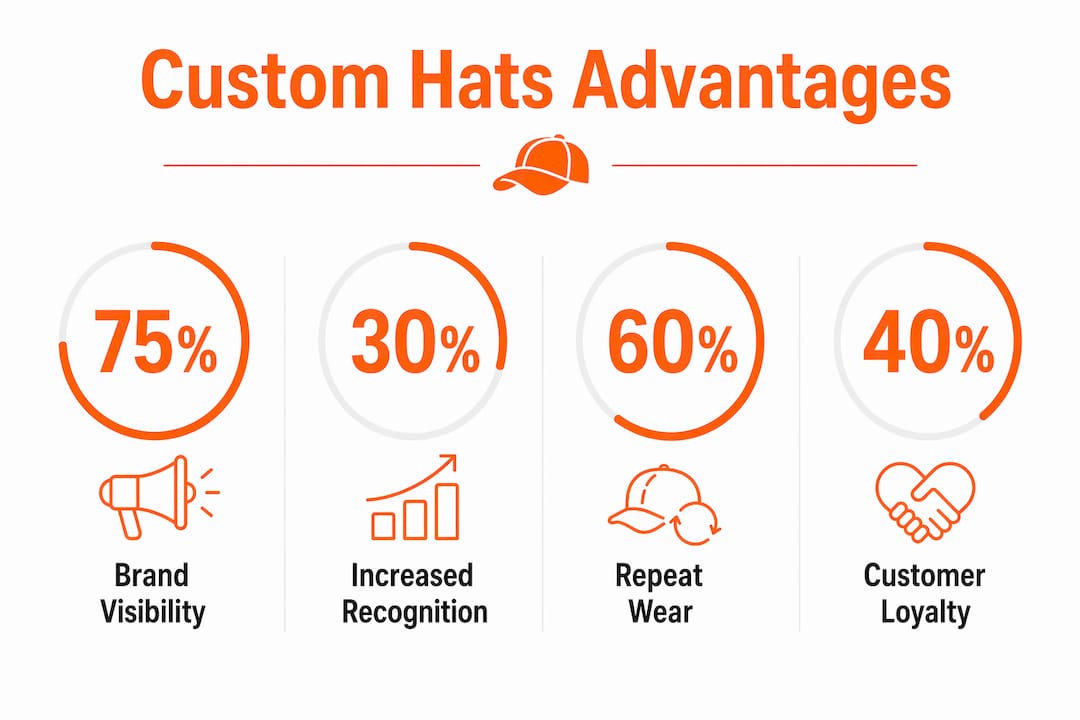
Custom hats deliver eye-level brand visibility that no other promotional product matches. A logo on a chest or sleeve competes with background noise. A logo on a hat sits at face level, where people naturally look during conversation. That positioning makes brand recognition faster and more consistent.
The exposure compounds over time. One well-designed hat can generate dozens of wears and hundreds of impressions, producing organic visibility that no single ad spend replicates. A digital ad disappears when the budget runs out. A quality hat keeps working for months or years.
Custom headwear also carries social weight. People choose what they put on their heads deliberately. A hat signals identity, values, and group membership. When a business produces a hat someone genuinely wants to wear, that hat becomes part of the wearer’s personal brand, not just a corporate giveaway.
“Because hats are positioned at face level, they offer eye-level visibility and turn wearers into mobile billboards.” This is the core reason custom hats for branding outperform most other promotional merchandise categories.
What makes custom hats more effective than other promotional products?
The structural advantage of a hat is physical. Shirts, bags, and pens sit below the sightline. Hats do not. During any face-to-face interaction, a branded hat is the first thing a person sees. That positioning is not accidental. It is the reason brand identity experts consistently rank headwear at the top of promotional apparel categories.
Hats also benefit from daily wear patterns. A person might change their shirt twice a day but wear the same hat for an entire weekend. That repetition builds brand familiarity without any additional cost to the business. The hat does the work.

The social signaling dimension is equally important. Custom hats that align with wearer identity integrate a brand into personal style and social signals. A restaurant crew wearing matching hats at a community event does not just look professional. They signal belonging, which draws curiosity and conversation from people who have never heard of the brand.
Pro Tip: Order hats in styles your team would actually wear off the clock. If your staff chooses to wear the hat on a Saturday, your brand gets free exposure in every environment they enter.
How does hat design quality affect your brand’s return?
Design quality is the single factor that separates a hat that gets worn from one that gets tossed in a drawer. Structured front panels hold shape and keep embroidery clean over time. A floppy, unstructured hat distorts the logo and signals low brand investment to anyone who sees it.
Material choice communicates brand personality before a word is spoken. Cotton twill reads as classic and professional. Washed cotton reads as relaxed and approachable. Corduroy reads as creative and fashion-forward. Each material attracts a different wearer and sends a different message. Choosing the right base fabric is a branding decision, not just a comfort decision.
Color strategy requires balancing neutral bases for versatility with accent colors for brand recognition. A black or navy hat works in almost any setting, which increases how often it gets worn. Adding a brand-specific accent color in the embroidery thread ties the hat back to the logo without limiting its wearability.
Embroidery technique matters more than most business owners realize. Flat embroidery suits detailed logos with fine lines. Puff embroidery, also called 3D embroidery, creates a raised, tactile effect that reads as premium and commands attention at a distance. Choosing the wrong technique for a logo can flatten a design that should pop or overwhelm a subtle mark that should stay clean.
| Design Element | Budget Hat | Brand-Level Hat |
|---|---|---|
| Crown structure | Unstructured, soft | Structured front panel |
| Material | Generic polyester blend | Cotton twill, washed cotton, or corduroy |
| Embroidery | Flat, low stitch count | Flat or puff, high stitch count |
| Fit | One-size-fits-all snapback | Adjustable with multiple size options |
| Longevity | Worn once or twice | Repeated wear over months or years |
Pro Tip: Request a physical sample before placing a bulk order. Seeing the embroidery in person reveals stitch density, color accuracy, and structure issues that digital mockups never show.
How do businesses use custom hats across different settings?
The applications for custom headwear are wider than most business owners expect. Each use case produces a different kind of brand value.
-
Employee uniforms. Matching hats for teams create visual consistency and professionalism instantly. A landscaping crew, a food truck team, or a retail staff wearing the same branded hat looks organized and trustworthy. Customers notice the consistency and associate it with reliability. Jam4apparel produces corporate uniform programs that include headwear as a core element of the branded look.
-
Trade shows and events. A branded hat given at a trade show booth travels home with the recipient. Every time that person wears it, the brand appears in a new environment. That reach extends far beyond the event itself. Businesses that treat event merchandise as a branding investment rather than a cost line see measurable returns in recognition.
-
Limited-run releases. Limited-run custom hats build exclusivity and demand, creating a sense of community belonging among customers. A brewery releasing a seasonal hat, a gym dropping a member-only design, or a restaurant marking an anniversary with a collector’s cap all use scarcity to deepen loyalty. The hat becomes a badge, not just merchandise.
-
Customer loyalty rewards. Giving a quality hat to a top customer communicates appreciation more effectively than a discount code. The hat is tangible, visible, and useful. It also keeps the brand in front of the recipient every time they wear it, which a coupon never does.
-
Community and cause marketing. Businesses that sponsor local sports teams, school events, or nonprofit fundraisers often supply branded hats. Those hats circulate through the community for months, building goodwill and name recognition simultaneously. For retail businesses, eye-level visibility in community settings is one of the highest-value brand touchpoints available.
What mistakes do businesses make when ordering custom hats?
The most common mistake is treating custom hats as cheap giveaways rather than brand-building apparel. Cheap hats are worn once and discarded. Well-designed hats achieve repeated wear and sustained brand exposure. The cost difference between a forgettable hat and a great one is often small. The difference in brand impact is enormous.
Other frequent mistakes include:
- Ignoring fit and comfort. A hat that fits poorly does not get worn. Offering multiple size options or an adjustable closure increases adoption significantly.
- Choosing the wrong embroidery technique. A complex logo with thin lines needs flat embroidery. A bold wordmark benefits from puff embroidery. Matching the technique to the design is a technical decision that requires expertise.
- Skipping color testing. Thread colors on a screen look different on fabric. Always request a color-matched sample before approving a bulk run.
- Designing for the brand, not the wearer. A hat covered in logos and slogans signals desperation. A hat with a clean, well-placed logo signals confidence. Wearers adopt the second type. They avoid the first.
- Ordering too few. Hats ordered in higher quantities cost less per unit and allow for consistent distribution across staff, events, and customers. Underordering forces reorders at higher unit costs.
The custom apparel order process for hats involves decisions at every stage. Working with a production partner who asks the right questions upfront prevents costly mistakes downstream.
Key Takeaways
Custom hats deliver lasting brand value when businesses prioritize design quality and wearer appeal over low cost.
| Point | Details |
|---|---|
| Eye-level visibility | Hats position logos at face level, producing faster and more consistent brand recognition than other apparel. |
| Repeated wear drives ROI | A quality hat generates hundreds of impressions over months, far outperforming single-use promotional items. |
| Design quality determines adoption | Structured crowns, premium materials, and correct embroidery technique determine whether a hat gets worn or discarded. |
| Multiple use cases | Custom hats serve employee uniforms, trade shows, loyalty rewards, limited releases, and community sponsorships. |
| Avoid the cheap giveaway trap | Investing in wearable, stylish hats produces sustained brand exposure; cheap hats produce one-time impressions at best. |
Why I think most businesses underestimate the hat
After working with businesses across dozens of industries, the pattern is consistent. Business owners spend serious money on signage, digital ads, and print materials, then order the cheapest hats they can find and wonder why nobody wears them. The logic is backwards.
A hat is the one promotional item that goes everywhere the wearer goes. It shows up at the grocery store, the school pickup line, the weekend barbecue. No other marketing channel gets that kind of organic reach into personal life. But it only works if the hat is good enough that someone chooses to wear it voluntarily.
The businesses that get this right treat their custom headwear the same way they treat their logo. They invest in structure, material, and embroidery quality. They think about who will wear the hat and what style that person actually gravitates toward. They order enough to distribute consistently rather than running out after the first event. The result is a piece of apparel that builds brand recognition every single day without any ongoing cost.
The businesses that get it wrong buy the cheapest option, slap a full-color logo on a flimsy cap, and call it marketing. Those hats end up in a closet. The brand gets nothing. The lesson is simple: a hat people want to wear is worth ten times what a hat people feel obligated to accept. Quality is not a luxury in custom headwear. It is the entire point.
— Adam
Jam4apparel’s custom hats and headwear services
Jam4apparel produces custom hats for businesses, teams, and organizations across the Chicagoland area, with in-house embroidery and decoration that meets brand-level quality standards.
Whether you need structured snapbacks for a restaurant crew, puff-embroidered caps for a corporate event, or limited-run hats for a customer loyalty program, Jam4apparel handles production from design approval through delivery. The team works with clients to match hat style, material, and embroidery technique to the brand’s identity and the wearer’s preferences. Explore custom apparel by industry to see how Jam4apparel serves businesses like yours, or visit the embroidery services page to learn about decoration options for your next hat order.
FAQ
Why do businesses order custom hats instead of other merchandise?
Custom hats provide eye-level brand visibility that other promotional products cannot match. They become part of daily wear, generating repeated impressions across every environment the wearer enters.
What embroidery technique works best for custom business hats?
Flat embroidery suits logos with fine lines and detail, while puff embroidery creates a raised, premium look for bold wordmarks and simple icons. The right choice depends on the logo’s complexity and the brand image the business wants to project.
How many custom hats should a business order?
Ordering in bulk reduces the per-unit cost and allows consistent distribution across staff, events, and customers. A single reorder at a small quantity typically costs more per hat than a larger initial run.
Do custom hats actually improve brand recognition?
Yes. Hats positioned at face level attract attention naturally and provide better brand recognition than lower-body apparel or stationary promotional items. Repeated wear compounds that recognition over time.
What makes a custom hat worth wearing repeatedly?
Fit, structure, and material quality are the primary factors. A hat with a structured crown, comfortable fit, and premium fabric gets worn regularly. A poorly made hat gets worn once, if at all.
Recommended
Ready to print your design?
Screen print, embroidery, and DTF — no minimums on many styles.