
What Is Team Apparel? Types, Benefits, and Design Tips
June 4, 2026
What Is Team Apparel? Types, Benefits, and Design Tips
Team apparel is coordinated clothing worn by group members to create a unified visual identity during sports, corporate, or organizational activities. It goes well beyond matching outfits. Team apparel signals affiliation and shared purpose across contexts as different as a youth soccer league in Chicagoland and a Fortune 500 company’s sales conference. The industry term you’ll hear alongside “team apparel” is team wear, and both refer to the same category of purpose-built, coordinated clothing. Brands like Sport-Tek, Gildan, and Next Level Apparel dominate the production side, while custom decorators handle the logos, names, and colors that turn a blank garment into a team identity.
What is team apparel and why does it matter?
Team apparel is coordinated clothing designed to visually unify group members across activities, including sports jerseys, corporate uniforms, and school spirit wear. The team clothing definition extends to any garment that carries shared colors, logos, or identifiers that mark someone as part of a group. That scope is broader than most people realize.
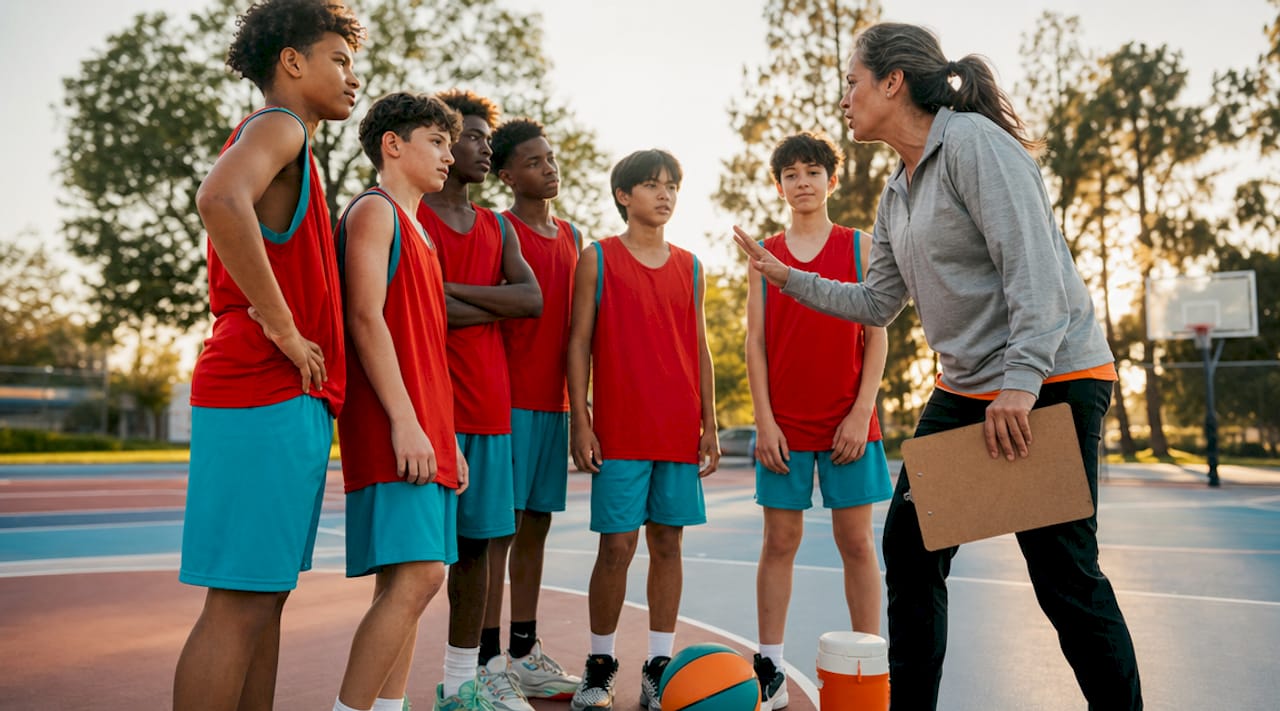
A high school basketball team wearing matching jerseys and warm-up jackets is using team apparel. So is a nonprofit’s volunteer crew in branded polos at a fundraiser, or a martial arts academy outfitting students in custom rashguards. The common thread is intentional coordination for a shared purpose.
What makes team apparel matter beyond aesthetics is its function as a communication tool. When a group walks into a room wearing the same colors and logo, they project professionalism and cohesion before anyone speaks. Custom team apparel builds team identity, boosts morale, and reinforces branding in ways that generic clothing simply cannot replicate.
What are the common types of team apparel?
The types of team apparel break down by use case, and understanding those categories helps groups order the right pieces for the right moments.
- Game-day uniforms: Jerseys, shorts, and compression gear designed for performance and visibility. These prioritize bold colors, player numbers, and moisture-wicking fabrics that handle sweat and movement during competition.
- Practice and training gear: T-shirts, athletic shorts, and lightweight hoodies built for daily use. Comfort and durability matter more than visual impact here, though consistent branding still applies.
- Travel and casual wear: Zip-up hoodies, joggers, and polos that players or employees wear to and from events. This category carries the brand into public spaces and builds recognition beyond the field or office.
- Corporate and event apparel: Office polos, event T-shirts, and recognition pieces. Corporate uniforms promote belonging and reduce perceived hierarchy when designed with comfort and recognition in mind.
- Accessories: Hats, bags, socks, and headbands that complete the look and extend branding to every visible surface.
Each category serves a different function, and the best-equipped teams carry pieces from at least three of these groups. A soccer club that only orders game jerseys leaves its players in mismatched street clothes during travel, which undercuts the professional image the jerseys were meant to create.
Pro Tip: When ordering for a sports team, plan for at least three apparel categories: game day, practice, and travel. This covers every visible moment in a team’s season and keeps the brand consistent from the locker room to the airport.
How to design a cohesive team apparel collection
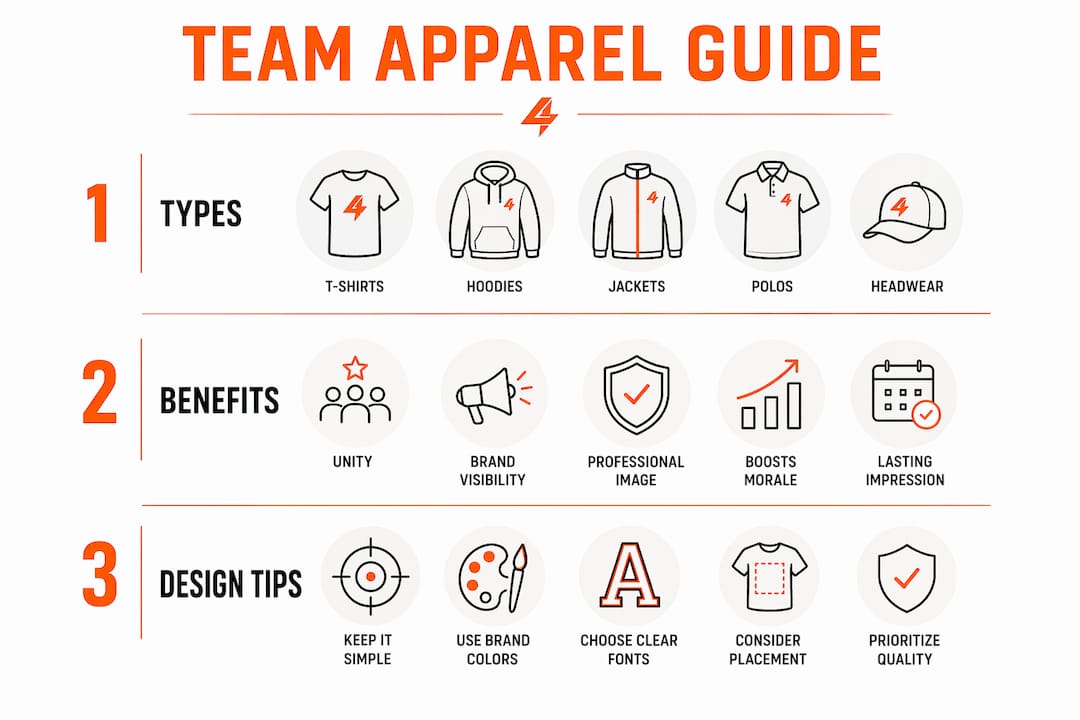
Building a cohesive apparel collection rather than ordering one garment type at a time is the single most effective way to improve professionalism and brand consistency. A collection approach means every piece, from the game jersey to the travel hoodie, shares the same color palette, logo treatment, and visual language.
Here is a practical process for designing a collection that works across wear moments:
- Define your wear moments. List every situation where your group will be seen together: game day, practice, travel, casual events, and any special occasions. Each moment needs at least one apparel solution.
- Lock in your brand standards. Choose your Pantone colors, logo files, and font treatments before ordering anything. Changing these mid-collection creates mismatches that are expensive to fix.
- Select garments by function. Match fabric technology to the activity. Moisture-wicking and durable fabrics belong in practice gear. Heavier cotton-poly blends work for casual and travel pieces.
- Balance aesthetics with comfort. A jersey that looks great but restricts movement will not get worn. Involve team members in fit testing before committing to a full order.
- Consolidate your supplier. Ordering from one experienced supplier reduces color mismatch and production surprises. Consistent Pantone matching, stitching quality, and delivery timing are far easier to manage when one partner handles the full collection.
| Wear moment | Recommended apparel | Key fabric feature |
|---|---|---|
| Game day | Jersey, shorts, compression layer | Moisture-wicking, lightweight |
| Practice | T-shirt, athletic shorts, hoodie | Durable, breathable |
| Travel and casual | Polo, zip hoodie, jogger | Comfortable, presentable |
| Corporate or event | Polo, event tee, recognition piece | Soft hand, professional finish |
Pro Tip: Ask your decorator to produce a physical sample of each garment in your brand colors before approving a full run. Color on screen rarely matches color on fabric, and a sample prevents costly reprints.
What are the benefits of team uniforms for branding and unity?
The benefits of team uniforms operate on three levels: psychological, organizational, and commercial.
On the psychological side, wearing coordinated clothing creates a measurable shift in mindset. Custom apparel boosts athlete confidence and reinforces a sense of belonging that generic clothing cannot replicate. When every person on a team wears the same colors, individual differences recede and collective identity takes over. That shift matters in competition and in the workplace.
Organizationally, team apparel reduces friction. Members do not need to decide what to wear to represent the group. Recognition-focused uniforms drive higher engagement than mandatory daily wear in corporate environments, which means the design and purpose of the apparel directly affects how willingly people wear it. Apparel that people are proud to put on works harder than apparel they feel obligated to wear.
Commercially, branded team clothing turns every wearer into a walking advertisement. A youth sports team wearing custom jerseys at a tournament exposes the sponsor’s logo to hundreds of families. A company’s staff in matching polos at a trade show creates a visual presence that a booth alone cannot achieve.
“Team apparel is a multi-piece solution designed around real wear occasions rather than a single uniform, enhancing adoption and day-to-day use.” Arcus AG
The cost argument for custom team clothing is also stronger than most groups expect. Bulk orders lower the per-unit price significantly, and consolidating multiple garment types with one supplier compounds those savings while keeping colors and quality consistent across the collection.
What printing and customization methods are used for team apparel?
Screen printing, sublimation, and heat transfer are the three primary methods for applying logos and designs to team apparel. Each has a distinct profile of strengths, and the right choice depends on fabric type, order volume, and design complexity.
| Method | Best for | Trade-off |
|---|---|---|
| Screen printing | High-volume orders, simple logos, cotton and poly blends | Setup costs make small runs expensive |
| Sublimation | All-over prints, polyester fabrics, full-color designs | Only works on light-colored polyester |
| DTF (Direct-to-Film) | Small runs, variable names and numbers, complex artwork | Slightly higher per-unit cost than screen printing at volume |
Screen printing is the workhorse of team apparel decoration. It produces sharp, durable prints at a low per-unit cost when orders exceed 24 pieces, which covers most team and organizational orders. Sublimation is the method of choice for all-over polyester prints like fully custom jerseys, where the design needs to cover seams and panels without cracking or peeling. DTF transfers, which Jam4apparel offers in-house, fill the gap for personalized pieces with variable player names or small-batch specialty items.
Embroidery sits outside the print methods but deserves mention for polo shirts, hats, and jackets where a raised, textured logo signals quality. It costs more per piece than screen printing but holds up through hundreds of wash cycles without fading.
Pro Tip: For a team collection that includes both jerseys and casual wear, plan to use sublimation for the jerseys and screen printing or embroidery for the hoodies and polos. Mixing methods by garment type gives you the best result for each piece rather than forcing one method onto every item.
Key takeaways
Team apparel works best when it is planned as a coordinated collection covering game day, practice, travel, and casual wear, all produced through the right decoration method for each garment type.
| Point | Details |
|---|---|
| Team apparel definition | Coordinated clothing that signals group affiliation and builds unified visual identity across sports and organizations. |
| Collection over single items | Planning apparel across multiple wear moments improves adoption, professionalism, and brand consistency. |
| Decoration method matters | Screen printing suits volume orders; sublimation covers polyester jerseys; DTF handles personalized or small-batch pieces. |
| Psychological and commercial value | Team clothing boosts confidence, reduces hierarchy, and turns every wearer into a brand ambassador. |
| Supplier consolidation | Ordering a full collection from one supplier keeps Pantone colors, fabric quality, and delivery timing consistent. |
Why team apparel is a culture decision, not just a clothing order
I have seen groups treat team apparel as an afterthought, placing a last-minute order for matching T-shirts the week before an event. The result is usually a pile of shirts that nobody wears again after day one. The groups that get real value from their apparel treat it as a culture decision from the start.
The most common mistake I see is ordering one garment type from three different suppliers because each one had a better price on that specific item. You end up with three slightly different shades of navy, two different logo placements, and a collection that looks assembled rather than designed. The savings evaporate when you factor in the time spent coordinating and the brand damage from inconsistency.
What actually works is starting with the wear moments and working backward to the garments. Ask where your team will be seen together, what they will be doing, and what impression you want to leave. That thinking produces a collection with purpose. A well-designed set of team wear pieces covering game day, practice, and travel tells a complete story about who your group is.
The other thing most people underestimate is the long-term value of quality materials. A hoodie made from a 60/40 cotton-poly blend with a properly cured screen print will still look good after two seasons. A cheap blank with a heat-applied transfer will crack and peel by mid-season, and your team will stop wearing it. Spending slightly more per piece on quality fabric and decoration pays back in wear frequency and brand longevity.
Team apparel is one of the most visible expressions of your group’s identity. Treat it with the same intention you would give any other brand decision.
— Adam
Get custom team apparel from Jam4apparel
Jam4apparel, based in Lake in the Hills, Illinois, builds custom team apparel collections for sports teams, schools, martial arts academies, businesses, and nonprofits throughout the Chicagoland area. From screen-printed bulk jerseys to embroidered polos and DTF-printed personalized pieces, Jam4apparel handles every decoration method in-house for faster turnaround and tighter quality control. Whether you need 12 pieces or 1,200, the team at Jam4apparel matches your colors, locks in your logo, and delivers a collection that represents your group at every wear moment. Request a quote and see what a cohesive team apparel collection looks like when it is built with intention.
FAQ
What is the team clothing definition?
Team clothing, also called team wear or team apparel, is coordinated clothing worn by group members to create a shared visual identity. It includes jerseys, polos, hoodies, jackets, and accessories unified by consistent colors, logos, and design elements.
What are the main types of team apparel?
The main types are game-day uniforms, practice and training gear, travel and casual wear, and corporate or event apparel. Each type is designed for a specific wear moment and uses fabrics suited to that activity.
How do I choose team clothing for my group?
Start by listing every situation where your group will be seen together, then select garments that match the function and formality of each moment. Designing around wear occasions leads to better adoption and a more consistent brand presence than ordering a single garment type.
What are the benefits of team uniforms beyond sports?
Corporate and organizational uniforms promote belonging, reduce perceived hierarchy, and improve employee engagement when designed with comfort and recognition in mind. They also function as brand advertising in any public setting.
Where can I buy custom team apparel near Chicago?
Jam4apparel in Lake in the Hills, Illinois, offers custom team apparel with in-house screen printing, embroidery, and DTF printing for teams and organizations throughout the Chicagoland area. Orders of any size are welcome, with competitive pricing and fast turnaround times.
Recommended
Ready to print your design?
Screen print, embroidery, and DTF — no minimums on many styles.