What Is Rush Order Apparel? A 2026 Guide
June 15, 2026
What Is Rush Order Apparel? A 2026 Guide
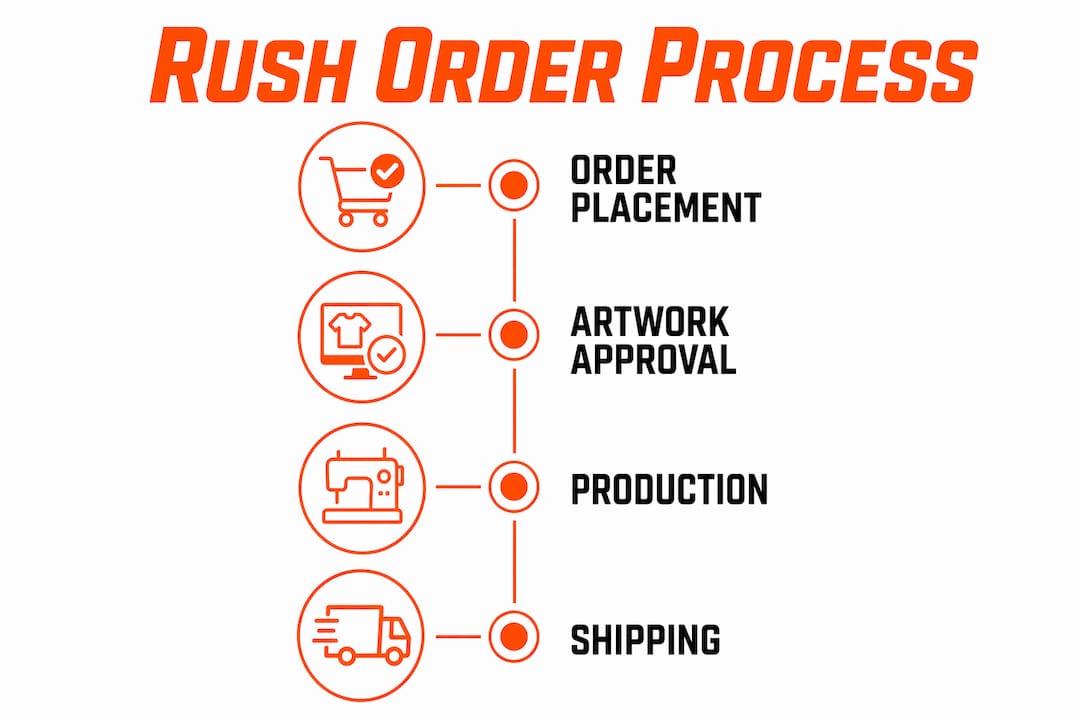
Rush order apparel is custom clothing produced on an accelerated schedule to deliver finished items faster than standard processing times allow. Businesses facing last-minute events, event planners with tight deadlines, and organizations needing urgent uniforms all rely on this service. The industry term you will hear from suppliers is “quick turn apparel” or “expedited apparel service,” and understanding how it works saves you money, stress, and missed deadlines. Production time, artwork approval, and shipping are three separate clocks, and all three must align for your order to arrive on time.
What is rush order apparel and how does it work?
Rush order apparel is defined as any custom clothing order that bypasses standard production queues to meet a shorter deadline. Standard custom orders typically take 7–10 business days from approval to shipment. Rush production apparel compresses that window to 24–48 hours in many cases. That compression is not magic. It is the result of deliberate operational choices by the supplier.
Suppliers who offer expedited apparel service do so by maintaining large stocks of popular blank garments from brands like Gildan and Bella+Canvas. Stocked blank inventory eliminates 2–3 days of transit time that would otherwise be spent waiting for blanks to arrive from a distributor. When your blanks are already on the shelf, production can start the moment your artwork is approved.

Production prioritization is the other key mechanism. Your order jumps ahead of standard queue jobs, which means the shop reorganizes its schedule around your deadline. That reorganization has real costs for the supplier, which is why rush orders carry additional fees.
Pro Tip: Confirm with your supplier whether their quoted turnaround time starts from order placement or from artwork approval. These two starting points can differ by a full business day or more.
Production time vs. shipping time: not the same thing
Many buyers confuse production time with total delivery time. Production time covers all shop-floor processes including printing, folding, and packing. Shipping time is the carrier transit period after the order leaves the facility. Approval time is the window between when you place the order and when you sign off on the artwork proof.
All three run sequentially, not simultaneously. A 24-hour production promise means nothing if your artwork approval takes 18 hours and you need overnight shipping on top of that. Plan each phase separately and you will avoid the most common rush order mistake.
What does rush order apparel actually cost?
Rush fees for custom apparel rush orders typically range from 10% to 30% of the total order value, depending on urgency and design complexity. A $500 order could carry a $50–$150 surcharge before shipping upgrades are factored in. That range exists because not all rush orders are equal. A 48-hour turnaround costs less than a same-day request.
Rush fees cover operational disruption, not just faster labor. Factories must break their planned batch workflows, reassign staff, and sometimes source materials outside normal channels. Understanding this distinction helps you negotiate more effectively. You are not paying for speed alone. You are compensating the supplier for the risk and disruption your timeline creates.
Flat fee vs. percentage surcharge
| Fee Structure | How It Works | Best For |
|---|---|---|
| Flat rush fee | Fixed dollar amount added to order total | Small orders where percentage would be disproportionate |
| Percentage surcharge | 10%–30% added to order subtotal | Larger orders where fee scales with complexity |
| Tiered urgency pricing | Fee increases as deadline shortens | Orders with flexible but tight windows |
| Shipping upgrade only | Standard production, expedited carrier | Orders needing faster delivery, not faster production |
Shipping costs are among the most negotiable components of a rush order. If you can consolidate shipments, adjust delivery windows, or accept a slightly later in-hands date, suppliers often have room to reduce freight charges. Production fees are harder to negotiate because they reflect real labor costs. Logistics fees have more flexibility.
Pro Tip: Ask your supplier to separate the production rush fee from the shipping upgrade cost on your quote. This lets you evaluate each component independently and identify where savings are possible.
Hidden costs catch buyers off guard more often than the listed surcharges do. Artwork revision requests after the initial proof, order changes mid-production, and missed approval cutoffs all add time and sometimes fees. Submit print-ready files in the correct format, confirm all details before approving, and you eliminate the most common sources of unexpected charges.
How to avoid delays when ordering rush apparel
The fastest production in the world does not help if your order misses a shop cutoff. Late artwork approval after a supplier’s daily cutoff time pushes a same-day production promise to the next business day. That single delay can cascade into a missed event date.
Follow these steps to protect your deadline on every fast clothing order:
- Submit print-ready artwork immediately. Vector files in AI or EPS format are preferred by most screen printers. Low-resolution JPEGs cause delays because the shop must request a replacement file.
- Confirm the shop’s daily cutoff time. Most facilities have a hard cutoff, often noon or 2 p.m., for same-day or next-day production starts. Orders submitted after that time roll to the following business day.
- Request a written in-hands date. Ask your supplier to provide a date that accounts separately for production and shipping timelines. A verbal promise is not a guarantee.
- Approve proofs within one hour. Slow proof approval is the single most common cause of missed rush deadlines. Assign one decision-maker to handle approvals before you place the order.
- Build a one-day buffer into your plan. If your event is Friday, target a Thursday in-hands date. Carrier delays happen, and a one-day buffer costs nothing but protects everything.
Pro Tip: For critical events, ask your supplier if they offer a guaranteed in-hands date with a refund or credit policy if they miss it. Reputable shops stand behind their rush commitments.
Working with a local supplier adds another layer of protection. Local apparel printing eliminates long carrier transit times and allows for in-person pickup if a shipping delay threatens your deadline.
Which apparel products are available for rush orders?
Rush order clothing is available across a broad range of garment types, but product complexity directly affects how fast your order can be completed. Simpler products with fewer decoration steps move faster through production.
Common products available for urgent clothing delivery include:
- T-shirts: The fastest option. Screen printing on a standard tee is the most efficient decoration method for rush production.
- Hoodies and sweatshirts: Slightly longer production due to garment weight and print area size, but widely available for rush service.
- Polos: Available for rush, though custom polo embroidery takes longer than screen printing due to digitizing and stitch time.
- Hats and caps: Rush embroidery on headwear is possible but adds time. DTF (Direct-to-Film) transfers on hats can be faster.
- Jackets: Higher complexity due to material and decoration placement. Rush is possible but expect higher fees.
- Promotional items: Branded tote bags, lanyards, and similar items are often available for rush, depending on supplier inventory.
How decoration method affects turnaround
| Decoration Method | Typical Rush Speed | Notes |
|---|---|---|
| Screen printing | Fastest | Best for large quantities and simple designs |
| DTF transfers | Fast | No minimum orders, works on most fabrics |
| Embroidery | Moderate | Requires digitizing; adds time for complex logos |
| Puff embroidery | Slower | 3D raised effect requires additional setup steps |
Rush order services typically cover T-shirts, hoodies, jackets, hats, polos, and promotional items, but availability depends on what blanks the supplier has in stock. Choosing a garment from a supplier’s stocked inventory, such as Gildan 5000 or Bella+Canvas 3001, is always faster than requesting a specialty blank that must be ordered in. When your deadline is tight, let inventory availability guide your product choice rather than the other way around.
Key takeaways
Rush order apparel succeeds when production time, artwork approval, and shipping are treated as three separate deadlines, each planned and confirmed before the order is placed.
| Point | Details |
|---|---|
| Rush production timeline | Expedited apparel service compresses standard 7–10 day production to 24–48 hours. |
| Rush fee range | Expect surcharges of 10%–30% of order value, covering labor disruption and logistics. |
| Approval timing is critical | Late artwork approval after shop cutoffs pushes same-day promises to the next business day. |
| Product choice affects speed | T-shirts with screen printing are the fastest; embroidered jackets take the most time. |
| Shipping is negotiable | Freight costs offer more flexibility than production fees when managing total rush order costs. |
What i have learned after years of rush orders
The biggest mistake I see from buyers is treating rush order apparel as a single transaction rather than a coordinated process. They focus entirely on the production promise and ignore the approval clock and the shipping clock. Then they are surprised when a 24-hour production guarantee still results in a late delivery.
The second mistake is choosing the wrong product for the timeline. A buyer who insists on puff embroidered jackets for a 48-hour turnaround is setting themselves up for disappointment. Screen-printed T-shirts on stocked Gildan or Bella+Canvas blanks are the right call when the deadline is non-negotiable. Save the complex decoration for orders with breathing room.
What actually works is building a relationship with one supplier before you need a rush order. When a shop knows your logo files, your preferred garment styles, and your billing information, they can move faster on your behalf. A new customer calling in a panic at 9 a.m. for a same-day order gets slower service than a known account with a clean history.
Technology has improved this process significantly. Suppliers with in-house production control, like Jam4apparel, can move from approval to press faster than shops that outsource any part of the workflow. Every handoff between vendors adds time. In-house means fewer handoffs.
My honest advice: build your rush order plan the same way you build any project plan. Identify the in-hands date first, then work backward through shipping, production, and approval to find your real submission deadline. That discipline separates buyers who consistently hit their deadlines from those who are always scrambling.
— Adam
Need rush apparel fast? Jam4apparel delivers
Jam4apparel is a custom apparel company based in Lake in the Hills, Illinois, with in-house screen printing, embroidery, and DTF printing capabilities. In-house production means no outsourced steps and no waiting on third-party vendors. The team stocks popular blank brands and handles everything from artwork to shipping under one roof.
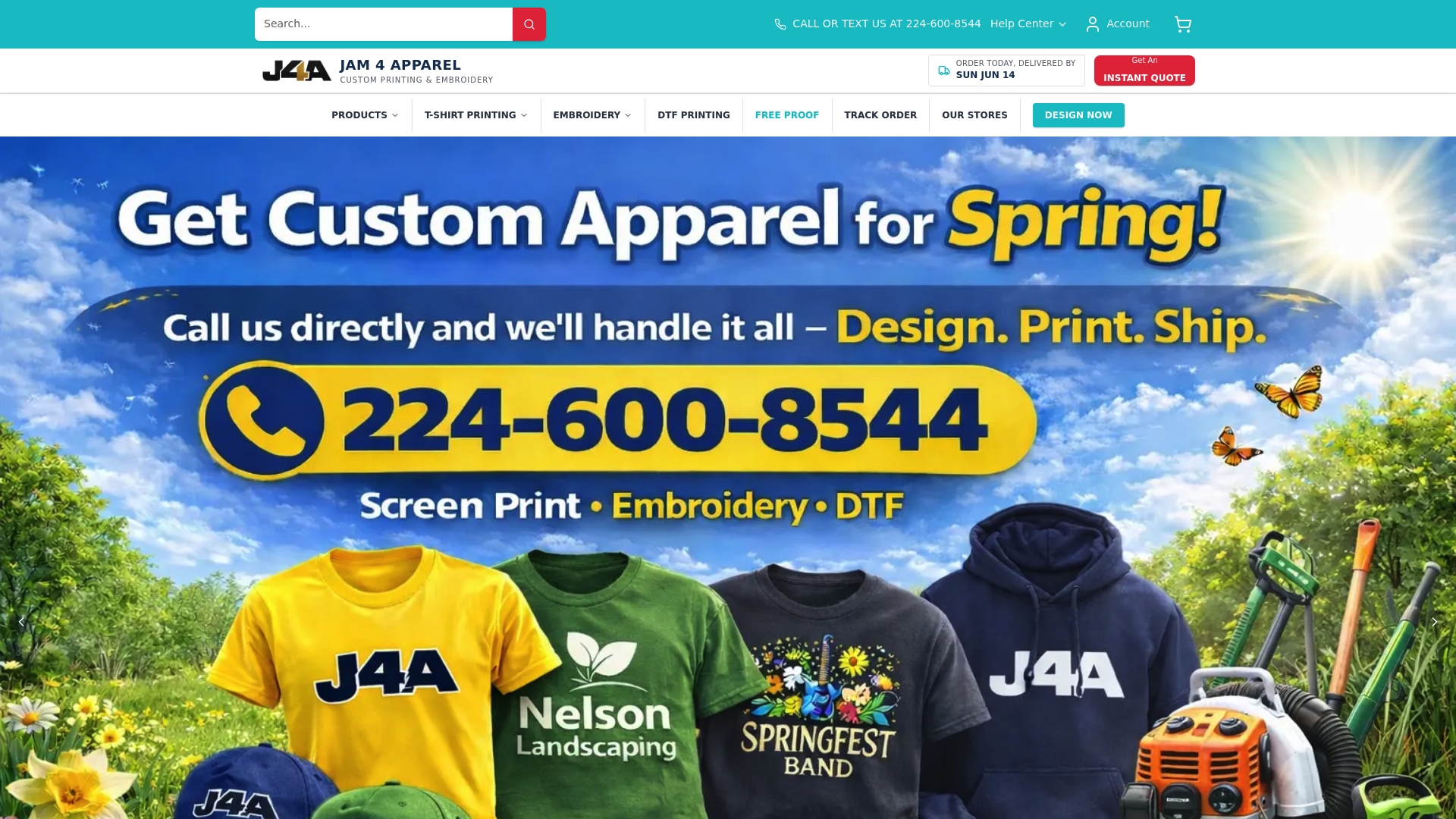
Whether you need bulk screen-printed shirts for a corporate event or a small run of branded polos for a trade show, Jam4apparel offers fast turnaround with transparent pricing. For Illinois businesses and organizations, local production means you can pick up your order directly if a shipping delay is not an option. Visit Jam4apparel to get a quote and confirm your in-hands date before your next deadline.
FAQ
What is rush order apparel?
Rush order apparel is custom clothing produced on an accelerated schedule, typically completing in 24–48 hours compared to the standard 7–10 business day turnaround. It serves businesses, event planners, and organizations with urgent uniform or promotional apparel needs.
How much does a rush order fee cost?
Rush order fees typically add 10%–30% to the total order value, depending on how tight the deadline is and how complex the design is. Shipping upgrades are charged separately and are often the most negotiable part of the total cost.
What is the fastest apparel product to order on a rush?
Screen-printed T-shirts on stocked blanks like Gildan or Bella+Canvas are the fastest option for rush order clothing. Embroidered items and complex garments like jackets take longer due to additional setup and production steps.
Why does artwork approval affect my rush order deadline?
Approval timing controls when production can begin, making it a separate deadline from production and shipping. Missing a shop’s daily cutoff by even one hour can push your entire order to the next business day.
Can i negotiate rush order fees?
Yes, particularly on the shipping side. Shipping costs offer the most flexibility in a rush order quote, especially if you can adjust the delivery window or consolidate shipments. Production rush fees are harder to reduce because they reflect real labor and scheduling costs.
Recommended
Ready to print your design?
Screen print, embroidery, and DTF — no minimums on many styles.