
What Is Group Order Apparel? A Complete Guide
July 19, 2026
What Is Group Order Apparel? A Complete Guide
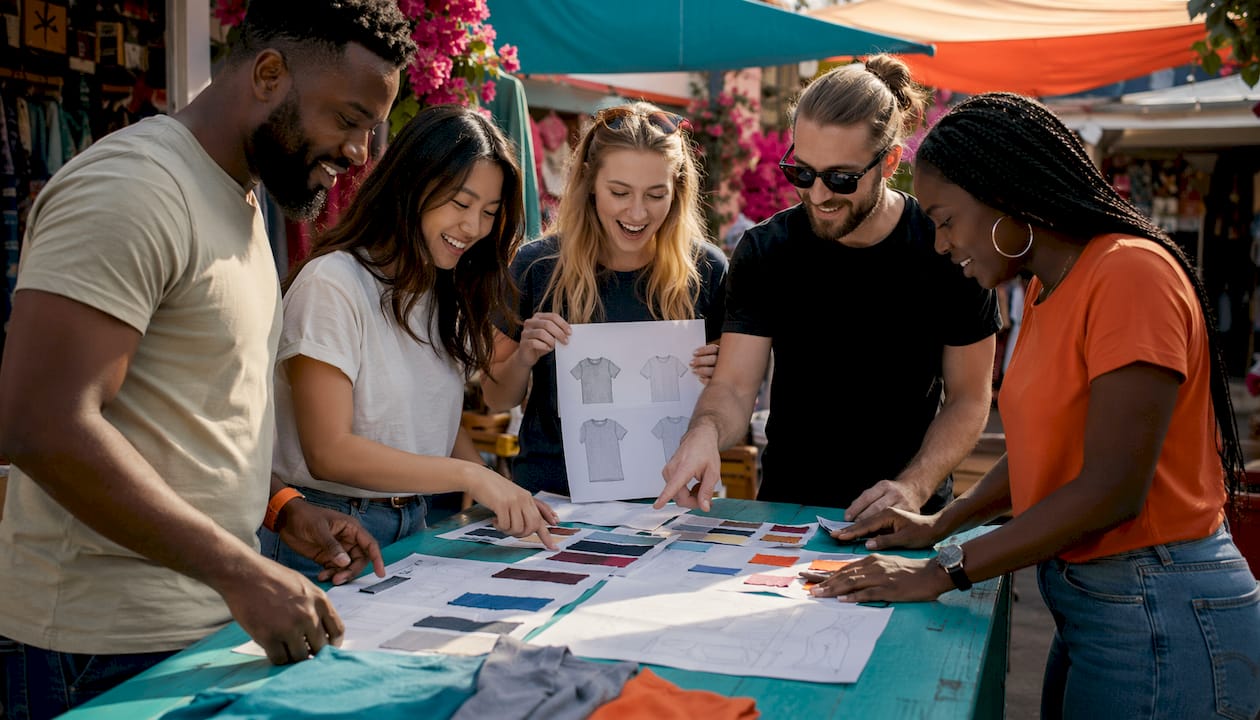
Group order apparel is defined as a coordinated bulk purchase of custom clothing items where multiple individuals within a team, organization, or event collectively place a single order, each selecting their own size and style preferences. The industry term for this process is a “group apparel order,” sometimes called a team order or bulk clothing order. Jam4apparel handles group orders for sports teams, schools, corporate teams, nonprofits, and community events throughout the Chicagoland area. Understanding what is a group order apparel means recognizing that it combines the cost efficiency of bulk purchasing with the personalization of individual sizing, making it the preferred method for any organization that needs custom clothing at scale.
What is a group order apparel and how does it work?
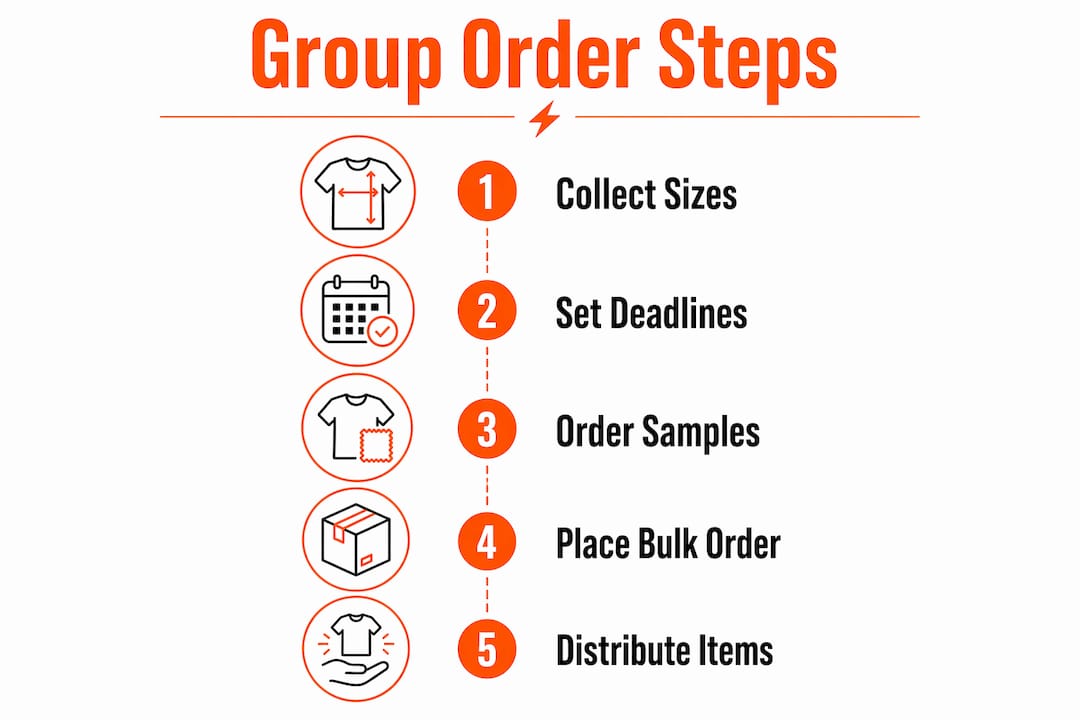
A group apparel order follows a defined workflow that moves from design approval through to final distribution. The process has five clear stages, and knowing each one prevents the most common delays.
- Design approval. The organizer finalizes the artwork, color choices, and garment style. Decoration methods like screen printing and embroidery are selected at this stage based on order size and desired look.
- Group invitation. Members receive a link to a private online store or a digital form where they submit their size, name, number, and any personal customization.
- Size and payment collection. Digital order systems simplify collection of sizes, names, numbers, and payments, eliminating the manual tracking errors common in group apparel orders. Real-time updates reduce the organizer’s workload considerably.
- Production. Once the deadline closes, the order goes into production. Screen printing suits large orders with bold graphics. Embroidery elevates professional appearance and brand prestige.
- Fulfillment and distribution. Finished garments ship to a single address for the organizer to distribute, or directly to each member’s home address depending on the provider’s setup.
Pro Tip: Set a hard deadline for size submissions and communicate it at least twice before closing the form. Late submissions after production starts are the single most expensive problem in group ordering.
What are best practices for size distribution in group apparel?
Guessing sizes for a group is the fastest way to end up with a pile of unwanted mediums and a shortage of extra larges. Accurate size data requires a survey, not an assumption.
Planners should expect a typical size distribution of roughly 10–15% Small, 30–35% Medium, 30–35% Large, 20–25% Extra Large, and 5–10% for 2XL and above. That distribution shifts based on group demographics. Sports teams skew toward larger sizes. Corporate groups tend to carry more XL orders than a general community group would.
| Group Type | Size Skew | Key Consideration |
|---|---|---|
| Sports teams | Large, XL, 2XL | Order more large and above |
| Corporate teams | Medium, XL | Balance professional fit with comfort |
| School or youth groups | Small, Medium | Confirm youth vs. adult sizing |
| Community or fundraiser | Even spread | Survey every participant individually |
| Nonprofit events | Variable | Low minimums may apply |
Collecting real sizes through a survey is the only reliable method. Size charts alone are often insufficient because fit varies by fabric and brand. Ordering physical samples is the standard practice for groups larger than 25 people. A sample lets members try the actual garment before committing to a size, which prevents costly returns and dissatisfaction.
For groups exceeding 50 people, adding 5–10% extra inventory in the most common sizes covers last-minute additions and changes. For smaller groups under 25, ordering 2–3 extras in medium and large is sufficient.
Pro Tip: Order your sample in the two most popular sizes for your group. If the large fits well and the extra large runs big, you have real data to share with members before they submit their sizes.
How to manage timelines and communication for group orders
A realistic timeline is the foundation of a smooth group order. Rushing the process creates errors that cost money and goodwill.
Group orders typically require at least 2–3 weeks to complete from the moment size collection closes. Orders over 100 people benefit from a 4-week window. That timeline does not include the size collection phase, which adds another 1–2 weeks for most groups.
A reliable communication schedule looks like this:
- Day 1: Send the size survey or store link to all members with a clear deadline.
- Day 7: Send a reminder to anyone who has not submitted their size.
- 3 days before deadline: Send a final notice. Make it specific: name the exact date and time the form closes.
- Deadline day: Close the form and send a confirmation to all participants who submitted.
Rush orders can be fulfilled but typically require additional fees and compress production to 1–3 days. Planning ahead eliminates rush costs entirely and increases sizing accuracy. Corporate internal orders sometimes move faster because the organizer controls the communication channel directly. Community or event-based orders almost always need more lead time because participants are harder to reach.
Understanding custom apparel turnaround time before you set your event date saves the entire group from a last-minute scramble.
What are common challenges in group apparel orders?
The most expensive mistakes in group ordering are predictable and preventable. Knowing them in advance is the difference between a smooth order and a chaotic one.
- Guessing sizes. Organizers who skip the survey and estimate sizes based on past experience consistently end up with the wrong quantities. Every group is different.
- Skipping samples. Variation in fit across brands means a size large in one garment runs like an extra large in another. Without a physical sample, members are guessing.
- No reminders. A single survey email gets ignored by a significant portion of any group. Multiple touchpoints are required to collect complete data.
- Last-minute changes. Members who request size changes after production begins create delays and added costs. A firm deadline policy prevents this.
- Manual tracking. Spreadsheets and email threads introduce errors. Digital ordering tools that handle size collection, payment, and status updates in one place reduce organizer errors significantly.
Organizers who invest time upfront in accurate size surveys and sampling report significantly higher satisfaction from group members and fewer returns or exchanges. The upfront effort pays off at distribution.
Pro Tip: Build a buffer into your deadline. Tell participants the form closes two days before it actually does. That buffer absorbs the inevitable late submissions without disrupting production.
Reviewing common ordering mistakes before you launch your group order is one of the most practical steps any organizer can take.
How do group apparel options vary by organization type?
Different groups have different needs, and a one-size-fits-all ordering approach fails most of them. The customization requirements, size distributions, and budget structures vary significantly by organization type.
Sports teams need individual names and numbers on every garment. These customizations typically add a day to turnaround time but are critical for team identity. Size distribution skews heavily toward large and above. Jerseys, performance shirts, and hoodies are the most common garment choices.
Corporate teams ordering company uniforms prioritize a professional look. Embroidery is the preferred decoration method for polos, jackets, and dress shirts because it signals brand prestige. Size distribution tends to include more XL orders than a youth group would. Corporate orders also frequently include multiple garment types in a single order.
Fundraisers and community events operate differently. Pricing and markup matter because the apparel itself is often a revenue source. Some providers offer no minimum order quantities, allowing orders as small as five pieces. That flexibility is particularly valuable for nonprofits and community groups where participation levels vary. Screen printing is the standard decoration method for event shirts because it handles bold graphics at volume efficiently.
School and spirit wear programs often run through a private online store that stays open for a set window, collecting orders and payments automatically. This model eliminates the organizer’s need to collect money individually, which is the most time-consuming part of any group order.
Key Takeaways
A successful group apparel order depends on accurate size data, physical samples for larger groups, and a communication timeline that starts well before the production deadline.
| Point | Details |
|---|---|
| Collect real sizes | Survey every participant individually rather than estimating based on group averages. |
| Order samples early | Groups over 25 people should request a physical sample to confirm fit before finalizing quantities. |
| Build in buffer inventory | Add 5–10% extra in common sizes for groups over 50 to cover late additions. |
| Set a firm timeline | Allow at least 2–3 weeks for production after size collection closes, and 4 weeks for 100-plus people. |
| Use digital tools | Online order systems reduce tracking errors and give organizers real-time visibility into submission status. |
What I’ve learned from watching group orders go wrong
After seeing hundreds of group orders come through, the pattern is consistent. The orders that go smoothly share one trait: the organizer treated size collection as seriously as the design itself.
Most organizers spend 80% of their energy on the artwork and almost none on the logistics of collecting accurate sizes. That imbalance is where the problems start. A beautiful design printed in the wrong sizes is a waste of everyone’s money.
The second mistake I see constantly is skipping the sample. Organizers assume that because they ordered a particular brand before, they know how it fits. Brands change their manufacturing. Fabrics change. A sample costs very little compared to the cost of reprinting or reordering because 30 people received the wrong size.
The third mistake is underestimating how long it takes to collect sizes from a large group. People do not respond to a single email. They respond to three. Build that into your plan from day one, and you will hit your deadline without chasing people at the last minute.
Buffer inventory is the most underused tool in group ordering. Ordering a few extra pieces in medium and large is cheap insurance. It covers the person who joins late, the member whose size was entered incorrectly, and the garment that gets damaged in shipping. The cost of a buffer is always less than the cost of a rush reorder.
— Adam
Jam4apparel makes group apparel orders straightforward
Jam4apparel works with sports teams, schools, corporate teams, nonprofits, and event organizers across the Chicagoland area to handle group apparel orders from design through delivery.
Whether your group needs 10 embroidered polos or 500 screen-printed event shirts, Jam4apparel’s in-house production handles varied sizes, styles, and decoration methods without the delays that come from outsourcing. The team manages the full process, including size coordination support, so organizers spend less time chasing submissions and more time focused on their event. Browse custom apparel by industry to find the right solution for your group, or reach out directly to get a quote tailored to your order size and timeline.
FAQ
What is a group order in apparel?
A group apparel order is a coordinated bulk purchase where multiple individuals within a team or organization collectively order custom clothing, each selecting their own size. It combines the cost savings of bulk ordering with individual size customization.
How many pieces do you need for a group apparel order?
Some providers offer no minimum order quantities, with orders starting at as few as five pieces. Larger orders typically unlock better pricing per unit and more decoration options.
How long does a group apparel order take?
Group orders typically require 2–3 weeks from the close of size collection through delivery. Orders over 100 people benefit from a 4-week production window.
Should I order samples for a group apparel order?
Physical samples are the standard practice for groups larger than 25 people. Fit varies by brand and fabric, so a sample prevents size errors that lead to returns or reprints.
What decoration method works best for group apparel?
Screen printing suits large orders with bold graphics, while embroidery is the preferred choice for professional uniforms and corporate apparel. The right method depends on your garment type, quantity, and the look you want to achieve.
Recommended
Ready to print your design?
Screen print, embroidery, and DTF — no minimums on many styles.