What Is a Seasonal Apparel Collection? A Planning Guide
August 19, 2026
What Is a Seasonal Apparel Collection? A Planning Guide
A seasonal apparel collection is a curated set of custom-branded items, tees, hoodies, hats, patches, decorated with screen printing, embroidery, or DTF and released around a specific season or event, like fall spirit wear, a holiday fundraiser, or summer camp shirts. Plan on starting 6 to 8 weeks out if you want product in hand before the date that matters.
A solid collection usually includes:
- Core items: tees, hoodies, hats, or patches picked for the season
- Decoration: screen printing, embroidery, DTF, or stitched patches
- First move: request a mockup or sample before committing to full quantity
Table of Contents
- What Counts as a Seasonal Custom Apparel Collection?
- Why Bother With a Seasonal Collection at All
- Choosing Items and Decoration Methods
- When to Start Planning and How Much to Order
- Getting Your Artwork Print-Ready
- Bulk Delivery, Team Stores, or Direct Ship?
- What Drives the Price of Your Order
- Questions to Ask Before You Hire a Vendor
- Your Copy-Paste Planning Checklist
- Get Your Seasonal Collection Started With Jam4apparel
- What Actually Goes Wrong (and How to Avoid It)
- Where to Learn More and Start Your Order
- Sources
What Counts as a Seasonal Custom Apparel Collection?
For schools, teams, nonprofits, and small brands, a seasonal collection is a short-run, purpose-built lineup tied to a calendar moment, not an open-ended catalog. Think fall spirit wear for a football program, back-to-school tees for a PTO, holiday fundraiser hoodies for a nonprofit, or summer camp shirts for a rec department. Each one has a start date, an end date, and a reason to exist.
This is a different animal from what fashion retailers call a “seasonal collection,” those Spring/Summer or Fall/Winter lines designers show on runways. That’s a design-industry term for trend-driven retail merchandise. Nothing in this guide relates to that. Here, “seasonal” means tied to your calendar, your team, your fundraiser, or your event.
- Fall spirit wear for football, cheer, or band programs
- Back-to-school tees ordered by a PTO or front office
- Holiday fundraiser hoodies sold by a nonprofit
- Summer camp or VBS shirts ordered for a fixed session
Why Bother With a Seasonal Collection at All
Seasonal merch does real work beyond looking good on picture day. It raises money, builds visibility at games and events, gives volunteers and staff something that says “we’re together,” and a limited run creates urgency that pushes supporters to buy now instead of “maybe later.”
- Fundraising revenue from markup on shirts, hoodies, and hats
- Visibility at games, fairs, and community events
- Team and staff unity through matching, recognizable gear
- Built-in urgency because the design won’t be reordered forever
Small nonprofits in particular can run this with little financial risk. On-demand printing and preorder storefronts let an organization sell merch without holding inventory, while bulk ordering lowers the per-item cost for groups that know their numbers.
Pro Tip: If your quantity is uncertain, run a preorder window instead of guessing at bulk numbers. If you know exactly how many people need shirts, bulk ordering almost always beats per-item preorder pricing.
Choosing Items and Decoration Methods
Match the garment to the season and the use case. Performance tees suit summer sports and camps. Hoodies and long sleeves make sense for fall and holiday runs. Hats and patches work as add-ons rather than the centerpiece, and patches specifically shine on jackets or bags that already exist.
Decoration method matters just as much as the garment:
- Screen printing is the most cost-effective choice for large runs with one or two colors
- Embroidery holds up best on polos, hats, and jackets, and reads as more premium
- DTF (direct-to-film) handles full-color designs with no minimum quantity, ideal for smaller or mixed-size seasonal runs
- Custom patches add a durable, sewn-on element to jackets or bags
Placement affects both look and cost. A single front-chest logo prints faster and cheaper than a design that also wraps a sleeve and covers the back. Every extra print color adds a screen charge in screen printing, so a two-color front design will always beat a four-color front-and-back design on price and turnaround.
Pro Tip: Ask your vendor for a per-color cost breakdown before finalizing art. Cutting one color from a design can shave real dollars off a 100-plus piece order.
When to Start Planning and How Much to Order
Timing is where most seasonal orders go sideways. Whether it’s a fall roster or a back-to-school run, the schools and teams that avoid rush fees are the ones who start early and lock in sizes before the deadline crunch.
- 6 to 8 weeks out: finalize design and confirm decoration method
- 5 to 6 weeks out: collect sizes from players, students, or staff
- 4 weeks out: approve final mockup and submit the order
- 2 to 3 weeks out: production runs, per typical fall-sports and back-to-school timelines
- Delivery week: shirts arrive in time for the first game, event, or school day
Quantity planning follows its own rules. Price breaks typically kick in at certain volume tiers, so ordering 48 shirts instead of 36 might cost less per piece even with more units. For buffer stock, group-ordering guidance recommends 2 to 3% extra for groups under 25 and 5 to 10% extra for groups over 50, enough to cover a size mistake or a late sign-up without a costly reorder.
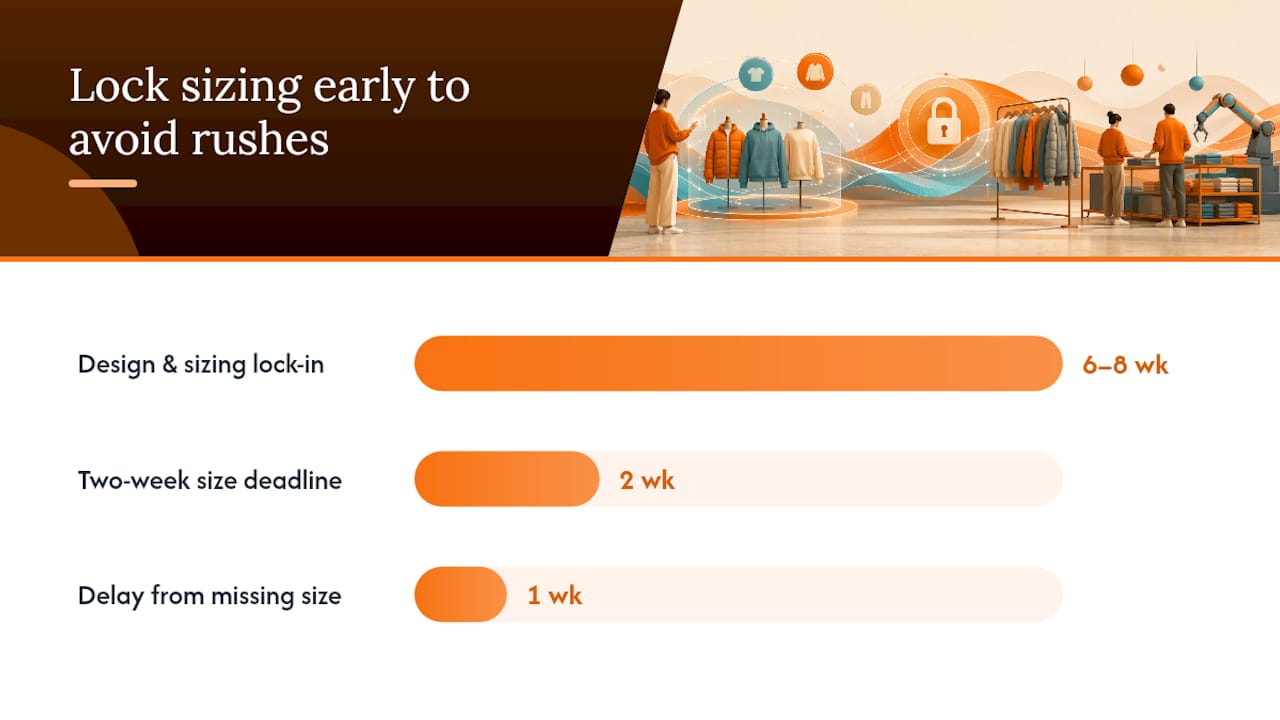
Size collection is the practical bottleneck. Schools collecting sizes from families should build in two full weeks for responses, since chasing down the last five kids always takes longer than expected.
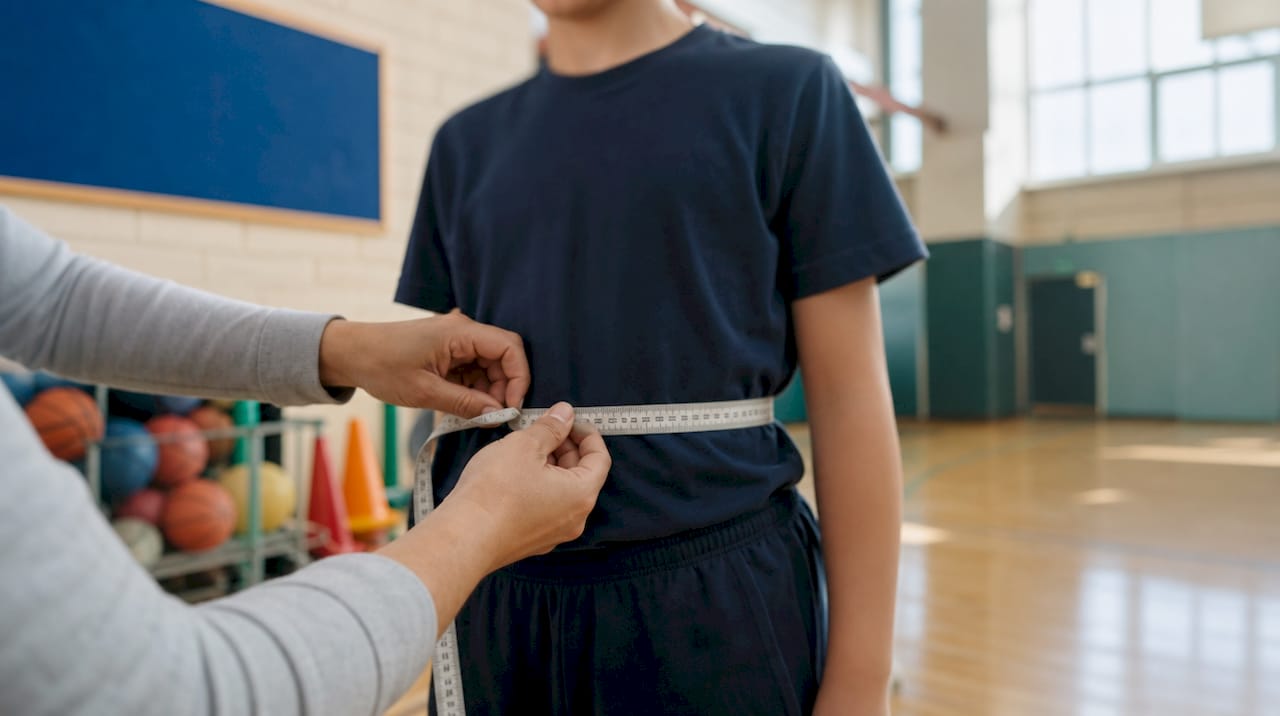
Pro Tip: Order one physical sample garment before finalizing sizes for any run over 25 pieces. A sample lets coaches or teachers try it on a real kid or adult before 50 orders go out based on a size chart alone.
Getting Your Artwork Print-Ready
Bad artwork is the single biggest cause of production delays. Vector files (AI, EPS, or PDF) are required for clean screen printing and DTF work, since they scale to any size without pixelation. If you only have a logo saved as a JPEG from a school newsletter, that’s a problem, ask for a high-resolution PNG (300 DPI minimum) at the very least, and expect your vendor to redraw it as vector if it needs to print large.
Other artwork basics that keep a project on track:
- Outline all fonts so text doesn’t shift or default to a substitute typeface
- Specify Pantone colors when you need exact color matching across items
- Limit spot colors to keep screen printing costs down
- Use light ink on dark garments (and vice versa) for visibility
Pro Tip: Always request a free digital mockup, and a physical sample for larger orders, before signing off on final art. It’s the cheapest insurance against an entire run coming back wrong.
Bulk Delivery, Team Stores, or Direct Ship?
How your gear gets distributed matters as much as how it’s made. Three models cover most seasonal orders:
- Bulk delivery: one shipment to a single address, sorted by size, cheapest per-piece cost
- Individual direct-ship: each person’s order goes to their own address, convenient but pricier per shipment
- Team store or preorder: an open or closed online store collects orders and payment before production starts
- Bulk delivery works best when a coach or coordinator can hand out gear in person
- Team stores remove inventory risk entirely since nothing prints until it’s paid for
- Direct-ship suits scattered groups like alumni or remote volunteers
For a nonprofit unsure of demand, a preorder store avoids the leftover-inventory problem that comes with guessing on bulk numbers, while a school with a known roster is usually better off with a straightforward bulk order.
What Drives the Price of Your Order
Your final invoice comes down to a handful of variables, and knowing them ahead of time keeps budgeting realistic:
- Blank garment choice (a basic tee costs far less than a premium hoodie)
- Number of print colors or embroidery stitch count
- Decoration method (screen printing scales down in cost as quantity goes up; DTF holds steadier per piece)
- Order quantity and where price breaks land
- Rush fees for compressed timelines
- Shipping, especially split shipments to multiple addresses
- Mockup and sample costs, often free or minimal with the right vendor
As a rough budgeting rule, larger school and team orders typically see the per-shirt price drop noticeably once quantities clear a mid-size threshold, since setup costs get spread across more pieces. Most vendors ask for a deposit, commonly a percentage of the total, at order confirmation, with the balance due before or at shipping.
Questions to Ask Before You Hire a Vendor
The right questions up front save you from a missed deadline or a botched print run. Ask directly:
- What’s your standard lead time, and what happens if I need it faster?
- Do you provide a free digital proof, and can I get a physical sample?
- Are there setup fees, and do they apply per color or per design?
- Can you split shipments by size or by location?
- What’s your policy if a piece arrives defective or the wrong size?
Trust signals worth requiring: in-house production (so your order isn’t subcontracted out and delayed), a free design proof before printing, an available production sample, published turnaround times, and a clear quantity-pricing structure. Jam4apparel handles printing and embroidery in-house, offers free mockups, and stocks recognized blanks like the American Apparel 2007 and American Apparel 2001, which gives schools and teams a known sizing standard to build a size chart around.
Pro Tip: Ask specifically about experience with schools, teams, or nonprofits. A vendor who’s handled youth sizing and school PO paperwork before will move faster than one learning it on your order.
Your Copy-Paste Planning Checklist
Save this as your working timeline for any seasonal run:
- Week 8: Confirm design, decoration method, and garment style
- Week 6: Open size collection (allow two full weeks for responses)
- Week 4: Approve final mockup, submit deposit, lock quantity
- Week 2 to 3: Production runs
- Delivery: Confirm distribution plan (bulk pickup, direct ship, or store fulfillment)
Add your buffer stock before final submission, not after. A size exchange after production starts almost always costs more than ordering two or three extras up front.
Get Your Seasonal Collection Started With Jam4apparel
Every checklist item above, samples, proofs, turnaround, quantity pricing, is exactly what Jam4apparel builds its process around. In-house screen printing and embroidery mean your order isn’t handed off to a third-party shop, which is often where seasonal timelines fall apart.
Jam4apparel works with schools, sports teams, martial arts academies, and nonprofits throughout the Chicagoland area, and stocks reliable blanks including the American Apparel 2007 and American Apparel 2001 for consistent sizing across a roster or student body. Every order starts with a free design proof, and physical samples are available before you commit to full quantity, no guessing what 100 hoodies will look like before they’re printed.
Whether you need a fall spirit wear run, a holiday fundraiser line, or a team store that handles its own preorders and fulfillment, the process starts the same way: request a quote through Jam4apparel’s screen printing services and get a size chart and mockup moving before your 6 to 8 week window closes.
What Actually Goes Wrong (and How to Avoid It)
The failure point on most seasonal orders isn’t the printing, it’s the size collection. Teams and schools that build in a hard cutoff date for size submissions rarely miss their event. The ones who leave it open-ended almost always end up paying a rush fee to fix it.
I’ve seen a single missing size row on a spreadsheet push a football team’s order back by a week, forcing a rush charge that would have been avoided by a two-week size deadline and one physical sample sent to the head coach first. Collect sizes early, centralize payment through one point of contact, and always sign off on a real garment sample before a run larger than 25 pieces goes to press. None of that is complicated. It’s just easy to skip when everyone’s busy, and skipping it is exactly what turns a simple order into a rush job.
A seasonal apparel collection works best when the design, sizing, and vendor questions are locked in 6 to 8 weeks before the date that matters.
| Point | Details |
|---|---|
| Start early | Begin planning 6 to 8 weeks before your season or event to avoid rush fees. |
| Order buffer stock | Add 2 to 3% extra for groups under 25 and 5 to 10% for groups over 50. |
| Match method to run size | Use screen printing for large single-color runs and DTF for smaller full-color designs. |
| Require samples and proofs | Get a free mockup and physical sample before approving any order over 25 pieces. |
| Choose your vendor by trust signals | Jam4apparel offers in-house production, free proofs, samples, and American Apparel blanks for schools, teams, and nonprofits. |
Where to Learn More and Start Your Order
- Why Organizations Pre-Order Apparel: planning strategy for team stores and preorders
- Schools & PTO Groups: sizing and bulk-order guidance for school programs
- Group Ordering Guide: sizing formulas and buffer recommendations for group orders
- Custom Shirts for Fall Sports Teams: a detailed seasonal timeline for team orders
Sources
- Group Ordering Guide — Sizes & Samples | T-Shirt Elephant
- Custom Shirts for Fall Sports Teams: Order Timeline + Sizing (2026) – The Loyal Brand
- Making Branded Merchandise for Small Nonprofits Work | Eleo Donor Management
Recommended
Ready to print your design?
Screen print, embroidery, and DTF — no minimums on many styles.