What Is a Custom Logo Patch? Your Complete Guide
July 9, 2026
What Is a Custom Logo Patch? Your Complete Guide
A custom logo patch is a personalized fabric emblem that displays a unique logo, name, or symbol on apparel or gear through embroidery, weaving, or printing. The industry standard term is “embroidered patch,” though woven and printed variations serve distinct design needs. Embroidered patches typically feature 8–12 thread colors on a durable twill backing, with merrow or heat-sealed borders that ensure longevity. These details matter because they separate a patch that lasts years from one that frays after a few washes. Whether you represent a small business, a school sports team, or a nonprofit, a well-made patch turns generic clothing into a recognizable brand statement.
What is a custom logo patch, and how is it made?
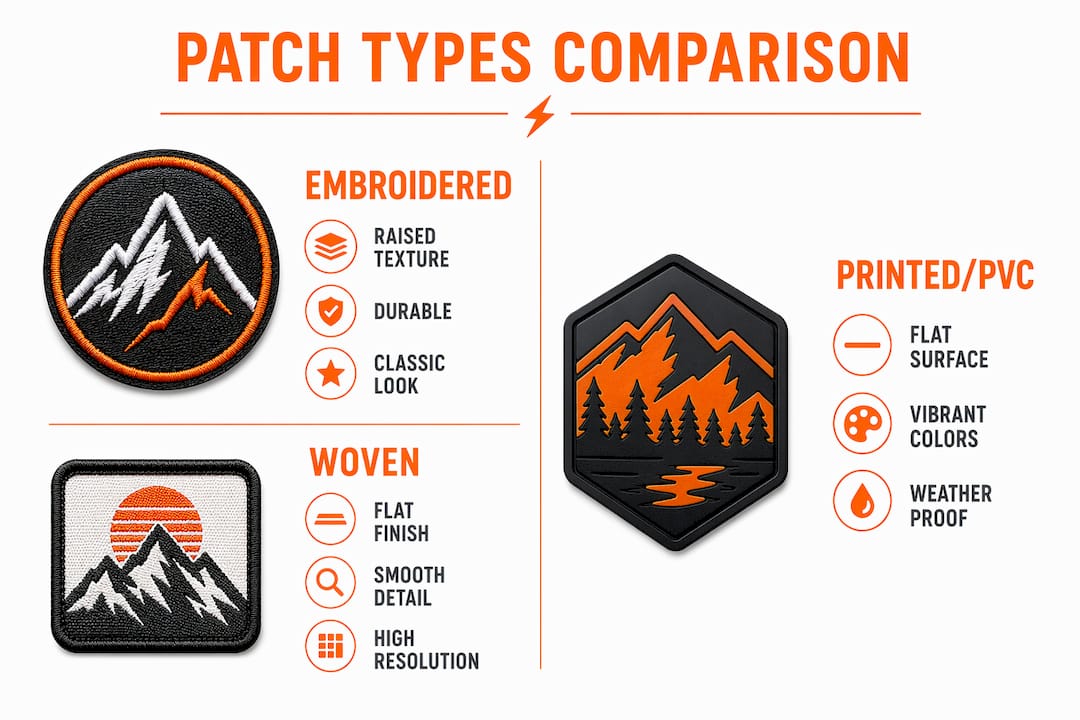
A custom logo patch is produced through one of three core methods: embroidery, weaving, or printing. Each method suits a different type of design and end use.
Embroidered patches are the most common type. Machines stitch thread directly onto a fabric base, creating a raised, three-dimensional texture. Stitch types like satin, fill, running, and 3D puff each produce different visual and tactile effects. That variety gives designers real control over how a finished patch looks and feels.
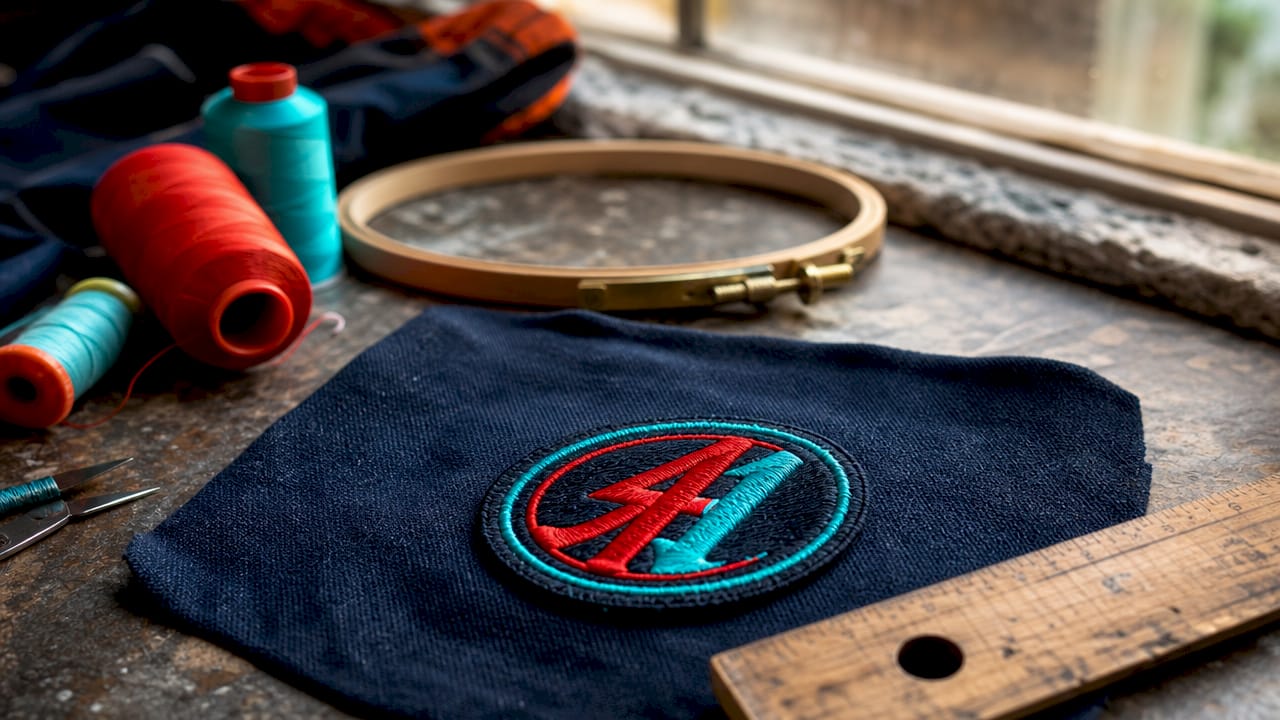
Woven patches use thinner threads woven directly into the fabric rather than stitched on top. The result is a flat, smooth surface that captures fine lines and small text far better than embroidery can. Woven patches work well for logos with intricate detail or typography that would lose clarity when stitched.
Printed patches transfer a design onto fabric or PVC using heat or UV printing. PVC patches are especially durable and water-resistant, making them a solid choice for outdoor gear and tactical equipment. Printed patches also handle photographic images and gradients that neither embroidery nor weaving can replicate.
Comparing patch types at a glance
| Feature | Embroidered | Woven | Printed/PVC |
|---|---|---|---|
| Texture | Raised, 3D | Flat, smooth | Flat or molded |
| Best for | Bold logos, simple icons | Fine detail, small text | Photos, gradients, outdoor use |
| Durability | High | High | Very high |
| Typical thread colors | 8–12 | Unlimited | Full color |
Pro Tip: Request a physical sample before approving a full production run. Colors on screen often look different from thread colors in person, and a sample catches those surprises early.
The manufacturing process also includes a step most buyers never see: digitization. Digitizing artwork converts your design into stitch instructions that the embroidery machine can follow. Specialists inspect the file for “thread-ability,” checking for areas where thread might unravel or colors might fade. You do not need to supply a specialized embroidery file. Manufacturers perform in-house digitization from your standard logo files, such as a PNG, PDF, or vector file.
What backing options are available for custom patches?
The backing you choose determines how a patch attaches to fabric and how long it stays put. Three options cover the vast majority of applications.
- Iron-on backing uses a heat-activated adhesive layer. A standard household iron or heat press bonds the patch to fabric in seconds. This option works well for casual apparel like jackets, bags, and hats where permanent stitching is not required.
- Sew-on backing is plain twill with no adhesive. The patch attaches through stitching around its edges, creating a bond that survives repeated washing and heavy wear. This is the right choice for uniforms, workwear, and any garment that sees daily use.
- Velcro backing uses a hook-and-loop system that lets you attach and remove the patch without tools. Velcro is the standard for military and tactical gear because it allows quick swaps between patches on the same garment.
Choosing the wrong backing is one of the most common ordering mistakes buyers make. A patch on a dry-clean-only blazer needs sew-on backing, not iron-on. A patch on a child’s backpack that gets swapped between kids needs velcro. Matching the backing to the actual use case protects your investment.
Pro Tip: For iron-on patches on cotton or polyester, apply firm pressure with a heat press at 320°F for 15–20 seconds, then let the garment cool completely before handling. A household iron works in a pinch but delivers less consistent heat distribution.
Each backing type affects patch longevity differently. Sew-on patches outlast iron-on patches on garments that go through frequent laundering. If durability is the priority, sew-on is the clear winner.
How do you design an effective custom logo patch?
Logo design for patches follows different rules than logo design for screens or print. The physical constraints of thread and fabric demand simplicity and scale.
- Start with a bold, simple icon. Embroidered patches perform best with logos that use clean shapes and strong contrast. Thin lines, gradients, and complex shadows do not translate well to thread.
- Set a minimum text size of 4mm. Text smaller than 4mm becomes illegible when embroidered, turning letters into blurry shapes. If your logo includes small text, switch to a woven patch or increase the overall patch size.
- Choose your border style deliberately. Merrow borders are the most common choice. They create a clean, raised edge that frames the patch and adds durability. Heat-sealed borders lie flat and work better for patches with irregular shapes.
- Match thread colors to your brand palette using Pantone codes. Pantone codes give your manufacturer an exact color reference, reducing the chance of a mismatch between your brand colors and the finished thread.
- Avoid poor digitization. A low-quality digitization file causes thread gaps, color bleeding, and uneven stitch density. Always work with a manufacturer that performs professional digitization in-house.
Choosing the right patch type based on your logo design is the single most important decision in the process. A beautifully designed logo loses its impact when produced in the wrong format.
Pro Tip: If your logo contains both a bold icon and small supporting text, consider splitting them. Use an embroidered patch for the icon and a woven patch for the text version. Many brands order both and use each in different contexts.
The branding value of a quality patch goes beyond aesthetics. The tactile, raised texture of a quality patch creates a premium brand impression that flat printed logos cannot match. That physical quality signals craftsmanship and attention to detail before anyone reads a word.
How do you order custom logo patches?
Ordering custom patches follows a clear sequence. Knowing each step prevents delays and protects your budget.
- Prepare your artwork file. Vector files (AI, EPS, SVG) are ideal because they scale without losing quality. High-resolution PNG or PDF files also work. Your manufacturer’s digitization team converts the file into stitch instructions.
- Request a digital mock-up before production. A mock-up shows you how the patch will look in the chosen colors, size, and stitch type. Approve the mock-up in writing before the production run begins.
- Specify your Pantone colors. Generic color names like “navy blue” mean different things to different people. Pantone codes eliminate that ambiguity and give your manufacturer a precise target.
- Confirm your quantity and size. Patch pricing typically drops at higher quantities. Common sizes range from 2 inches to 5 inches in diameter, and size directly affects the level of detail you can include.
- Review turnaround time. Standard production for custom embroidered patches typically runs 2–3 weeks after artwork approval. Rush options are available from most manufacturers but carry a premium.
Ordering custom patches for the first time is easier when you understand the custom apparel order process from start to finish. Knowing what to expect at each stage keeps your project on schedule and on budget. For teams ordering patches as part of a larger uniform program, reviewing how to order custom work uniforms gives useful context on coordinating multiple decoration methods at once.
Key Takeaways
Custom logo patches deliver lasting brand value when you match the production method, backing type, and design approach to your specific application.
| Point | Details |
|---|---|
| Production method matters | Choose embroidery for bold logos, woven for fine detail, and printed for photos or outdoor use. |
| Backing drives longevity | Sew-on backing outlasts iron-on on frequently washed garments; velcro suits interchangeable applications. |
| Design for the medium | Keep text above 4mm and use bold, simple shapes to avoid illegible embroidery. |
| Digitization is non-negotiable | Professional in-house digitization prevents thread gaps, color fading, and poor stitch density. |
| Pantone codes protect your brand | Specifying Pantone colors removes guesswork and keeps your patch consistent with your brand identity. |
Why patches are still the most underrated branding tool
Patches get dismissed as a novelty, and that is a mistake I see organizations make repeatedly. A well-made embroidered patch on a staff jacket communicates something a printed logo simply cannot: permanence. The raised texture, the tight stitching, the clean merrow border. Those details register with people before they consciously notice them.
The misconception I encounter most often is that patches are only for uniforms or military gear. The reality is that a patch on a restaurant server’s apron, a nonprofit volunteer’s vest, or a youth sports team’s hoodie carries the same branding weight as a patch on a tactical jacket. The medium is the same. The signal is the same. Quality reads as quality regardless of context.
What I have found is that organizations underinvest in digitization and then blame the patch. A poorly digitized file produces a patch that looks amateurish even when the underlying logo is strong. The fix is straightforward: work with a manufacturer that digitizes in-house and shows you a physical sample before committing to a full run. That one step eliminates most of the quality complaints I hear.
Patches also age well in a way that screen-printed logos do not. A screen-printed design fades. A quality embroidered patch, sewn onto a garment, holds its color and structure through years of washing. For organizations that care about building brand identity that lasts, that durability is not a small detail. It is the whole point.
— Adam
Custom patches from Jam4apparel, built for your brand
Jam4apparel produces custom embroidered patches for businesses, schools, sports teams, and nonprofits throughout the Chicagoland area. Every order includes a free artwork proof so you see exactly what your patch will look like before production begins.
Jam4apparel handles in-house digitization, backing selection, and size customization, so you get a finished patch that matches your brand without the back-and-forth. The team works with clients across multiple industries, from corporate apparel programs to martial arts academies. Whether you need 12 patches or 1,200, Jam4apparel delivers consistent quality with fast turnaround times and direct support from start to finish.
FAQ
What is a custom logo patch made of?
A custom logo patch is made from thread stitched onto a twill or felt fabric base, with a backing layer for attachment. Embroidered patches use polyester or rayon thread; PVC patches use molded rubber-like plastic.
How many thread colors can a custom patch include?
Standard embroidered patches support 8–12 thread colors. Woven patches and printed patches can accommodate a broader color range, including full-color designs.
What file format do I need to order custom patches?
Vector files such as AI, EPS, or SVG are preferred. High-resolution PNG or PDF files also work. Your manufacturer’s digitization team converts the artwork into stitch-ready instructions.
Can I iron a custom patch onto any fabric?
Iron-on patches bond best to cotton and polyester fabrics. Avoid applying them to nylon, leather, or delicate materials, as the heat required can damage those surfaces. Sew-on backing is the safer choice for specialty fabrics.
How long do custom embroidered patches last?
Professional-grade patches with reinforced merrow borders and high-density stitching hold up through years of regular laundering. Lower-quality patches fade or fray within a few washes.
Recommended
Ready to print your design?
Screen print, embroidery, and DTF — no minimums on many styles.