Top Team Uniform Decoration Methods for Coaches & ADs
August 8, 2026
Top Team Uniform Decoration Methods for Coaches & ADs
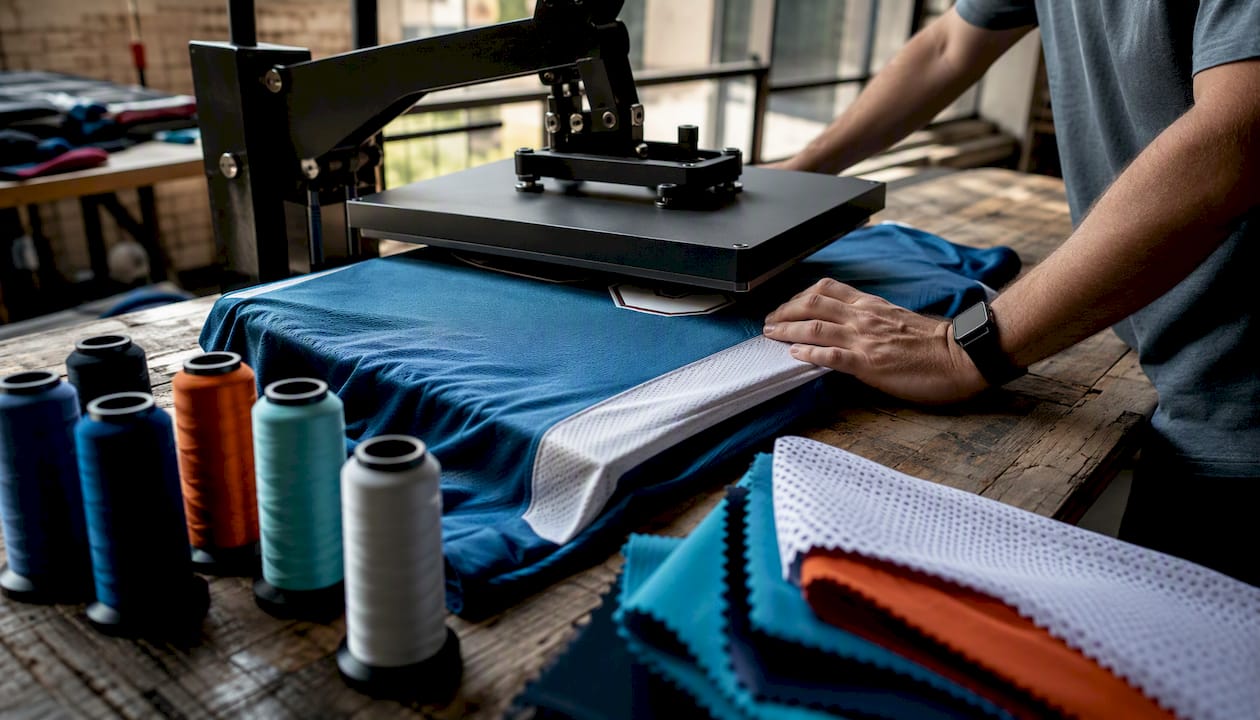
For durability, pick embroidery or tackle twill. For full-color performance jerseys, sublimation is the standard. For complex graphics on smaller runs, DTF (direct-to-film) is the current go-to. For high-volume simple designs, screen printing keeps costs low. Here is the short version before the details:
- Embroidery: Best for caps, polos, and chest crests where a raised, premium look matters. Trade-off: cost rises fast with stitch count, and it adds weight to lightweight knits.
- Tackle twill/appliqué: The heritage choice for bold numbers and chest scripts on baseball and football jerseys. Trade-off: adds structure and weight; not ideal for mesh or ultra-light performance fabrics.
- Screen printing: Best for bulk practice shirts, warmups, and spirit wear. Trade-off: setup fees make small runs expensive; not suited to photographic or gradient artwork.
- Sublimation: Best for all-over full-color polyester jerseys (basketball, soccer, volleyball). Trade-off: only works on white or light polyester; no post-cut personalization.
- DTF (direct-to-film): Best for full-color names, numbers, and logos on small-to-medium runs across almost any fabric. Trade-off: slightly less breathable than screen print on performance mesh.
- DTG (direct-to-garment): Best for cotton-heavy garments with photographic artwork. Trade-off: slower per piece, higher cost at volume, not ideal for performance polyester.
- Heat transfer/vinyl: Best for low-quantity custom numbers and quick-turn single pieces. Trade-off: durability is the lowest of any method; heat and washing degrade adhesion over time.
- Custom patches: Best for adding removable or sewn branding to jackets, bags, and warmups. Trade-off: requires sewing or ironing; not suited to thin stretch fabrics.
Table of Contents
- What Are the Top Team Uniform Decoration Methods?
- At-a-Glance Comparison for Fast Decisions
- How do you choose the right decoration method for your team?
- Artwork and file prep: what you need to avoid delays and extra charges
- What do cost, turnaround, and durability actually look like by method?
- What decoration trends are shaping team uniforms right now?
- Which decoration method works best for each sport and uniform element?
- Common mistakes teams make when choosing decoration methods
- Key Takeaways
- The method nobody talks about enough: cost per wear
- Ready to outfit your team? Jam4apparel delivers in-house, fast.
- Sources and further reading
What Are the Top Team Uniform Decoration Methods?
Every method below has a distinct process, look, and cost profile. Knowing how each one works is what separates a smart order from an expensive mistake.
Embroidery
A machine stitches thread directly into the fabric using a digitized file. The result is a raised, textured logo with a premium, tactile feel. Embroidery is recognized for maximum durability and premium appearance, which is why it is the default choice for caps, polo shirts, and chest crests on coaching staff gear.
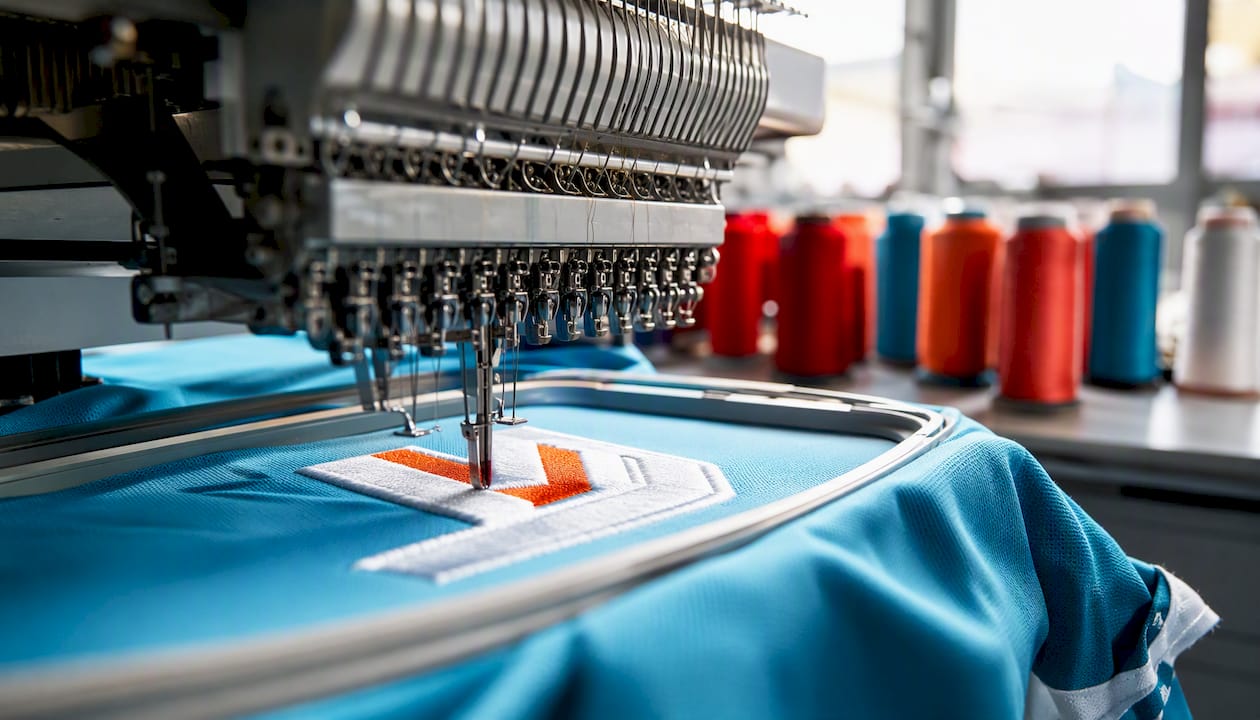
Pros: Extremely durable, does not fade or crack, professional appearance, works on most woven fabrics. Cons: High stitch counts drive up cost quickly; fine detail and gradients are not possible; can pucker lightweight knits and stretch performance mesh; adds weight.
Fabric compatibility: Woven fabrics (twill, canvas, fleece, structured caps) are ideal. Avoid on thin polyester mesh or lightweight performance jerseys — the needle perforations and thread tension can distort the fabric.
Tackle twill / appliqué / patches
Fabric letters or numbers are cut from twill or felt, then sewn or heat-bonded onto the garment. Twill is the heritage choice for bold numbers and chest scripts on baseball-style jerseys, giving that classic raised athletic texture you see on pro uniforms.
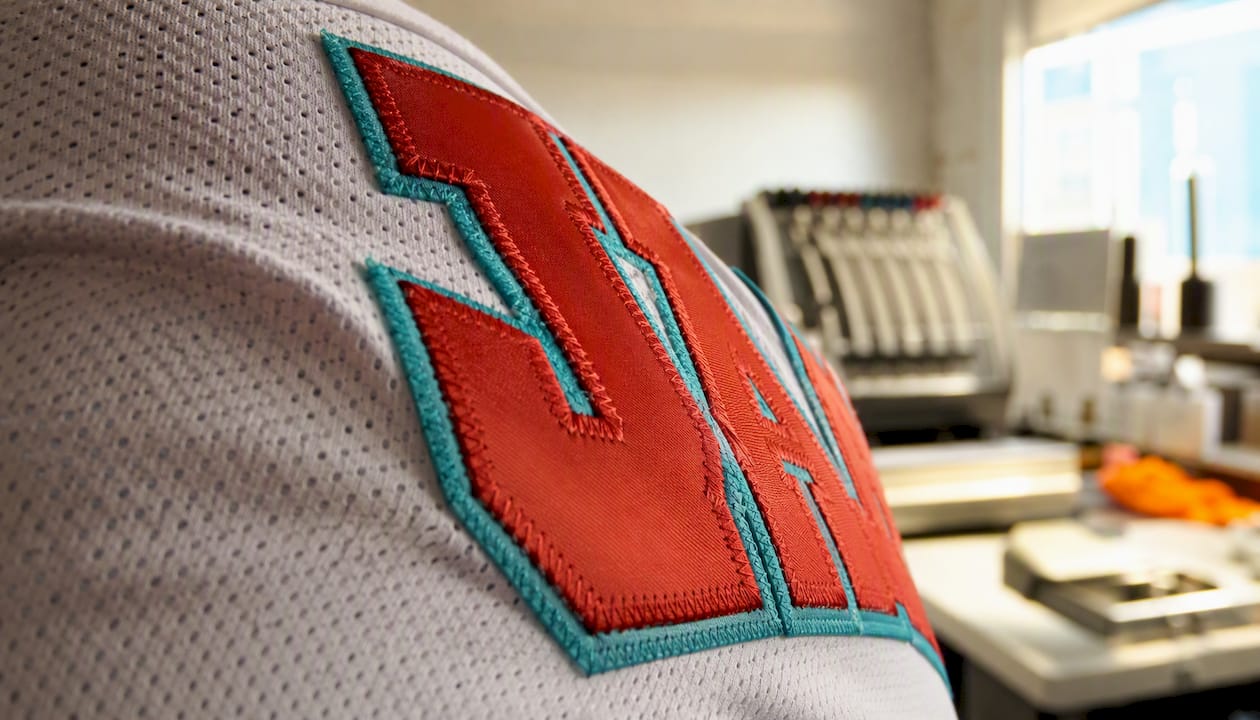
Pros: Bold, structured look; highly durable; readable from a distance; works on most jersey fabrics. Cons: Adds weight and stiffness; labor-intensive for large rosters; not suited to all-over graphics; minimum order economics favor larger runs.
Fabric compatibility: Works on most jersey fabrics including polyester, nylon, and cotton blends. Avoid on very thin stretch mesh where the sewing can pucker.
Screen printing
Ink is pushed through a mesh screen onto the fabric, one color per screen. Screen printing is cost-effective at volume and ideal for simple 1–4 color designs on large runs, which is why it dominates practice wear, warmups, and spirit gear.
Pros: Low per-piece cost at volume, vibrant saturated colors, fast production once screens are made, works on cotton and blends. Cons: Setup fees (one screen per color) make small runs expensive; gradients and photographs require specialty processes; not ideal for individual name/number personalization across a roster.
Fabric compatibility: Best on cotton and cotton-poly blends. Water-based inks work on performance polyester but require testing; plastisol inks can crack on stretch fabrics over time.
Sublimation
Sublimation dye is printed onto transfer paper, then heat-pressed so the ink converts to gas and fuses directly into the polyester fibers. The ink becomes part of the fabric itself, which means it cannot crack, peel, or fade the way surface-applied methods can.
Pros: Unlimited colors and photographic detail, no added weight or texture, will not crack or peel, ideal for all-over graphics and lightweight performance wear. Cons: Only works on white or very light polyester (100% or near-100%); once the jersey is cut and sewn, you cannot add individual names/numbers via sublimation; higher per-piece cost for small runs.
Fabric compatibility: Polyester only. Cotton and dark fabrics will not accept sublimation dye properly.
Pro Tip: If your team needs individual player names added after a sublimated jersey is made, plan to use DTF or tackle twill for the name/number layer. This hybrid approach is standard practice for pro-look builds.
DTF (direct-to-film)
A design is printed onto a special film, coated with adhesive powder, cured, and then heat-pressed onto the garment. DTF is recommended for small runs and complex full-color designs with quick turnaround, and it has rapidly become the preferred method for numbering and name application on pre-made jerseys.
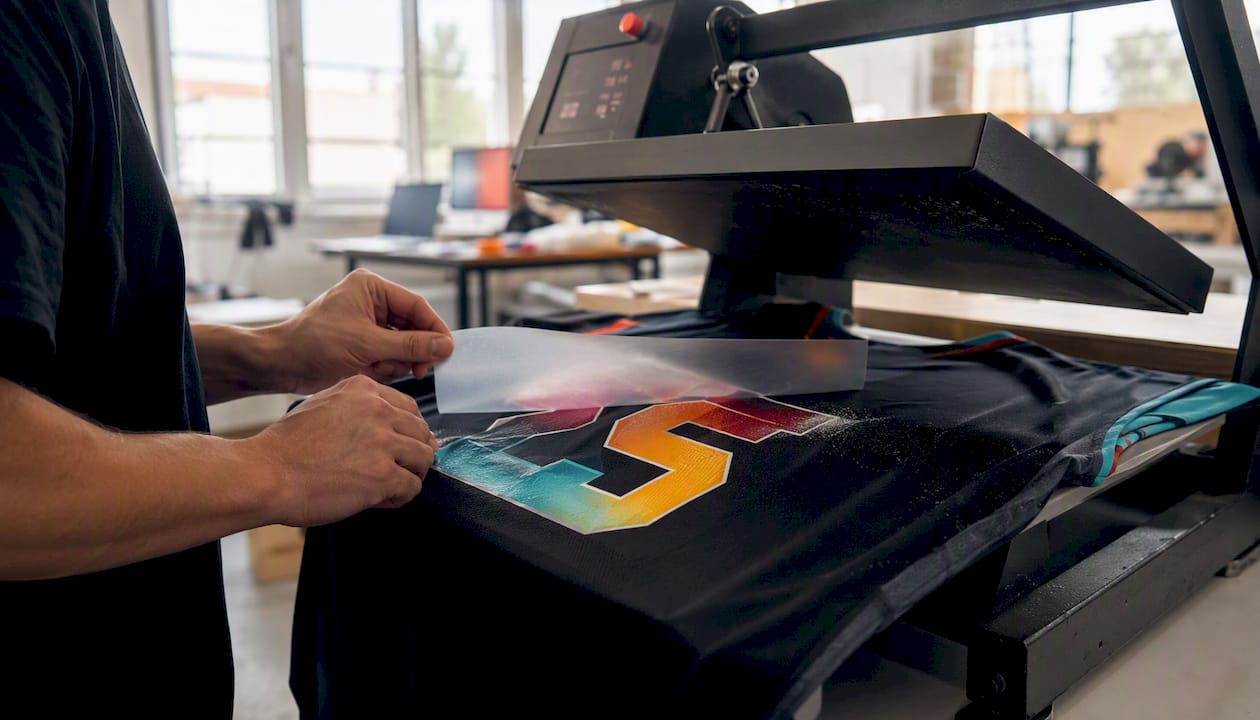
Pros: Full color with no setup fees per color, works on virtually any fabric including polyester and cotton, no minimum order requirement, fast turnaround. Cons: Slightly less breathable than screen print on performance mesh; the transfer layer sits on top of the fabric rather than fusing into it; longevity depends on press quality and wash care.
Fabric compatibility: Works on cotton, polyester, blends, nylon, and even some leather. One of the most versatile methods available.
DTG (direct-to-garment)
A modified inkjet printer applies water-based ink directly onto the garment surface. Best suited to cotton-heavy garments with photographic or highly detailed artwork.
Pros: No setup fees, photographic detail possible, good for one-off or very small runs. Cons: Slower per piece than DTF; requires pre-treatment on dark garments; not suited to performance polyester; cost per piece stays high even at moderate volumes.
Fabric compatibility: Cotton and high-cotton blends. Performance polyester is generally not compatible.
Heat transfer / vinyl (HTV)
Pre-cut vinyl or printed transfer sheets are heat-pressed onto the garment. Common for single-piece custom numbers and quick-turn orders.
Pros: Low setup cost, works on most fabrics, fast for one-offs. Cons: Lowest durability of any method; edges can peel after repeated washing; not suitable for programs that expect multi-season wear.
Fabric compatibility: Most fabrics, but adhesion varies. Avoid on highly textured or heavily ribbed surfaces.
Silicone / 3D printing
Silicone-based ink or raised 3D transfers are applied via heat press, creating a tactile logo with a modern, retail-quality finish. Common on premium warmup jackets and lifestyle apparel.
Pros: Distinctive raised look, flexible, durable on stretch fabrics, does not crack. Cons: Higher cost than standard transfers; limited to specific logo shapes; not suited to fine text or complex gradients.
Full method comparison
| Method | Best for | Typical cost drivers | Durability | Color/detail | Fabric compatibility | Typical minimum | Turnaround |
|---|---|---|---|---|---|---|---|
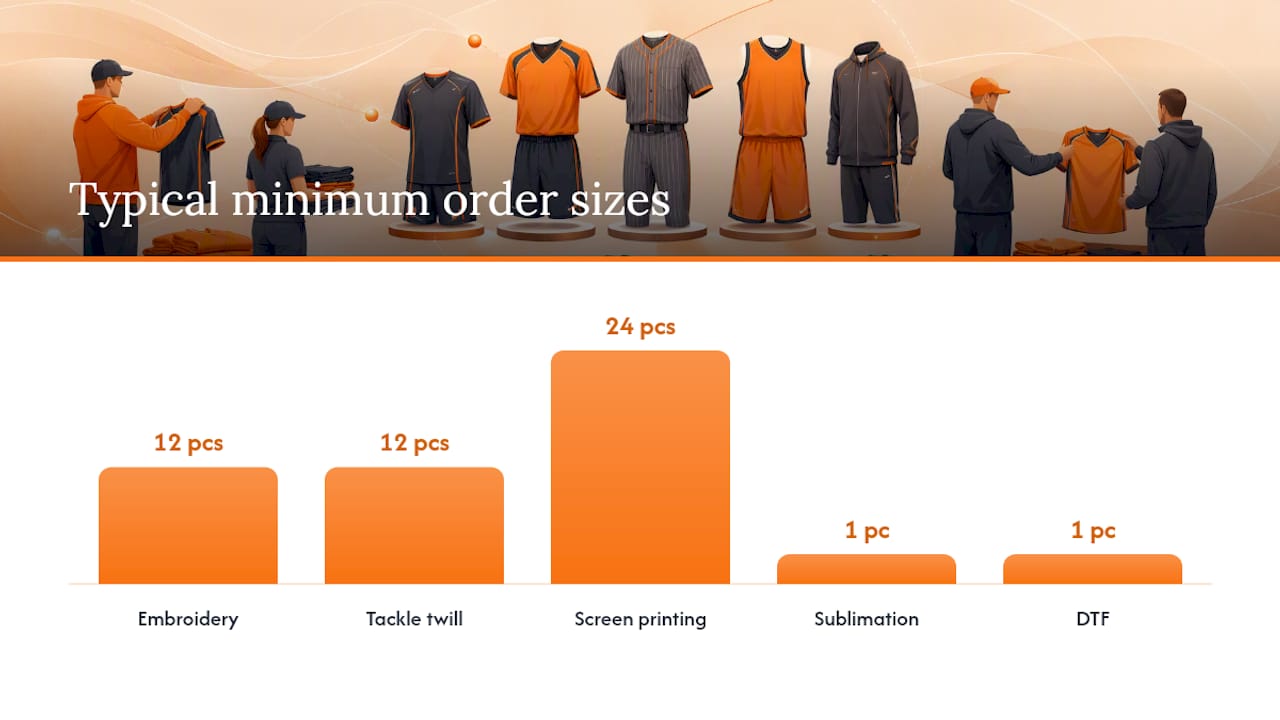
| Embroidery | Caps, crests, polos | Stitch count, digitizing fee | Excellent | Low (no gradients) | Wovens, structured knits | 12 pcs | 7 days |
| Tackle twill | Numbers, chest scripts | Cut complexity, sew labor | Excellent | Medium (solid colors) | Most jerseys, avoid thin mesh | 12 pcs | 10–21 days |
| Screen printing | Bulk practice/spirit wear | Screens per color, run size | Good | Medium (4 colors) | Cotton, blends | 24 pcs | 7 days |
| Sublimation | All-over performance jerseys | Per-piece dye cost, design complexity | Excellent | Unlimited | White/light polyester only | 1 pc (cut-and-sew varies) | 10–21 days |
| DTF | Names/numbers, small runs | Film cost, press time | Good–Very good | Unlimited | Nearly all fabrics | 1 pc | 3–7 days |
| DTG | One-off cotton tees | Pre-treatment, ink cost | Good | Unlimited | Cotton/blends | 1 pc | 3–5 days |
| Heat transfer/vinyl | Single pieces, quick turns | Material cost | Low–Medium | Medium | Most fabrics | 1 pc | 1–3 days |
| Silicone/3D | Premium warmups, lifestyle | Transfer cost, complexity | Very good | Low–Medium | Stretch fabrics, polyester | 12 pcs | 7 days |
At-a-Glance Comparison for Fast Decisions
Use this table to match your team’s priorities to the right method before you call a decorator.
| Method | Best for | Cost drivers | Durability | Color/detail | Fabric fit | Min order | Turnaround |
|---|---|---|---|---|---|---|---|
| Embroidery | Caps, crests, staff polos | Stitch count | Excellent | Limited | Wovens, structured | 12 pcs | 7 days |
| Tackle twill | Bold numbers, scripts | Cut/sew labor | Excellent | Solid colors | Most jerseys | 12 pcs | 10–21 days |
| Screen printing | Bulk tees, warmups | Color screens, run size | Good | Up to 4 colors | Cotton, blends | 24 pcs | 7 days |
| Sublimation | All-over polyester jerseys | Design complexity | Excellent | Unlimited | White/light polyester | Varies | 10–21 days |
| DTF | Names/numbers, small runs | Film, press time | Good–Very good | Unlimited | Nearly all | 1 pc | 3–7 days |
| DTG | Cotton tees, one-offs | Pre-treatment, ink | Good | Unlimited | Cotton/blends | 1 pc | 3–5 days |
| Heat transfer/vinyl | Single pieces, quick turns | Material | Low–Medium | Medium | Most | 1 pc | 1–3 days |
| Silicone/3D | Premium warmups | Transfer cost | Very good | Limited | Stretch, polyester | 12 pcs | 7 days |
How do you choose the right decoration method for your team?
The decision framework used by experienced decorators comes down to four questions: What is the durability requirement? What is the order size? How complex is the artwork? What fabric are you decorating?
Work through this checklist before you request a quote:
- Estimate the lifecycle. A uniform used across two or three seasons justifies a higher per-piece cost. Factor cost per wear rather than only initial price when comparing methods.
Questions to ask your decorator before placing an order
- What file formats do you accept, and do you charge a digitizing or vectorization fee?
- How many color separations are included in the quote, and what is the cost per additional color?
- Do you provide a digital proof before production, and is there a charge for revisions?
- What is your policy on defects or misprints — do you reprint or credit?
- What is the realistic turnaround for my order size, and what does a rush order cost?
- Can I order a physical sample or pre-production strike-off before the full run?
Red flags to watch for
- No mention of minimum order quantities or setup fees in the quote
- Vague turnaround language (“a few weeks”) with no production start date
- No file spec sheet or artwork requirements provided upfront
- Decorator cannot confirm fabric compatibility for your specific garment
Artwork and file prep: what you need to avoid delays and extra charges
Getting your files right before you submit them is the single fastest way to cut turnaround time and avoid surprise fees.
File format requirements by method
| Method | Recommended format | Minimum resolution | Color mode |
|---|---|---|---|
| Screen printing | Vector (AI, EPS, PDF) | N/A (vector) | Pantone / spot colors |
| Embroidery | Vector for digitizing (AI, EPS) | N/A | Thread color codes (e.g., Madeira, Isacord) |
| Sublimation | High-res raster or vector | — | CMYK or RGB |
| DTF | Vector or high-res raster | — | CMYK |
| DTG | High-res raster (PNG with transparency) | — | CMYK |
| Heat transfer/vinyl | Vector (AI, EPS) | N/A (vector) | Spot colors |
Standard placement sizing guidance for reference: left chest 3–4 inches wide, full back 10–12 inches wide, sleeve 2–3 inches wide, cap front 2–2.5 inches wide.
File prep checklist
- Convert all fonts to outlines or paths before submitting — missing fonts are the most common production delay
- Minimum stroke width of 1 pt for screen printing; thinner strokes drop out or fill in
- For embroidery, avoid fine serifs and thin lines under 1/8 inch — they will not stitch cleanly; convert small text to a print method instead
- For tackle twill, letters and numbers need a minimum height of approximately 2 inches for clean cutting
- Gradients and drop shadows are not possible with screen printing or embroidery; they require DTF, DTG, or sublimation
- Photographs require DTF, DTG, or sublimation; never submit a photo for screen printing without asking about simulated process printing first
- For sublimation, supply the full garment template file so the decorator can align seams and panels correctly
Pro Tip: If your logo includes small text under 0.5 inches tall, ask your decorator to convert that text layer to a flat print (DTF or screen) rather than embroidery. Stitching tiny text almost always looks muddy — a clean printed version reads sharper and costs less.
What do cost, turnaround, and durability actually look like by method?
Main cost drivers
Every quote has the same basic structure: setup costs plus per-piece costs. The ratio between them is what changes by method.
- Screen printing: — Setup is the cost (one screen per color, typically $20–$40 per screen). Per-piece cost drops sharply as quantity rises, making it the lowest-cost option at 48+ pieces.
Turnaround expectations
Standard production runs 7–21 days depending on method and order size. Rush orders (typically 3–5 business days) carry a surcharge of 25–50% in most shops. DTF and heat transfer are the fastest methods for small quantities. Screen printing and sublimation require more lead time for setup and curing.
Durability and care by method
Embroidery and tackle twill are the most durable decoration types. Embroidery and twill generally outlast most printed methods across multiple wash cycles, which matters for programs running the same kit across two or three seasons.
- Embroidery/twill: — Machine wash cold, tumble dry low. No special handling needed.
- Screen printing: — Turn garments inside out, wash cold, avoid high heat in the dryer. Plastisol prints can crack if dried on high heat repeatedly.
What decoration trends are shaping team uniforms right now?
The biggest shift in team apparel decoration over the past few years is the rise of DTF for short-run and complex work. Industry coverage from Impressions Expo documents rapid improvements in DTF print finishes and faster turnaround for short runs compared with earlier digital-transfer technology, making it a practical alternative to screen printing for runs under 48 pieces.
The other major trend is the hybrid build: a sublimated polyester base combined with sewn tackle twill numbers and an embroidered chest patch. Hybrid combos are common in retail and team projects because they balance weight, cost, and visual impact in a way no single method can match. A fully embroidered jersey is heavy and expensive. A fully sublimated jersey cannot be personalized after production. The hybrid solves both problems.
Silicone and 3D logo applications are also gaining ground on premium warmup jackets and sideline gear, where a raised tactile logo signals quality without the weight of full embroidery.
Pro Tip: Before committing to a hybrid build, order a physical sample. Press adhesion, seam integrity, and wash performance all behave differently when two methods share one garment. One sample run saves a full roster reorder.
Industry trade archives and buyer guides consistently show that teams adopting hybrid strategies report better per-wear value over multi-season programs, particularly for varsity and travel programs where appearance matters as much as function.
Which decoration method works best for each sport and uniform element?
These recommendations are based on the most common program builds for each sport. Primary method is the standard choice; fallback is the alternative when budget, timeline, or fabric rules out the primary.
Sport-by-sport recommendations
- Baseball (home/away jerseys): Primary: sublimated body + tackle twill numbers and name. Fallback: screen-printed body + DTF numbers. Twill numbers on baseball jerseys deliver the classic raised look that players and coaches expect. For retail-quality builds, see best practices for baseball team jerseys.
By uniform element
- Caps: Embroidery is the standard. Puff embroidery adds a 3D raised effect for a premium look on structured caps.
Roster personalization strategy
For large rosters (30+ players), pre-plan your name/number list before production starts. DTF and tackle twill handle individual personalization most efficiently. For small rosters (under 12), DTF is often the most cost-effective path because there are no per-color setup fees. For programs that rotate players or add late additions, keep a small DTF budget for add-on pieces rather than reprinting the full run.
Common mistakes teams make when choosing decoration methods
These are the errors that cause reprints, budget overruns, and unhappy players.
Choosing method before confirming fabric. Sublimation on a cotton-poly blend will produce a washed-out, faded result. Screen printing plastisol on a lightweight performance mesh can crack and restrict breathability. Always confirm the fabric content of your garment before selecting a method.
Underestimating setup costs on small runs. A 12-piece screen-printed order with a 4-color design can cost more per piece than a DTF order of the same size, once you factor in the four screen fees. Get a full quote, not just a per-piece price.
Submitting raster files for embroidery. A JPEG or PNG cannot be digitized directly into a stitch file without manual work. That work costs money and takes time. Submit vector files (AI or EPS) whenever possible, and ask about digitizing fees upfront.
Ignoring placement sizing. A logo that looks great at 8 inches wide on a full back will look oversized and amateurish at 8 inches on a left chest. Confirm placement dimensions with your decorator before approving the proof.
Skipping the proof. Production proofs exist to catch color shifts, sizing errors, and placement mistakes before the full run. Waiving the proof to save a day almost always costs more time when something is wrong.
Choosing heat transfer/vinyl for game uniforms. HTV is a budget tool for practice or one-off pieces. It is not built for the wash frequency of a game uniform used across a full season. Teams that outfit game jerseys with vinyl numbers often replace them mid-season.
Not asking about turnaround in writing. “A few weeks” is not a production commitment. Get a written start date and completion date, especially for pre-season orders where the schedule is fixed.
Key Takeaways
The most effective team uniform decoration strategy matches method to fabric first, then to budget and order size, with durability evaluated over the full program lifecycle rather than per-piece cost alone.
| Point | Details |
|---|---|
| Match method to fabric first | Sublimation requires polyester; embroidery suits wovens; DTF works on nearly any fabric. |
| Factor cost per wear | Embroidery and tackle twill outlast most printed methods across multiple seasons. |
| Use hybrid builds for premium looks | Sublimated base plus tackle twill numbers and embroidered crest delivers pro-level appearance without full-embroidery weight. |
| Prep files correctly | Submit vector files for screen printing and embroidery; raster files for DTF, sublimation, and DTG. |
| Jam4apparel for team orders | Jam4apparel handles screen printing, embroidery, DTF, and custom patches in-house with fast turnaround for Chicagoland teams. |
The method nobody talks about enough: cost per wear
Most coaches and ADs compare decoration methods by the line-item price on a quote. That is the wrong number to optimize.
A screen-printed practice shirt at $8 per piece sounds like a win until you replace it every season because the print has cracked and faded. A sublimated jersey at $28 per piece that runs clean through three seasons costs less per game than the cheap alternative. The math is not complicated, but it requires thinking past the purchase order.
The same logic applies to the embroidery-versus-DTF debate on caps and polos. DTF is faster and cheaper upfront. Embroidery lasts longer and reads as more premium. For staff gear and coaching apparel that represents your program publicly, the extra cost of embroidery is almost always worth it. For player practice gear that gets replaced annually, DTF or screen printing is the rational call.
The hybrid approach is where this thinking gets interesting. Pairing a sublimated body with sewn twill numbers and an embroidered crest gives you the durability of stitched decoration where it matters most (the number, the crest) and the weight savings of sublimation everywhere else. Pro programs have used this combination for years. High school and club programs are catching up fast, partly because DTF has made the number/name layer affordable even for small rosters.
One more thing: the decorator you choose matters as much as the method. A shop with in-house production, a clear proof policy, and a written turnaround commitment will save you more headaches than any method upgrade. Ask the right questions before you sign off on a quote.
Ready to outfit your team? Jam4apparel delivers in-house, fast.
Jam4apparel handles every method covered in this guide, all under one roof in Lake in the Hills, Illinois. Whether your program needs bulk screen printing for practice gear, custom embroidery for caps and staff polos, DTF transfers for roster personalization, or custom patches for warmup jackets, the production is done in-house, which means tighter quality control and faster turnaround than shops that outsource.
Every order starts with a free design proof so you see exactly what you are getting before a single piece is decorated. Jam4apparel serves sports teams, schools, and clubs throughout the Chicagoland area with competitive pricing on both small and large runs. Request a quote at jam4apparel.com and get your team’s decoration plan in front of a specialist who can match the right method to your fabric, budget, and timeline.
Sources and further reading
- Custom Uniform Decoration Methods: Embroidery, Printing & Selection Guide (2026) – UNIFORMS.COM.AU
- Winning Techniques for Decorating and Numbering Team …
- How to Choose the Best Branded Apparel Decoration Methods
- Essential Decoration Techniques for Fall 2024 Team …
- Custom Sports Jersey Decoration Techniques Explained: Sublimation, Embroidery, Silicone & More | TONTONSPORT - tonton sport
- Twill vs Embroidery vs Sublimation | Sialkot Sample Masters
- impressionsexpo.com
- nxtbook.com
Recommended
Ready to print your design?
Screen print, embroidery, and DTF — no minimums on many styles.