
The Role of Mockups in Custom Apparel Design
July 18, 2026
The Role of Mockups in Custom Apparel Design
A mockup is a high-fidelity visual representation of a finished garment, created before a single piece goes into production. The role of mockups in custom apparel is to align what a designer imagines with what a client expects and what a manufacturer produces. Without that alignment, costly revisions, rejected orders, and disappointed clients follow. Jam4apparel and professional apparel decorators across the industry treat mockups as a required step, not an optional courtesy. They are the clearest communication tool in the entire production workflow.
How mockups improve communication and reduce costly errors
Mockups function as executable intent, transforming abstract design concepts into specific visual constraints that prevent expensive design drift during production. When a client sees a flat sketch or a verbal description, they fill in the gaps with their own assumptions. A mockup eliminates that guesswork entirely by showing exact color, placement, and scale on a realistic garment.
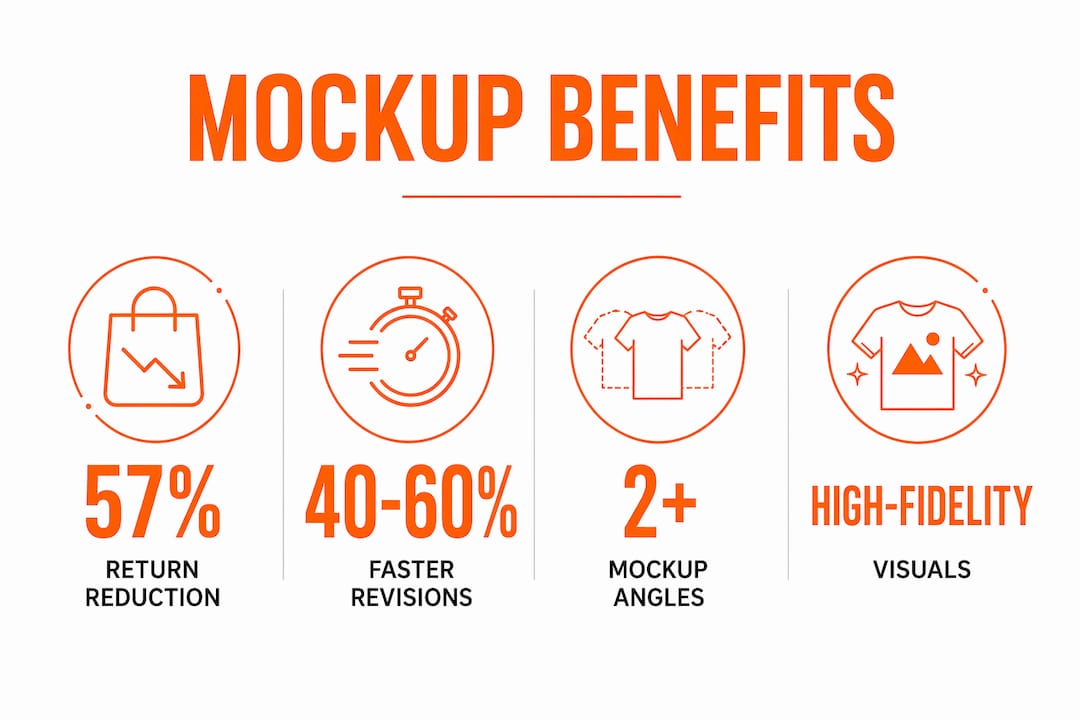
The financial stakes are real. High-quality mockups can reduce e-commerce return rates from 35% to 15%. That reduction represents a 57% drop, driven entirely by setting accurate expectations before purchase. When customers know exactly what they are buying, they buy with confidence and return less often.
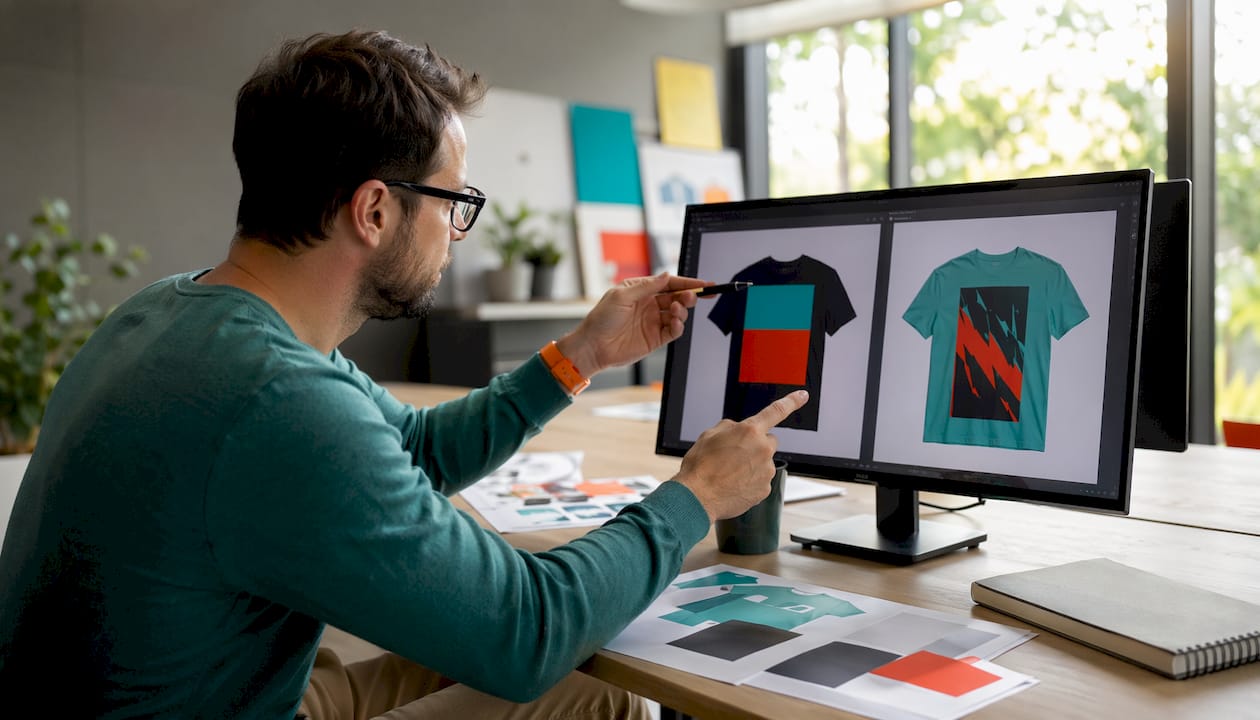
Realistic mockups also depend on the right technical approach. Displacement maps wrap designs around fabric folds and texture, preventing the flat, sticker-like appearance that signals low quality to buyers. This technique is especially important for screen-printed and embroidered designs, where placement relative to seams and folds matters. Skipping displacement mapping produces mockups that look artificial and undermine client trust before production even begins.
Common mistakes that reduce mockup effectiveness include:
- Placing artwork at the wrong scale relative to the garment
- Using flat, untextured backgrounds that hide how a design interacts with fabric
- Ignoring color accuracy between screen display and print output
- Presenting only one angle when the design wraps or appears on multiple panels
- Skipping size-specific mockups when the same design appears on XS through 3XL
Pro Tip: Always present at least two mockup angles, front and back, plus a close-up detail view for any embroidery or multicolor print. Clients approve faster when they can see the full picture.
Mockups shorten revision time by 40–60%, helping teams finalize designs faster and cutting development costs. That time saving compounds across a full product line, where dozens of colorways and styles require individual approvals.
Why mockups drive marketing results and stronger client presentations
Professional mockups do more than prevent production errors. They build the perception of quality before a product physically exists. Stakeholders view professional mockups as a “visual promise of quality,” creating subconscious trust and brand credibility at the first impression. That perception directly influences purchasing decisions, pitch approvals, and partnership agreements.
The marketing advantages of strong custom apparel design mockups are concrete and measurable. Better visualization improves conversion rates by increasing willingness to purchase and lowering customer acquisition costs. Brands that invest in professional mockup presentation consistently outperform those relying on plain product photos or rough sketches in client decks.
Mockups also enable a marketing strategy that most small business owners overlook: launching before production. Using mockups as primary marketing tools allows brands to collect pre-orders without waiting for physical samples, accelerating go-to-market timelines and reducing inventory risk. A school spirit wear store, for example, can present a full catalog of mockups to parents and students before ordering a single shirt.
The most effective mockup formats for marketing purposes include:
- Lifestyle mockups showing the garment worn in a real-world setting, which build emotional connection
- Ghost mannequin mockups that display fit and structure without a model, ideal for e-commerce product pages
- Flat lay mockups arranged with complementary items, suited for social media and lookbook content
- Multi-angle mockups showing front, back, and side views, which reduce buyer hesitation
- Branded presentation decks combining multiple mockups with color options and size charts for client pitches
Visual content consistently outperforms text-only marketing across every channel. Mockups are the most cost-effective form of visual content available to apparel brands, because they require no photography, no models, and no physical inventory. A single well-built mockup file can populate an entire social media calendar, a pitch deck, and an e-commerce listing simultaneously.
What modern mockup technology makes possible
The gap between a design file and a client-ready presentation has narrowed significantly. Modern 3D apparel mockups eliminate expensive photography sessions and produce over 100 variants in a single day with consistent lighting and angles. Traditional photoshoots often take weeks to schedule, execute, and edit. That speed difference changes how quickly a brand can respond to client feedback or test new colorways.
The table below compares the three primary mockup creation methods by key production factors.
| Method | Speed | Cost | Realism | Best use case |
|---|---|---|---|---|
| 3D digital mockup | Very fast | Low per variant | High | Large catalogs, multiple colorways |
| Layered template file | Fast | Low | Medium to high | Standard tees, hoodies, hats |
| Physical sample photo | Slow | High | Highest | Premium launches, final approval |
Layered, editable mockup files are the practical standard for most custom apparel workflows. High-quality mockups with layered files allow faster iteration and adjustments, improving responsiveness to client feedback without reprinting or reshooting. A designer can swap a logo, change a colorway, or adjust placement in minutes rather than days.
The workflow from design file to client-ready presentation follows a clear sequence. The designer prepares a print-ready file in the correct color mode and resolution. That file drops into a layered mockup template with displacement mapping applied. The designer exports multiple colorways and angles, then assembles them into a presentation with size and color options labeled. The client receives a complete visual package and can approve or request changes without touching a physical sample.
Best practices for using mockups throughout the apparel development cycle
Mockups deliver the most value when they enter the workflow early, not just at the approval stage. Using a mockup during concept testing lets you gather real feedback from clients or customers before committing to a design direction. That early input prevents the most expensive kind of revision: the one that happens after production has started.
Matching the mockup format to the context and audience matters as much as the mockup quality itself. A corporate client reviewing uniform options responds better to clean ghost mannequin or flat lay mockups with neutral backgrounds. A youth sports team parent group engages more with lifestyle mockups showing athletes in action. Understanding your audience shapes which format you choose, and the wrong format can undermine an otherwise strong design. For guidance on avoiding common missteps in the ordering process, the custom apparel ordering mistakes resource from Jam4apparel covers the most frequent errors designers and clients make together.
Key practices that separate effective mockup workflows from ineffective ones:
- Build mockups before requesting physical samples to avoid premature production costs
- Present multiple colorways in a single deck so clients make one decision, not several
- Use consistent garment styles across a product line to maintain visual coherence
- Label every mockup with the print method, color codes, and placement measurements
- Archive approved mockup files for reorder reference, reducing errors on repeat orders
Mockups enable brands to test pricing, colors, and designs as marketing assets before bulk production, reducing inventory risk and overhead. That testing function is especially valuable for small business owners who cannot afford to produce a full run of a design that the market rejects.
Pro Tip: Assemble a mockup presentation deck that includes the garment front and back, a close-up of the decoration, a size chart, and the available color options. Clients who receive a complete deck approve orders faster and request fewer revisions.
Understanding how mockups fit into the broader custom apparel order process helps designers and business owners set realistic timelines and avoid bottlenecks at the approval stage.
Key Takeaways
Mockups are the single most effective tool for reducing errors, accelerating approvals, and building client trust in custom apparel production.
| Point | Details |
|---|---|
| Mockups prevent costly errors | Displacement mapping and accurate scale prevent misinterpretation before production begins. |
| Return rates drop significantly | High-quality mockups can cut e-commerce return rates from 35% to 15% by setting accurate expectations. |
| Marketing value is immediate | Mockups enable pre-orders, social media content, and pitch decks before physical samples exist. |
| Layered files accelerate iteration | Editable mockup templates allow rapid colorway and placement changes without reshooting. |
| Format must match audience | Ghost mannequin suits corporate clients; lifestyle mockups engage consumer and team audiences. |
Why I think most brands underinvest in mockups
Adam here. After working with dozens of custom apparel clients, the pattern I see most often is this: brands treat mockups as a formality rather than a production tool. They rush through the mockup stage to get to physical samples faster, and then they spend twice as long revising those samples.
The brands that move fastest are the ones that slow down at the mockup stage. They present complete decks with multiple angles, labeled color codes, and size-specific views. Their clients approve in one round. The brands that skip that rigor go back and forth three or four times, burning time and goodwill on both sides.
The other thing I have noticed is that mockups have become a sales tool, not just a design tool. A well-built mockup deck closes deals. Clients who can see exactly what they are getting, in every colorway, from every angle, say yes faster. That is not a design insight. That is a sales insight, and most designers have not made the mental shift yet.
The connection between visual presentation and brand identity is direct. Mockups are where that identity gets tested and refined before it costs anything to change.
— Adam
Jam4apparel’s approach to mockups and custom apparel production
Jam4apparel works with small businesses, schools, sports teams, and growing brands across the Chicagoland area to produce custom apparel that looks exactly as intended from the first order.
Every project at Jam4apparel includes a mockup review before production begins, whether the decoration method is screen printing, embroidery, or DTF transfer. That review catches placement, color, and scale issues before they become production problems. The team handles in-house production with fast turnaround times, so the time saved at the mockup stage translates directly into faster delivery. Explore the full range of custom apparel by industry to find the right solution for your brand.
FAQ
What is the role of mockups in custom apparel?
Mockups are high-fidelity visual representations of a garment created before production begins. They align designer intent with client expectations and prevent costly revisions by showing exact color, placement, and scale.
How much can mockups reduce apparel return rates?
High-quality mockups can reduce e-commerce return rates from 35% to 15%, a 57% decrease driven by setting accurate buyer expectations before purchase.
What is displacement mapping in apparel mockups?
Displacement mapping wraps a design around fabric folds and texture in a digital mockup, preventing the flat, sticker-like appearance that reduces consumer trust and perceived product quality.
When should mockups enter the custom apparel workflow?
Mockups should enter the workflow at the concept stage, before physical samples are requested. Early mockup review catches design issues when changes cost nothing and prevents expensive late-stage revisions.
Can mockups replace physical samples entirely?
Mockups handle most approval and marketing needs without physical samples, but a physical sample remains the best tool for final fit and fabric confirmation on premium or large-volume orders.
Recommended
Ready to print your design?
Screen print, embroidery, and DTF — no minimums on many styles.