Screen Printing vs Embroidery: Which Method Wins?
August 12, 2026
Screen Printing vs Embroidery: Which Method Wins?
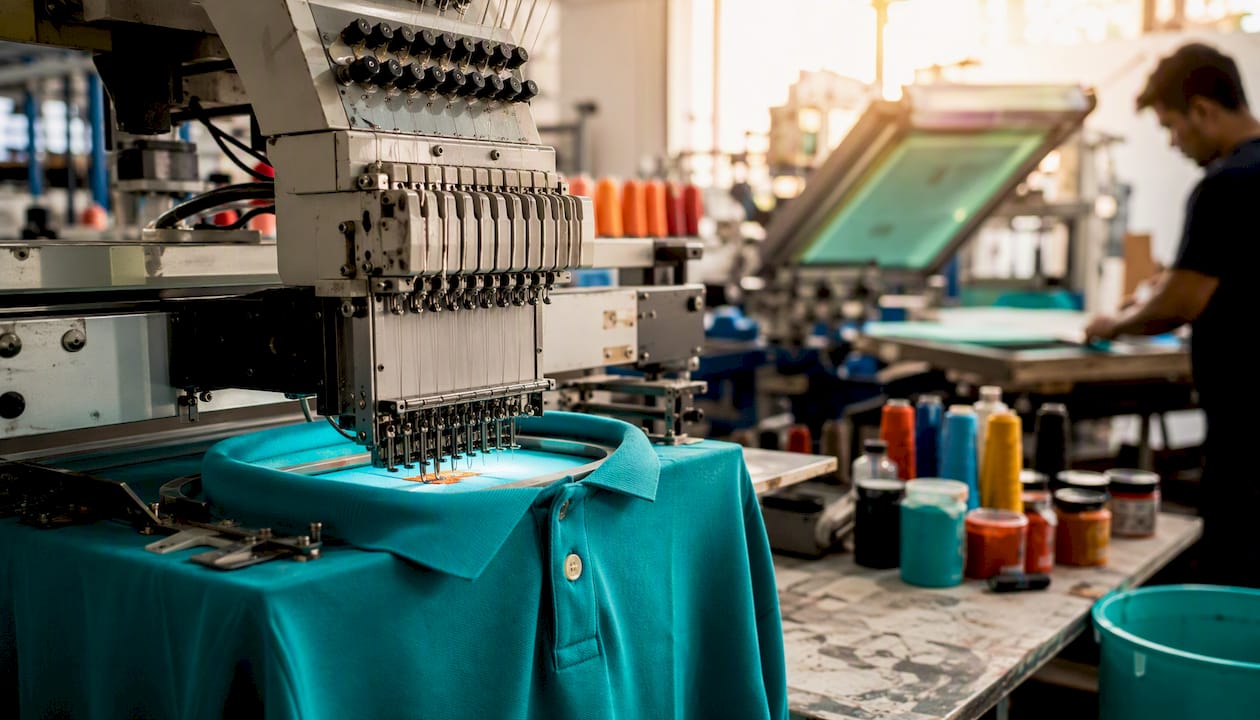
For small, client-facing logos on polos and hats, choose embroidery. For large, colorful event tees and bulk promotional shirts, screen printing is the stronger call. The method that wins depends on three things: what the design looks like, how many pieces you need, and what the garment will go through after it leaves the shop.
Here is the short version of how those factors break down:
- Design complexity and placement: Embroidery handles small, structured logos well; screen printing handles large, detailed artwork across a full chest or back.
- Cost by quantity: Screen printing has fixed setup costs per color that get cheaper as quantity climbs; embroidery pricing is steadier but driven by stitch count.
- Durability and wear cycle: Embroidered thread survives industrial laundering; screen-print inks hold up well with proper curing and lighter wash cycles.
Both methods are production staples at Jam4apparel, and the right choice almost always comes down to the specific job, not a blanket preference for one technique over the other.
Key Takeaways
Embroidery wins on durability and professionalism for small logos; screen printing wins on cost and scale for large, colorful designs.
| Point | Details |
|---|---|
| Match method to project type | Embroidery for polos, hats, and uniforms; screen printing for event tees, hoodies, and bulk runs. |
| Screen printing cost scales with quantity | Setup fees of $15–$35 per screen make small runs expensive; cost per unit drops sharply above 48 pieces. |
| Digitizing quality drives embroidery results | A well-built stitch file improves repeatability and reduces returns across every repeat uniform order. |
| Care extends decoration life | Wash inside-out in cold water, avoid bleach, and tumble dry low to protect both inks and thread. |
| Jam4apparel offers both in-house | In-house screen printing and embroidery in Chicagoland means faster turnarounds and consistent quality control. |
Table of Contents
- How does screen printing vs embroidery actually work?
- Side-by-side: how the two methods compare
- What does each method actually cost, and how long does it take?
- Getting your files and design ready for production
- How do screen printing and embroidery hold up after washing?
- Which method should you choose for your specific project?
- What in-house production actually changes about the result
- Jam4apparel handles both methods, start to finish
- Sources
How does screen printing vs embroidery actually work?
Embroidery: from artwork to stitches
Embroidery starts with a step most buyers never see: digitizing. Before a single needle moves, a digitizer converts your artwork into a machine-readable stitch file. That file defines stitch type, density, underlay, and pull compensation for every element in the design. A satin stitch runs along letter edges; a fill stitch covers solid areas; underlay stitches stabilize the fabric underneath so the top layer doesn’t pucker or shift.
Thread colors are matched to a physical chart (Madeira and Isacord are the two most common thread brands in U.S. shops), and the machine executes the file the same way every time. That repeatability is one of embroidery’s biggest strengths for uniforms and branded staff apparel.
The finished result is raised, textured, and slightly stiff in dense areas. Thread has a natural sheen that reads as premium on structured garments. It works best on left-chest placements, caps, polo collars, jacket backs, and anywhere the garment has enough body to support the needle tension without distorting.
Pro Tip: Keep text at a minimum of 4–6mm cap height for legibility. Below that, letter forms collapse into a blob of thread. If your logo has fine lines or small type, simplify the artwork before digitizing rather than trying to stitch every detail.
Screen printing: screens, ink, and color passes
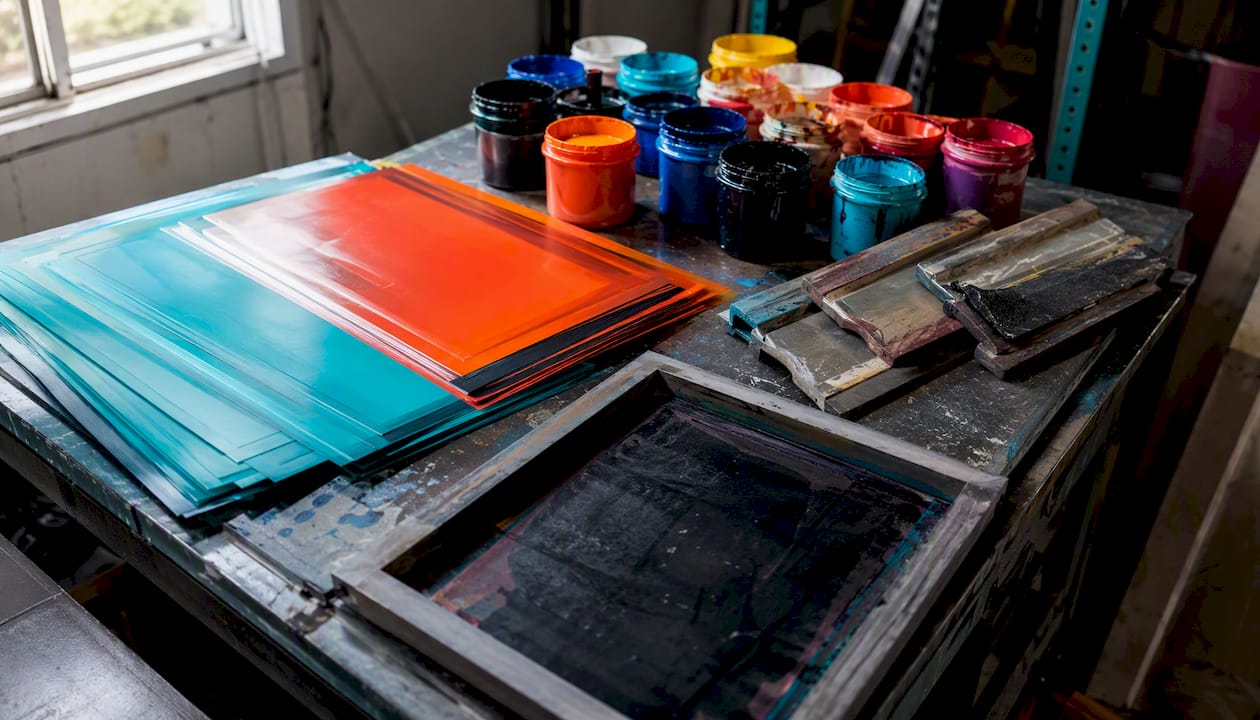
Screen printing pushes ink through a mesh stencil onto the fabric surface. Each color in the design gets its own screen, its own ink pass, and its own registration point on the press. A three-color design means three screens, three setups, and three passes through the machine.
Common ink types used in U.S. shops:
- Plastisol: The industry workhorse. Sits on top of the fabric, cures at around 320°F, and produces vivid, opaque color. Slightly rubbery feel on heavier coverage.
- Water-based: Soaks into the fabric fibers for a softer hand. Requires more precise curing and works best on lighter garments.
- Discharge: Removes the dye from the fabric and replaces it with pigment. Produces an extremely soft, vintage feel but only works on 100% cotton.
- Specialty inks: Metallic, puff, glow-in-the-dark, and high-density inks for specific design effects.
The silk-screening process produces a flat, smooth ink layer that can cover large areas with consistent color. Gradients are achievable through halftone dot patterns, though they require careful separation work. Heavy ink coverage changes how the garment feels in hand, which matters for wearability on soft tees.
Pro Tip: Reducing a multi-color design to fewer colors by combining similar shades or converting a gradient to a halftone can cut setup costs significantly without the average viewer noticing the difference.
Side-by-side: how the two methods compare
| Dimension | Screen Printing | Embroidery |
|---|---|---|
| Best for | Large event tees, hoodies, bulk promo shirts | Polos, hats, uniforms, staff apparel |
| Durability | Good with proper curing; can crack or fade if undercured | Excellent; thread resists fading through repeated washing |
| Design detail | Large, bold art; gradients via halftones; struggles with very fine lines | Small-to-medium logos; clean edges; no photographic detail |
| Fabric compatibility | Cotton, cotton blends, polyester; flat surfaces work best | Structured knits, canvas, denim, caps; struggles on thin stretch fabrics |
| Setup cost | Per-screen fee per color ($15–$35/screen is a common industry range) | One-time digitizing fee occurs depending on design complexity and service provider. |
| Per-unit cost | Drops sharply with volume; high at small runs | Steadier across quantities; driven by stitch count |
| Turnaround | Faster at high volume once screens are made | Consistent across run sizes; digitizing adds lead time on first order |
| Feel/texture | Flat, smooth; soft with water-based inks | Raised, textured, slightly stiff in dense areas |
| Limitations | Color count raises cost; not ideal for small runs | No photographic detail; minimum text size; not suited for thin fabrics |
Quick decision bullets from that comparison:
- At smaller quantities with simple designs, embroidery or DTF often cost less than screen printing once setup fees are factored in.
- Over 48 pieces with a bold, colorful design? Screen printing’s per-unit cost advantage kicks in hard.
- Hats, structured caps, or left-chest polo logos? Embroidery every time.
- Full-back hoodies or event shirts? Screen printing handles the scale and coverage better.
- Short run with a photographic or full-color image? Consider DTF transfers as an alternative to both.
Screen printing is suited for bold, colorful, large-area designs while embroidery is best for textured, small-to-medium logos on structured garments.
What does each method actually cost, and how long does it take?
Screen printing cost behavior
Screen printing setup fees run roughly $15–$35 per screen, and each color in your design is a separate screen. A four-color front print could carry $60–$140 in setup before a single shirt is printed. That fixed cost is why screen printing economics flip dramatically as quantity increases: the setup fee gets divided across more units, and the per-shirt cost drops fast. At 12 shirts, setup dominates. At 144 shirts, it barely registers.
For Illinois businesses, understanding how setup fees scale with run size is the single most useful piece of cost knowledge before placing an order.
Embroidery cost behavior
Embroidery pricing works differently. The digitizing fee is a one-time charge for converting your artwork into a stitch file, typically paid once per design. After that, per-garment cost is driven by stitch count: a simple left-chest logo with 5,000 stitches costs less per piece than a complex jacket back with 20,000 stitches. That relationship stays fairly consistent whether you order 12 pieces or 200, which makes embroidery more predictable for repeat uniform orders.
Turnaround expectations
To speed up any quote or order, have these ready before you reach out:
- Vector artwork file (AI, EPS, or high-resolution PDF)
- Desired placement and approximate print/stitch size
- Garment style, color, and size breakdown
- Quantity and in-hands date
Getting your files and design ready for production
The file you send determines how much production time and cost goes into your order before a single garment is touched.
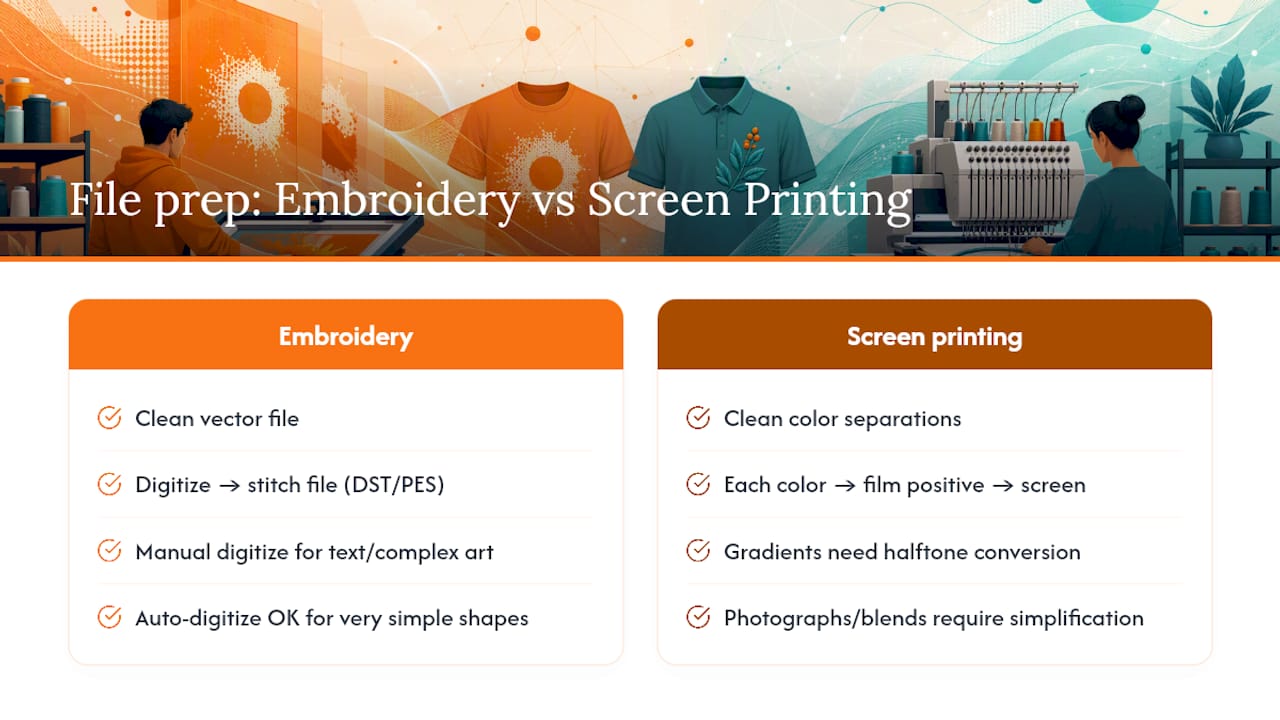
For embroidery, the preferred starting point is a clean vector file. The digitizer uses it to plan the stitch path, choose fill types, set underlay layers, and define pull compensation for the specific fabric. Digitizing converts that artwork into a machine-readable stitch file in formats like DST or PES. Auto-digitizing software can handle very simple shapes, but for anything with text, gradients, or multiple elements, manual digitizing adjustments are worth the investment. A well-built stitch file runs cleanly on every repeat order without re-digitizing.
For screen printing, the production team needs clean color separations. Each color layer becomes its own film positive and then its own screen. Gradients require halftone conversion, which adds a step. Artwork with too many colors, blends, or photographic elements needs to be simplified or converted before screens can be burned. Understanding how color limits affect your design before you finalize artwork saves back-and-forth at the approval stage.
Pro Tip: For uniform programs where the same logo will be reproduced dozens of times over months or years, request a sew sample or embroidered swatch before approving the full run. A physical sample catches stitch density issues, thread color mismatches, and puckering on the actual garment fabric — problems that are invisible in a digital proof.
Key production tradeoff: a higher-quality digitize costs more upfront but pays back on every repeat order. A rushed or auto-generated stitch file might look acceptable on the first run and degrade on the third. The same logic applies to screen printing: investing time in clean separations and a proper halftone approach produces consistent results across a long print run.
How do screen printing and embroidery hold up after washing?
Embroidered thread is woven into the fabric structure, not sitting on top of it. That physical integration is why embroidery generally holds up better through commercial laundering, high-temperature washing, and heavy-use cycles. Thread doesn’t crack, peel, or fade the way surface inks can under harsh conditions. Work uniforms that go through industrial laundry services weekly are a natural fit for embroidery.
Screen-print inks behave differently depending on how well they were cured. Plastisol cured at the correct temperature bonds tightly to the fabric and can last for years with normal care. Undercured ink cracks and peels early. Water-based and discharge inks are softer but more sensitive to high heat and harsh detergents. Specialty inks like metallics tend to have shorter lifespans than standard plastisol.
Care tips that extend the life of both methods:
- Wash inside-out in cold or warm water (not hot).
- Avoid chlorine bleach on printed or embroidered garments.
- Tumble dry on low or hang dry; high heat degrades both ink bonds and thread integrity over time.
- Skip fabric softener on embroidered items — it can loosen thread tension over many cycles.
Pro Tip: If you’re ordering embroidered work uniforms that will go through commercial laundering, specify this when placing your order. The digitizer can adjust stitch density and underlay to account for the extra stress.
With proper production and reasonable care, both methods can realistically last through years of regular wear. The honest caveat: a screen-printed event shirt worn twice a year will outlast a work uniform washed three times a week, regardless of decoration method. Match the method to the garment’s actual life, not just the look.
Which method should you choose for your specific project?
The right answer depends on what you’re making and how it will be used. Here is a direct project-level guide:
- Corporate polos and staff uniforms: Embroidery. The raised logo reads as professional, thread survives repeated washing, and a single digitizing fee covers all future repeat orders. Uniform programs benefit from the consistency embroidery delivers across large rosters.
- Structured caps and hats: Embroidery. Caps are one of the best surfaces for stitching; the curved brim and structured crown hold needle tension well. Puff embroidery adds a 3D raised effect that works especially well on snapbacks and dad hats.
- Event tees and bulk promotional shirts: Screen printing. Large chest graphics, vibrant colors, and runs of 48 or more are exactly where screen printing earns its cost advantage.
- Hoodies and sweatshirts: Either, depending on placement. A left-chest logo works in both methods; a full-back graphic is better suited to screen printing.
- Short runs with photographic or full-color designs: DTF transfers. Neither screen printing nor embroidery handles photographic detail economically at low quantities. Jam4apparel’s DTF service covers this gap.
- School spirit wear and team apparel: Screen printing for bulk tees and hoodies; embroidery for coaches’ polos and staff jackets.
Hybrid strategies work well for organizations that need both. A school or business might embroider staff polos and jackets while screen printing event shirts and volunteer tees. Keeping the same logo file on record for both methods means consistent branding across every piece.
What in-house production actually changes about the result
Most buyers focus on the final product and skip the production step that determines whether that product holds up. Here is what actually matters from a shop floor perspective.
The biggest real-world tradeoff in embroidery isn’t thread color or stitch count — it’s the digitizing decision made before the machine starts. A design that looks clean in a digital proof can pucker badly on a knit polo if the underlay wasn’t set correctly for that fabric weight. Catching that in a sew sample costs a few minutes. Catching it after 200 polos are stitched costs significantly more.
In screen printing, the equivalent moment is the color separation approval. A client who wants a five-color gradient on a dark shirt is asking for a technically complex job. Reducing that to three colors with a well-placed halftone often produces a result that looks just as good to the end wearer, at a fraction of the setup cost. That conversation happens before screens are burned, not after.
Jam4apparel handles both methods in-house, which means digitizing decisions, separation approvals, and sew samples all happen under one roof before production starts.
Jam4apparel handles both methods, start to finish
Jam4apparel’s in-house shop in Lake in the Hills, Illinois, runs both custom screen printing and custom embroidery under one roof. That matters because digitizing, color separations, sample approvals, and production quality checks all happen in the same building, not across three vendors. For Chicagoland businesses, schools, sports teams, and organizations, that means faster turnarounds, consistent logo reproduction, and a single point of contact from artwork to finished garment.
Services include custom screen printing, embroidery with in-house digitizing, DTF transfers, custom patches, spirit wear stores, and corporate uniform programs. Whether you need 12 embroidered staff polos or 500 screen-printed event tees, the process starts the same way: upload your artwork, specify your garments and placements, and get a free proof before production begins. Request a quote or browse the full catalog to get started.
Sources
- Screen Printing Cost Breakdown: Setup Fees, Per-Unit Pricing & More — Printable Press
- Screenprint | Materials and techniques | The Met
- How to Digitize a Design for Embroidery | The Laughing Giraffe
Recommended
Ready to print your design?
Screen print, embroidery, and DTF — no minimums on many styles.