
Durability First: PVC vs Leather Patches for Apparel Buyers
September 2, 2026
Durability First: PVC vs Leather Patches for Apparel Buyers
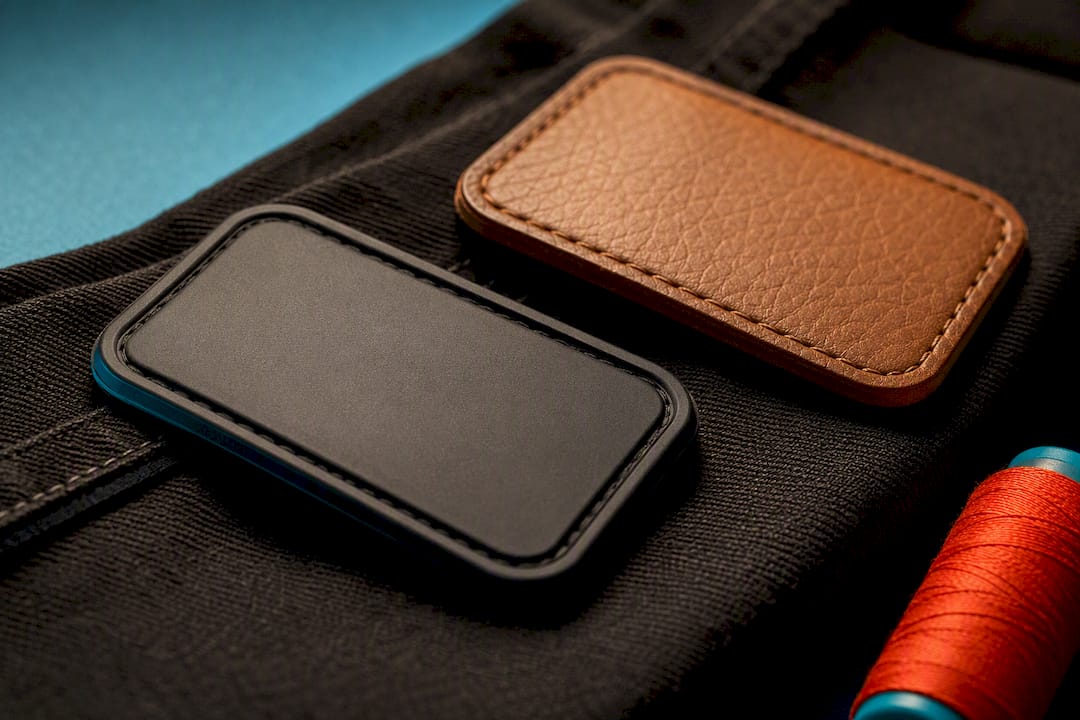
Pick PVC when your patches need to survive rain, sun, machine washing, or years on a hat brim without fading. Pick leather when the goal is a premium, tactile look that’s meant to age and darken over time. PVC wins on raw durability and color range; leather wins on heritage feel. After years of running both through production at Jam4apparel, that trade-off is really the whole decision.
TL;DR:
- PVC patches are highly resistant to UV, water, and abrasion, making them ideal for outdoor, high-wash environments like uniforms and backpacks.
- Leather patches develop a patina over time, which enhances their aesthetic and is intentionally chosen for heritage and premium branding.
- PVC offers unlimited color and gradient options with molded relief, while leather design is limited to debossing and engraving with only one or two tones.
- PVC patches can be machine washed and wiped clean, whereas leather requires spot cleaning and periodic conditioning to prevent cracking.
- Cost factors include mold setup fees for PVC and hide grade plus labor for engraving or stitching for leather, with larger orders decreasing per-unit expenses.
Table of Contents
- PVC vs Leather Patches: The Core Differences
- PVC Patches: What They Are and Why They Last
- Leather Patches: Types, Aesthetic Value, and Aging
- Head-to-Head: Durability, Design, and Cost
- How to Choose the Right Patch Material for Your Project
- Care Instructions and How Long Each Material Lasts
- What Drives the Price of Custom Patches
- A Production Note From Adam
- Environmental Impact and Sustainability
- Comfort and Flexibility on Apparel
- Allergies and Skin Sensitivity
- When Jam4apparel Recommends PVC vs Leather
- Get Your Patch Project Started With Jam4apparel
- Sources
PVC vs Leather Patches: The Core Differences
The two materials solve different problems, and most buyers already know which problem they have before they start comparing specs.
- Durability and weather resistance: PVC shrugs off UV, rain, salt spray, and repeated washing; leather tolerates light use but degrades faster outdoors.
- Design and detail: PVC molds bright, multi-color, 3D graphics; leather is limited to debossing, laser engraving, and one or two tones.
- Maintenance: PVC wipes clean or survives a cold gentle wash; leather needs periodic conditioning and never fully soaking.
- Best-for fit: PVC suits hats, tactical gear, outdoor apparel, and team uniforms; leather suits denim tags, business jackets, and heritage branding.
If you need one word for each: PVC is built for punishment, leather is built for character.
PVC Patches: What They Are and Why They Last
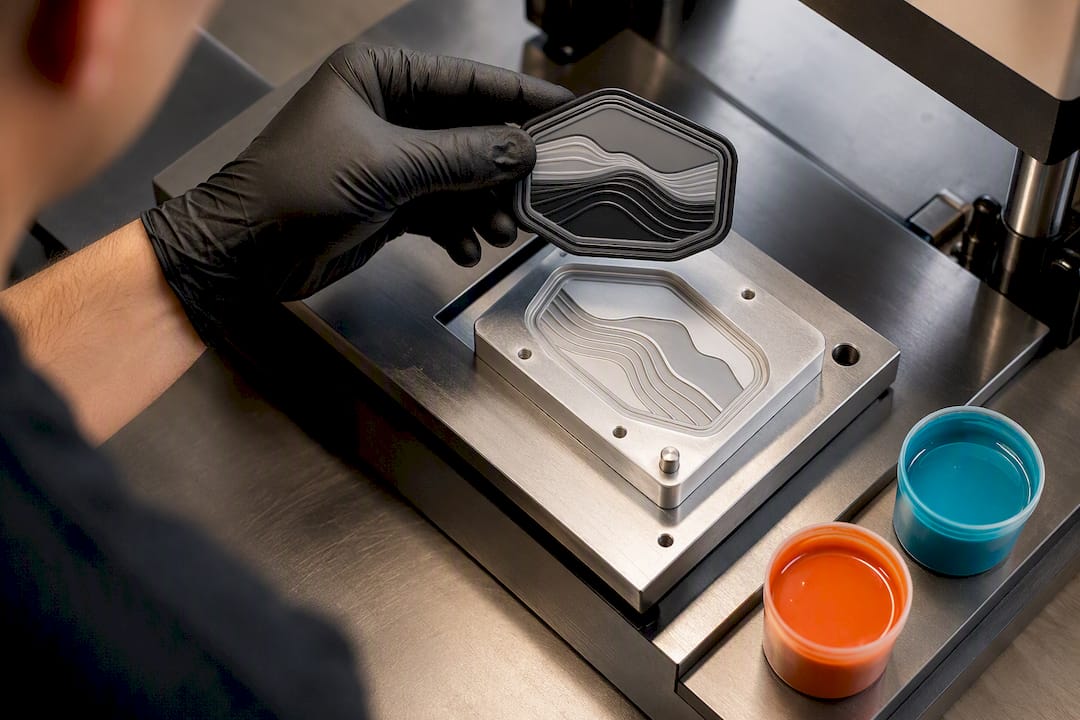
PVC patches, sometimes called rubber patches in the industry, start as liquid polyvinyl chloride poured into a custom mold. The color goes into the material itself during that molding process rather than being printed or stitched on top, which is exactly why PVC and rubber patches hold their color so well over years of use. Manufacturers use the two terms interchangeably, so don’t be thrown off if a supplier quotes “rubber” when you asked about PVC.
That molding process is also where PVC’s durability comes from. The finished patch is essentially waterproof, resists abrasion far better than woven or leather alternatives, and handles a wide temperature range without going brittle. Soft PVC patches tolerate wiping and even cold, gentle machine washing without the color lifting or cracking, which is why they show up constantly on ball caps, backpacks, and uniforms that get run through the laundry weekly.
Design-wise, PVC is the only realistic option when a logo needs true gradients, four or more colors, or raised 3D elements. Molds can carve depth into the patch itself, not just print on the surface, so a mascot or crest can look sculpted rather than flat. Backing options are flexible too. Velcro-backed PVC is a favorite for tactical, ROTC, and uniform programs because pieces can be swapped without a needle and thread. Iron-on and sew-on backings work fine for standard apparel.
The trade-offs are minor but real. Extreme heat, like leaving a patch on a dashboard in July, can soften PVC over time. And some buyers simply prefer the firmer, leather-like hand feel over PVC’s rubbery texture, especially for premium jackets where touch matters as much as looks.
Leather Patches: Types, Aesthetic Value, and Aging
Leather patches come in a few distinct grades, and the grade you choose changes both the price and the way the patch will look five years from now. Full-grain leather is the top tier, keeping the hide’s natural texture and aging the most dramatically. Top-grain is sanded smoother and slightly more uniform. Bonded leather, made from scraps and fiber, costs less but wears out faster. Vegan leather (usually polyurethane) mimics the look without animal material, appealing to brands that want the aesthetic without the sourcing question.
Design on leather is intentionally restrained. Debossing presses a logo into the surface without ink, laser engraving burns a crisp outline, and color options usually top out at one or two tones plus the natural leather shade. That restraint is the point. Leather branding leans on texture and shadow instead of color saturation.
Durability works differently here too. PVC holds a static appearance, meaning it looks the same on day 1,000 as it did on day one. Leather does the opposite: it develops a patina, darkening and softening with handling and sun exposure. Leather patches often become more attractive with age when they’re cared for, which is exactly why heritage brands, denim makers, and premium hat companies choose it on purpose. The aging is the feature, not a flaw, as long as it’s managed. How that patina develops actually depends on the tanning method: chrome-tanned hides stay flexible and hold their original color longer, while vegetable-tanned hides are the ones that darken into that rich, worn look people associate with heritage goods.
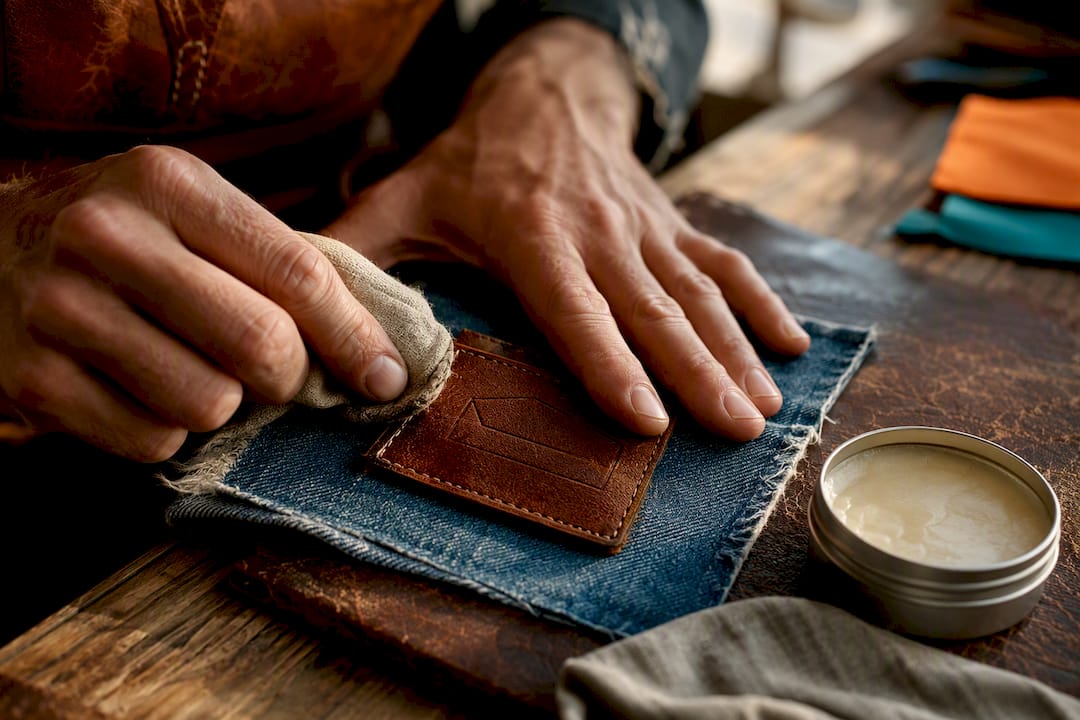
Attachment is usually sewn, since leather doesn’t melt onto fabric the way iron-on backings work with PVC. That means slightly higher labor cost and a firmer edge that some buyers find less comfortable against skin. Neglect leather and it dries out, cracks at the fold lines, and loses the crispness of any debossed detail. It needs a little upkeep to age well instead of just aging badly.
Head-to-Head: Durability, Design, and Cost
Here’s how the two materials stack up across the factors that actually decide most patch orders.
| Factor | PVC | Leather |
|---|---|---|
| Durability / environmental resistance | Waterproof, high UV and abrasion resistance, wide temperature tolerance | Moderate resistance; sun and moisture accelerate drying and cracking |
| Color and detail | Unlimited colors, smooth gradients | One to two tones, texture-driven design |
| 3D / depth capability | Strong, molded relief and raised elements | Limited to debossed or engraved depth |
| Maintenance | Wipe-clean, tolerates gentle machine wash | Spot-clean only, needs periodic conditioning |
| Best suited for | Hats, tactical gear, outdoor apparel, team uniforms | Denim, business jackets, premium heritage branding |
| Cost drivers | Mold/die setup, size, color count | Hide grade, tooling for engraving, stitching labor |
A few real-world patterns back this up:
- A landscaping crew’s ball caps sit in direct sun and get rained on constantly; PVC’s UV and water resistance means the logo still looks fresh after a full season, something long-term wear tests confirm holds up far better than leather under the same exposure.
- A denim brand wants its back-pocket patch to look better broken in; leather’s patina does exactly that, and buyers actively want the darkening.
- A martial arts academy needs a multi-color belt-rank patch with fine detail; PVC molding handles four colors and small text cleanly, where leather would flatten it to a single debossed shape.
- A corporate uniform program swaps logos seasonally without resewing; Velcro-backed PVC handles that instantly, while sewn leather does not.
Laundering is the clearest dividing line. PVC tolerates a cold, gentle cycle. Leather should never go through a washing machine at all, cold or otherwise, because repeated wetting is exactly what accelerates drying and cracking down the line.
How to Choose the Right Patch Material for Your Project
Work through this before you request a quote, and you’ll skip most of the back and forth with a supplier.
- Define the environment. Outdoor, high-wash, or high-abrasion use points to PVC. Indoor, low-wash, premium apparel points to leather.
- Decide how many colors the logo actually needs. Anything beyond two tones or any gradient work rules out leather.
- Set your wash frequency. Weekly laundering favors PVC. Occasional spot-cleaning is fine for leather.
- Pick your attachment method. Need swappable patches? Go Velcro-backed PVC. Want a clean, permanent look? Sewn works for either material, though it’s the standard for leather.
- Confirm quantity and budget. Mold fees for PVC and tooling for leather engraving both get cheaper per unit at higher volume.
When you’re vetting a supplier, ask direct questions: Do they provide a physical sample before full production? Are mold or die fees separate from the per-unit price? What’s their color-matching tolerance? What backing do they recommend for your specific garment? What’s the real lead time, not the best-case one? Clarifying tooling fees and lead times before ordering up front avoids the most common source of invoice surprises.
Watch for red flags: a supplier that won’t send a sample, specs that stay vague when you ask for exact dimensions or color codes, or durability claims that sound too good to check.
Pro Tip: Order one physical sample in your actual colors before committing to a full run. A screen mockup never shows you how a gradient molds in PVC or how deep a debossed logo actually sits in leather.
Care Instructions and How Long Each Material Lasts
PVC patches need almost nothing: wipe them down, or run them through a cold, gentle machine wash and let them air dry. Leather needs more attention. Spot-clean only, never submerge it, and condition it every six to twelve months to keep the surface from drying out. Store both away from direct heat sources and avoid folding leather at sharp angles, which is where cracking starts first.
For lifespan: a PVC patch on a daily-wear work uniform typically holds its color and shape for several years of regular washing. A well-conditioned leather patch on an occasional-use jacket can last just as long, but a neglected one dries and cracks within a season or two of heavy sun exposure.
What Drives the Price of Custom Patches
Size, color count, and quantity are the three biggest levers on price for either material. PVC pricing adds a mold or die setup fee that gets amortized across your order, so bigger runs bring the per-unit cost down fast. Leather pricing depends more on hide grade and the labor involved in engraving or debossing plus stitching. Backing choice (sew-on, iron-on, or Velcro) and any extra finishing also factor in. A detailed breakdown of typical patch pricing is worth reviewing before you request quotes, so you know which line items to expect. Always ask whether the mold or tooling fee is a one-time charge or baked into the unit price, since that changes how reorders are quoted.
A Production Note From Adam
Most clients who come to Jam4apparel already know their environment. Outdoor teams and uniform programs get steered toward PVC almost every time. Boutique and heritage brands ask for leather because they want that aging look on purpose. We build samples in-house before any full run, and we’ll help you pick the backing that actually matches how the garment gets worn.
Environmental Impact and Sustainability
Neither material is the obvious “green” choice, and anyone who tells you otherwise is skipping half the story. PVC is a petroleum-derived plastic. It doesn’t biodegrade, and manufacturing it involves chlorine chemistry that raises legitimate environmental questions, though a molded PVC patch’s long service life partly offsets its footprint by not needing frequent replacement.
Leather’s story is more complicated than “natural equals sustainable.” Leather is a byproduct of the meat industry, which means it doesn’t require dedicated animal farming the way people sometimes assume. But tanning, especially chrome tanning, uses heavy metals and generates wastewater that needs careful treatment to avoid contaminating local water sources. Vegetable-tanned leather is gentler on that front but slower to produce and typically pricier.
Vegan leather sidesteps the animal-sourcing question entirely, but most versions on the market are polyurethane, which brings the plastic problem right back. It’s not automatically the more sustainable pick just because it avoids animal hide.
The most honest way to think about sustainability here is durability over disposal. A patch that lasts eight years and never needs replacing has a smaller lifetime footprint than one that degrades in two, regardless of what it’s made from. That’s actually the strongest environmental argument for PVC in high-wear settings: fewer replacement orders means less material produced overall. For low-wear applications where a leather patch will realistically last just as long with basic care, the calculation evens out. Neither material is disposable-grade; both are meant to outlast the garment they’re on if you treat them right.
Comfort and Flexibility on Apparel
Comfort comes down to how the patch behaves against skin, fabric, and movement, and the two materials feel almost opposite. PVC has some give to it. It flexes with the fabric underneath, which matters on a hat brim that gets folded into a back pocket or a jacket sleeve that bends at the elbow. That flexibility also means less risk of a hard edge digging into skin at a collar or cuff.
Leather is stiffer by nature, especially full-grain and top-grain varieties. That stiffness is part of why it reads as premium. It holds its shape and doesn’t crease the way a flexible patch does. But stiffness has a real cost in wearability. A rigid leather patch on a fitted garment, like the inside collar of a jacket, can feel noticeably different against skin than the soft cotton or polyester surrounding it. It’s not usually uncomfortable, but it is noticeable, and it’s worth trying a sample against the actual garment placement before committing to a full order.
Weight is a smaller factor but still relevant on lightweight fabrics. Leather patches, particularly larger ones, add more heft than PVC of the same size, which can cause a thin knit hat or a light jacket to sag slightly at the attachment point over time. PVC’s lighter, more pliable structure makes it the safer default for anything worn close to the body or on stretch fabrics like performance polos and athletic wear. Leather works best on garments with enough structure to support it, like denim, canvas, and structured jackets, where the stiffness reads as intentional rather than awkward.
Allergies and Skin Sensitivity
Skin reactions to patches are rare, but they’re not zero, and the two materials carry different risk profiles. PVC is generally considered low-risk for skin contact, since the finished, cured patch doesn’t typically release the plasticizers or additives that raise concerns in other PVC products like vinyl flooring. That said, extremely sensitive skin can occasionally react to any synthetic plastic surface through friction or heat buildup, particularly in placements that sit directly against skin rather than over a layer of fabric.
Leather carries a different concern: the tanning process. Chrome tanning, the most common method, can leave trace chromium compounds in the finished hide, and chromium is a recognized skin sensitizer for a small percentage of people. Vegetable-tanned leather avoids that particular chemical but isn’t automatically hypoallergenic either, since natural tannins can still irritate sensitive skin in rare cases.
In practice, this rarely affects patch buyers because patches sit on the outside of a garment rather than directly against skin the way a leather wristband or watch strap would. Collar patches and cuff-adjacent placements are the exception worth thinking about, especially for uniforms worn by people who already report sensitive skin. If that’s a concern for your team or customer base, PVC is the safer default simply because it has fewer documented sensitizer risks than tanned leather. Vegan leather, being polyurethane-based, sits closer to PVC on this front, though it’s worth confirming with your supplier what specific material and finish they’re using rather than assuming “vegan” automatically means “hypoallergenic.”
When Jam4apparel Recommends PVC vs Leather
We steer outdoor teams, high-wash uniforms, and multi-color logos toward PVC almost every time. Heritage apparel and premium brands chasing that worn-in look get leather. Start a quote with a sample and mockup request, and we’ll help you land on the right material before you commit to a full run.
— Adam
Get Your Patch Project Started With Jam4apparel
Jam4apparel is the in-house alternative to guessing your way through a patch order. Instead of choosing blind from a catalog, you get a free design proof, a physical sample in your actual colors, and production run right here rather than outsourced overseas, which keeps turnaround fast whether you’re ordering fifty patches or five thousand.
The path is simple: request a quote, review your proof, approve a sample, then we move straight into production. Whether you’re outfitting a martial arts academy with durable PVC belt patches or dressing up a team’s jackets with leather for a premium look, our team will help you match material and backing to how the garment actually gets used. Browse industry-specific apparel solutions to see examples close to your project, or head to Jam4apparel to start your quote today.
Sources
- PVC vs. Leather Patch Durability: My Guide to Choosing the Toughest Emblem
- How Leather Stands Tall for Making Premium Patches | Patches Mania Europe
Recommended
Ready to print your design?
Screen print, embroidery, and DTF — no minimums on many styles.