
Ordering 100+ Pieces? Patch vs Embroidery for Small Brands
September 6, 2026
Ordering 100+ Pieces? Patch vs Embroidery for Small Brands
Choose direct embroidery when you need a small, permanent, premium mark on a stable garment like a polo. Choose patches when you need removable badges, fine detail, or one design applied across hats, jackets, and bags in the same order. The three deciding factors are permanence, order size, and how much detail your artwork demands.
TL;DR:
- Patches are more cost-effective for large orders and allow easy repositioning across different garments, whereas embroidery incurs higher costs per piece long-term.
- Woven patches excel at fine details like small text, while printed or PVC patches are better for complex artwork with gradients and shading.
- Heat-seal patches are faster to apply but less durable over time compared to sew-on patches, which offer better long-term resilience.
- Embroidery works best on flat, stable fabrics like polos, but patches perform better on curved or textured surfaces such as hats and jackets.
- Requesting a sample and wash test before bulk production is crucial to avoid issues like thread fraying or patch lifting, especially on new designs.
Table of Contents
- Patch vs Embroidery: The Core Differences at a Glance
- Cost and Order-Size Economics
- Which Artwork Survives Which Method
- Durability, Laundering, and How Each Feels to Wear
- Planning Multi-Garment Orders and Reorders
- Best Uses by Garment Type
- How to Choose: A Decision Checklist for Your Order
- What Jam4apparel Sees Across Hundreds of Orders
- Environmental Impact Considerations of Patches vs Embroidery
- How Turnaround Time Differs Between the Two Methods
- Repair and Maintenance: Keeping Both Looking Sharp
- A Vendor’s Honest Take on Which Method Wins
- Get a Sample Before You Commit to Either Method
- Sources
Patch vs Embroidery: The Core Differences at a Glance
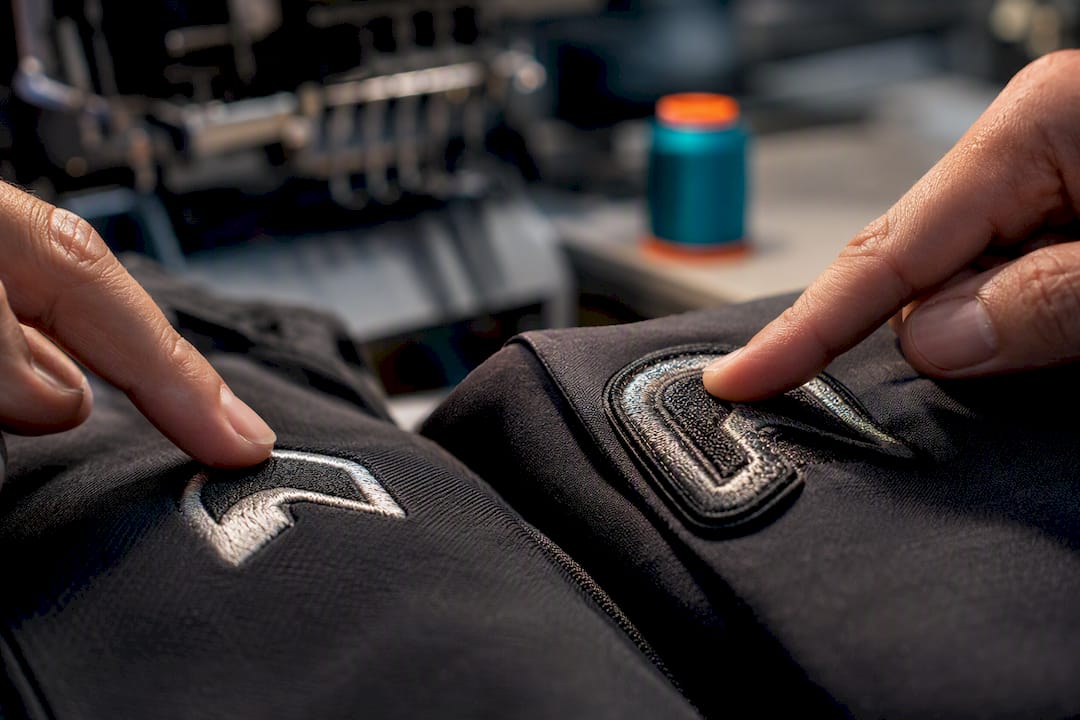
Direct embroidery stitches thread straight into the garment, producing a clean, integrated look that becomes part of the fabric permanently. Patches are made separately and then attached, which is what makes them removable and easy to move between garments. That single distinction drives almost every other decision in this comparison.
Here’s how the main options break down:
- Direct embroidery: Thread stitched directly into the garment. Permanent, premium feel, one machine cycle per piece.
- Embroidered patch: Fabric backing embroidered separately, then sewn, ironed, or hook-and-loop mounted.
- Woven patch: Thin, tightly woven threads for fine detail and small text, low bulk.
- Printed or PVC patch: Digitally printed or molded design, best for gradients, photorealistic art, or rubbery 3D looks.
Sew-on backing lasts longest. Heat-seal (iron-on) is faster to apply but can lift over time. Hook-and-loop (Velcro-style) trades some durability for swap-ability, ideal for rotating names or ranks.
Cost and Order-Size Economics
At low quantities, embroidery and patches often cost close to the same per piece. That changes once volume climbs. Patches typically pull ahead past a certain moderate quantity of units, because the patch itself gets batch-produced once and the labor per garment drops to just attaching it, not stitching a full design into every item.
Watch for costs that don’t show up in the initial quote:
- Labor to sew or heat-press patches onto finished garments
- Reorder fees if you didn’t save the digitized file or patch die
- Design revision charges after the first proof
- Sample or stitch-out fees, which are worth paying anyway
Pro Tip: When comparing quotes across vendors, send the exact same artwork file, specify the backing type you want, and ask for a line-item breakdown. Otherwise you’re comparing apples to oranges dressed up as a single number.
Read our breakdown of what a custom patch actually costs before you request pricing, so you know what questions to ask.
Which Artwork Survives Which Method
Fine text under about a quarter inch tall tends to blur or fill in during direct embroidery, since stitch density has limits before thread bunches up and eats the letterforms. Tight gradients and photographic detail run into the same wall. Direct embroidery also gets shaky on very thin or stretchy fabric, where the stitches can pucker the base material.
- Choose woven patches for small text, fine outlines, or multi-color logos with lots of detail.
- Choose printed or PVC patches when your design has gradients, shading, or complex artwork that thread simply can’t replicate.
- Ask your decorator for a digitizing sample and a physical stitch-out before committing to a bulk run, especially on new artwork.
Poor digitizing, not the machine, is usually what causes gaps, broken thread, or distorted outlines in a finished piece.
Durability, Laundering, and How Each Feels to Wear
Durability comes down to backing choice as much as method. Sew-on patches match embroidery for long-term durability, while heat-seal patches face more risk of lifting after repeated hot washes and dryer cycles.
Embroidery has its own failure modes worth knowing about:
- Puckering around dense stitch areas, usually from missing or wrong-weight stabilizer
- Thread abrasion on high-friction spots like cuffs or bag straps
- Loose backing fabric showing through on thin garments
Wash-test your samples before signing off on a bulk order. It’s a five-minute check that catches problems a photo never will. For care instructions to hand off to your team once garments ship, our uniform care guide covers wash temperature and drying tips that protect both patches and embroidery.
As for feel: embroidery sits low and blends into the fabric, while patches add visible thickness and a slight ridge you can feel running a hand across the seam. Neither is wrong. It depends on whether you want the logo to disappear into the garment or stand up off it.
Planning Multi-Garment Orders and Reorders
Patches solve a problem embroidery can’t: putting the identical design on wildly different garments without redigitizing anything.
- Order one patch batch, apply it everywhere. A single production run of patches can go on hats, jacket chest panels, and tote bags without new setup for each garment style.
- Account for hooping limits with embroidery. Curved caps, zippered jackets, and bag straps often can’t sit flat in a hooping frame the way a polo can, which limits where direct embroidery is even possible.
- Build in lead time buffers. Patch production and application both take scheduling time; order 2 to 3 weeks ahead of an event date whenever possible.
- Keep a small patch inventory on hand. Extra patches cost little to store and let you outfit new hires or replace damaged ones without restarting a full production run.
Best Uses by Garment Type
- Polos and staff uniforms: direct embroidery, for a clean chest mark that reads as permanent and professional.
- Hats and structured caps: patches, since curved panels are hard to embroider cleanly and patches sit well on rigid crowns. See how this looks on a structured trucker hat for reference.
- Jackets and outerwear: patches, especially for business jackets where a badge-style crest reads as intentional branding rather than an afterthought.
- Bags and mixed-SKU merch: patches, because one batch covers every item in the line without separate setups.
- Very light or stretch fabrics, and leather: sample both methods first, since neither performs predictably without a test piece.
A rotating staff badge program, a merch drop across five product types, and a full team uniform order all point toward patches. A single polo run for a small office points toward embroidery.
How to Choose: A Decision Checklist for Your Order
Work through these in order, and you’ll land on the right method faster than any pros-and-cons list gets you there.
- Does the mark need to be permanent, or removable? Permanent points to embroidery. Removable or swappable points to patches.
- How many pieces are you ordering? Under 100 units, either method usually pencils out similarly. Above that, patches usually cost less per piece.
- How detailed is the artwork? Fine text, gradients, or many colors push you toward woven or printed patches.
- What’s the garment fabric and shape? Curved, structured, or stretchy items favor patches; flat stable fabric favors embroidery.
- Does comfort against skin matter? Embroidery sits flatter; patches add bulk that some wearers notice on collars or hat brims.
When you talk to a decorator, ask directly: What’s your minimum order quantity? What’s the lead time? Will you provide a stitch-out or physical sample before production? What backing options do you offer, and which one do you recommend for my use case? What are your digitizing fees, and at what quantity does pricing break to a lower tier?
Pro Tip: Treat a vendor’s answer to “can I get a wash-tested sample first” as a real signal. If they hedge, or can’t tell you their typical lift or fail rate on heat-seal patches, that’s worth pausing on before you commit to a bulk order.
What Jam4apparel Sees Across Hundreds of Orders
Custom embroidery, custom patches, DTF transfers, and puff embroidery can be run in-house from Lake in the Hills, Illinois, ensuring every order goes through the same shop before it ships. That matters for quality control: nothing gets outsourced to a third party you can’t ask questions of.
Before any bulk run, we produce a sample and stitch-out, then recommend a wash test on the actual garment base. Fabric weight and weave change outcomes more than most buyers expect, and catching a problem on one sample beats catching it on 200 finished pieces.
Environmental Impact Considerations of Patches vs Embroidery
Neither method is dramatically greener across the board, but they carry different environmental trade-offs worth weighing if sustainability factors into your buying decision.
Direct embroidery uses thread and backing stabilizer, both consumed per garment with no separate manufacturing step. There’s no extra material sitting in inventory and no unused stock to eventually discard. The tradeoff is that a mistake or logo change means redoing the entire embroidery run on affected garments, since you can’t remove and reuse a botched stitch job.
Patches involve a separate manufacturing step, which means additional material (backing fabric, adhesive, sometimes plastic-based PVC) and a second production run before the patch ever touches a garment. That said, patches offer one advantage embroidery can’t: reusability. A patch can be moved from a worn-out jacket to a new one, extending its useful life beyond a single garment. Removable patches also mean you’re not scrapping an entire uniform because a logo changed. You update the patch, not the whole piece of clothing.
PVC and printed patches carry a heavier plastic footprint than woven or embroidered ones, since they’re molded rather than stitched. If environmental impact matters to your organization, woven patches or embroidered patches are the lower-impact patch option, and ordering in accurately forecasted quantities (rather than over-ordering “just in case”) reduces waste on both sides of this comparison more than the method choice itself does.
How Turnaround Time Differs Between the Two Methods
Direct embroidery generally moves faster for small, straightforward orders because there’s no separate manufacturing step. Once artwork is digitized, embroidery goes straight to production on the actual garments, and small runs (a few dozen polos, for instance) can often turn around in about a week depending on shop capacity.
Patches add a step. The patch has to be manufactured first, whether that’s woven, embroidered, or printed, and only after that batch is complete does the application stage begin (sewing, heat-pressing, or attaching hook-and-loop backing). For a brand-new patch design, that two-stage process typically adds extra lead time compared to embroidery ordered on the same timeline, since you’re waiting on patch production before garment application can even start.
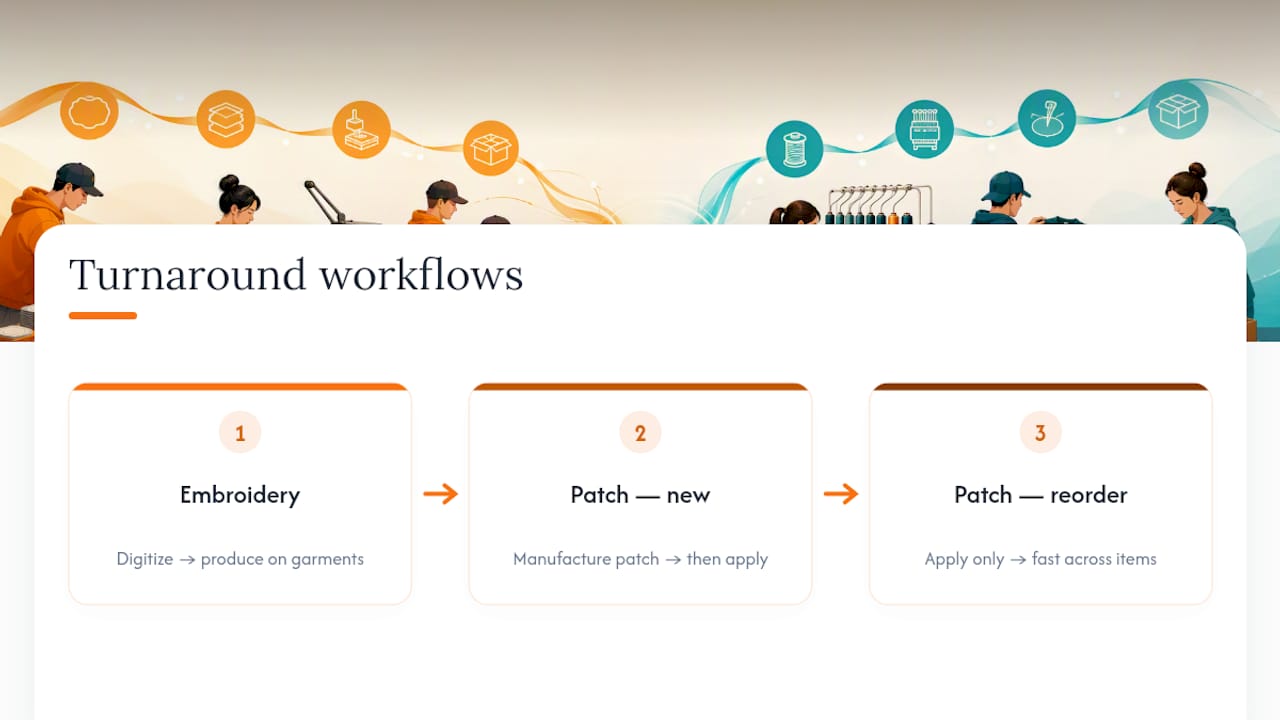
The math flips for reorders and mixed programs, though. Once a patch design exists, applying that same batch to new garments is fast, since there’s no redigitizing or new setup required for each item. If you’re outfitting a sports team with hats, jackets, and bags all carrying the same logo, ordering patches once and applying them across every product type is often quicker overall than digitizing and running direct embroidery separately on each garment style.
The practical takeaway: for a single small order on one garment type, embroidery usually wins on speed. For a program spanning multiple garment types or one you’ll reorder repeatedly, patches win once the first batch is produced, because every future application moves faster than starting an embroidery job from scratch.
Repair and Maintenance: Keeping Both Looking Sharp
Embroidered logos rarely need repair, but when they do, it’s usually a loose or broken thread at an edge. Catching a frayed thread early and trimming it (never pulling it) prevents unraveling that spreads across the design. A stitch-savvy tailor can touch up a small section without redoing the whole logo, but matching thread color exactly gets harder as garments fade with wash cycles.
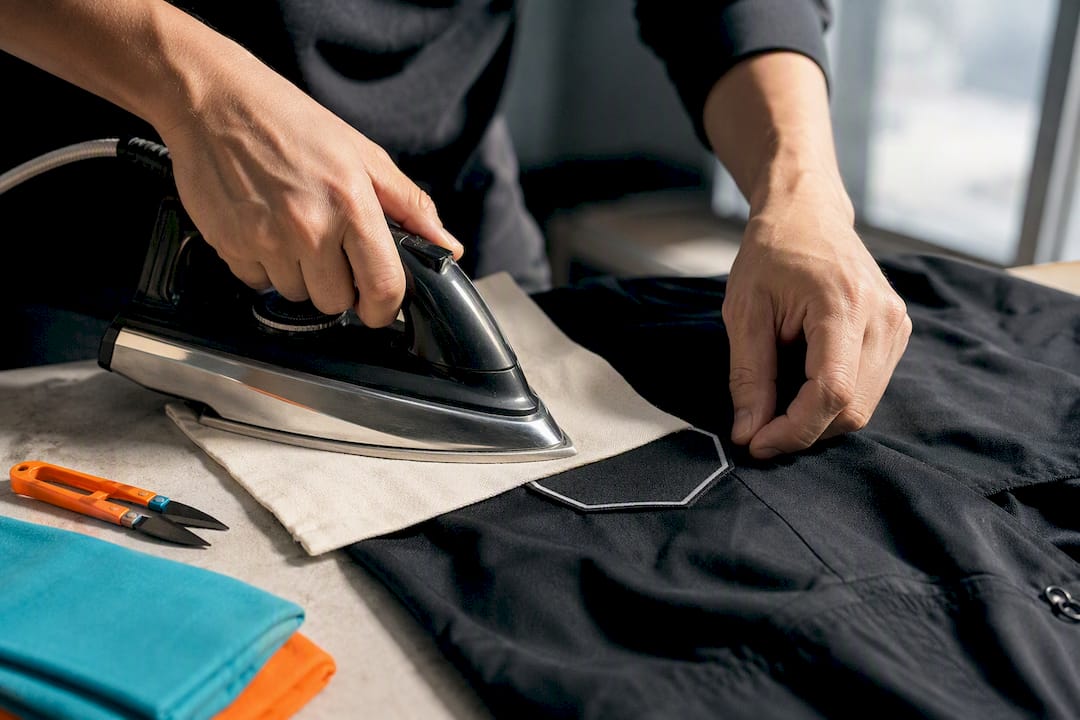
Patches face a different set of maintenance issues, mostly tied to the backing method. Sew-on patches occasionally need a stitch or two reinforced at the corners, where the most wear happens. That’s a five-minute fix with a needle and thread, no special tools required. Heat-seal patches are the ones that need watching: if a corner starts lifting, re-pressing it with an iron (cloth barrier between iron and patch, medium heat, firm pressure for 20 to 30 seconds) usually reseals it before it peels further. Letting a lifted corner go through another wash cycle almost always makes it worse.
Hook-and-loop patches need the least maintenance since there’s nothing stitched or heat-sealed to fail, but the loop backing on the garment can wear out with heavy use and lose its grip over time. If that happens, replacing the loop backing patch is usually cheaper than replacing the whole garment.
A general rule for both methods: wash inside-out, skip high heat drying when you can, and address small issues (a loose thread, a lifting corner) the moment you notice them. Small maintenance now avoids buying a full replacement later.
A Vendor’s Honest Take on Which Method Wins
Most small businesses that ask us this question already have a garment in mind, and that garment usually answers the question for them. Polos and staff shirts point to embroidery. Hats, jackets, and mixed merch point to patches. The honest advice most vendors won’t give you: don’t pick one method for your whole brand. Run embroidery on your premium staff wear and patches on your hats and outerwear, then keep a small patch reserve for new hires or damaged pieces. That hybrid approach covers more ground than betting everything on one decoration style. If you’re still unsure which fits your specific garments, request a sample of both before you commit to a bulk order.
Get a Sample Before You Commit to Either Method
Jam4apparel runs custom embroidery, custom patches, and puff embroidery under one roof in Lake in the Hills, which means you get a real stitch-out sample and a wash test before a single bulk unit gets produced, not a stock photo and a guess. That in-house setup also means faster turnaround than shops that outsource patches or embroidery to a third party and wait on their schedule.
If you’re weighing polos against hats, or trying to figure out whether your logo survives fine detail in thread versus a woven patch, request a quote through our custom embroidery services page and ask specifically for a sample stitch-out on your artwork. We’ll tell you plainly which method fits your garment and order size, not just which one we’d rather produce.
Sources
This article drew on comparisons from MFG Merch, Bushi Sports, StitchQuote, and Jiamei Labels.
- Direct Embroidery vs Patch Application - MFG Merch
- Direct Embroidery vs Embroidered Patches: 7 Proven Advantages - Bushi Sports
Recommended
Ready to print your design?
Screen print, embroidery, and DTF — no minimums on many styles.