
How to Design Trade Show Giveaway Shirts That Work
July 14, 2026
How to Design Trade Show Giveaway Shirts That Work
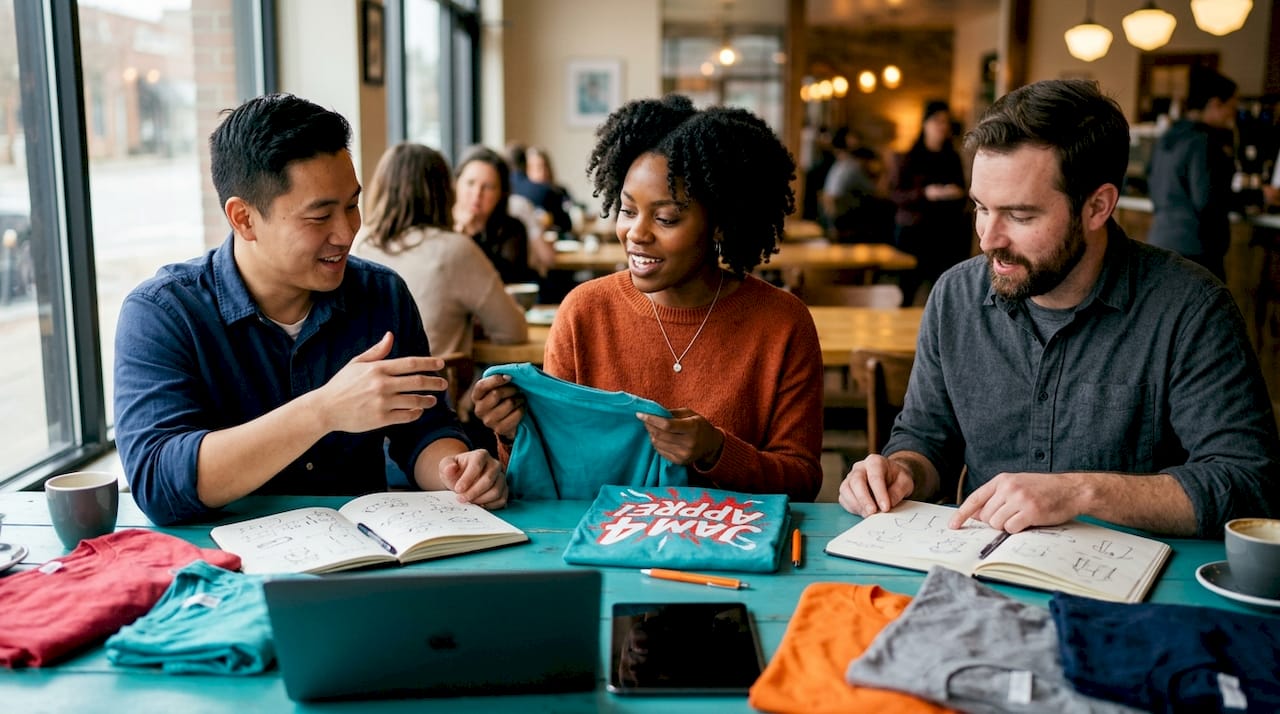
Branded event shirts are the most wearable form of trade show marketing, and the ones that fail share a common flaw: they prioritize the brand’s ego over the attendee’s experience. To design trade show giveaway shirts that actually build visibility, you need three things working together: a clear visual hierarchy, comfortable materials, and a production timeline that leaves no room for surprises. Jam4apparel works with marketing professionals and event planners across the Chicagoland area to get all three right, and the principles that drive those results apply to any event, anywhere.
What are the key design principles for trade show giveaway shirts?
The single most important rule in promotional apparel design is clarity. Trade show shirts that prioritize a strong logo, simple text, and bold colors improve booth visibility and attendee recognition from 10–15 feet away. That distance matters because most attendees make a split-second decision about whether to approach your booth based on what they see across the aisle.
Logo placement and visual hierarchy
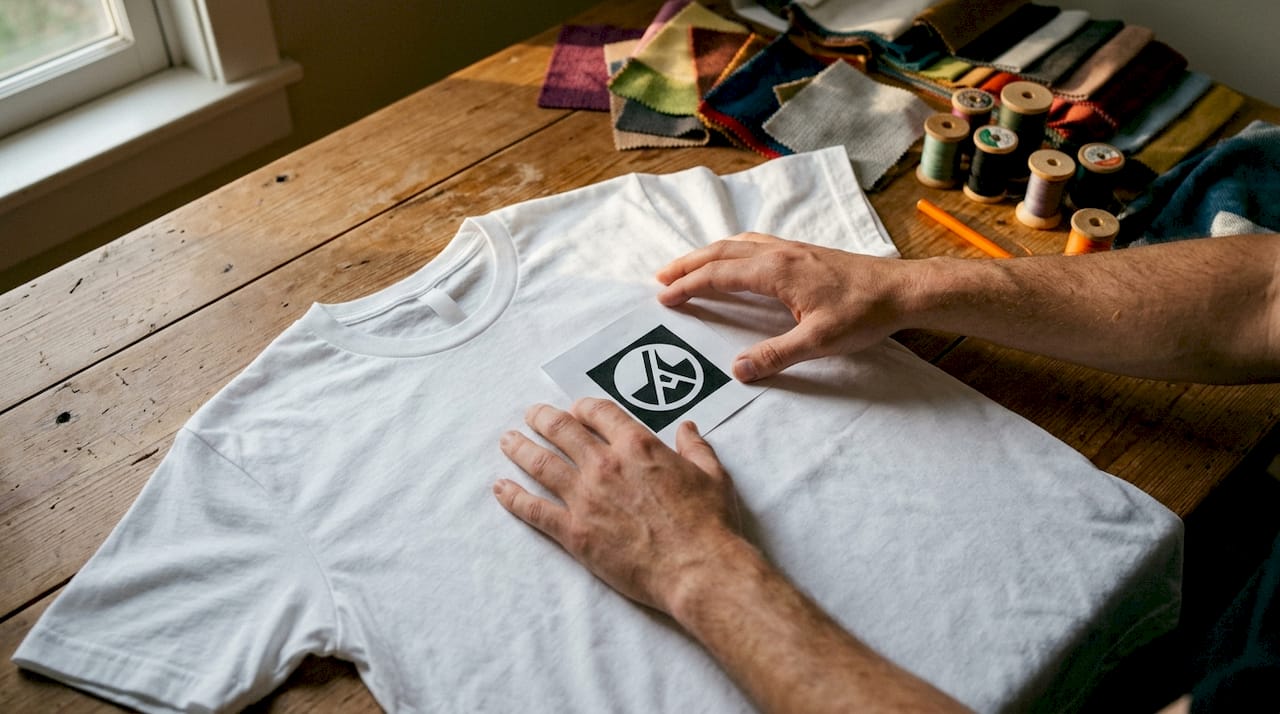
Logo placement follows a clear hierarchy based on the impression you want to make. Left-chest placement reads as professional and understated, which works well for corporate events and financial services brands. Full-front prints deliver bold, immediate impact and suit consumer-facing brands at high-traffic expos. Sleeve placement works as a secondary message location, not a primary one. Never treat the sleeve as the main branding real estate.
Color strategy deserves as much attention as logo size. Choose colors that contrast with your booth background, not match it. A navy shirt disappears in front of a navy backdrop. Mid-tone and vibrant colors tend to photograph well, which matters when attendees post photos to social media.
- Keep fonts to two maximum. One for the brand name, one for a tagline or event name.
- Limit design elements to three. Logo, event name, and one supporting graphic or hashtag.
- Avoid reversed-out text on dark shirts unless the contrast ratio is high enough to read at a distance.
- Test your design at thumbnail size. If it reads clearly at 1 inch wide, it will read clearly on a shirt across a crowded floor.
Pro Tip: Print a mockup on standard paper and tape it to a shirt. Walk 15 feet away and check readability. This low-tech test catches more problems than any screen preview.
Consistent apparel styling across the entire team removes confusion and creates a polished impression that increases visitor trust and approach rate. Mixed shirt styles on a team send a disorganized signal, even when the logo is identical.
Which apparel types and materials work best at trade shows?
Fabric choice determines whether your staff looks sharp at 9:00 AM and still looks sharp at 5:00 PM. Performance polos and dri-fit tees suit hot venues and high-activity events because moisture-wicking fabrics keep staff comfortable and confident over long hours. A staff member who is overheating and uncomfortable will disengage from attendees. That costs leads.
Matching apparel style to event type
Different events call for different apparel categories. A technology conference rewards a clean performance polo or a fitted dri-fit tee. An outdoor festival or sporting expo calls for a lightweight cotton-blend tee with UV resistance. A corporate financial summit may call for an embroidered button-down or a structured quarter-zip.
| Apparel type | Best event setting | Key benefit |
|---|---|---|
| Performance polo | Corporate expos, indoor trade shows | Professional look, moisture-wicking |
| Dri-fit tee | High-activity events, outdoor expos | Lightweight, breathable, easy to move in |
| Lightweight hoodie | Morning events, cool venues | Layering option, high print surface area |
| Button-down shirt | Financial, legal, or executive events | Formal appearance, embroidery-ready |
Avoid 100% heavyweight cotton for all-day events in warm venues. It holds heat and moisture. A 50/50 cotton-polyester blend or a tri-blend fabric gives you the soft feel attendees prefer while managing temperature better.
Pro Tip: Order samples in your top two fabric choices before committing to a bulk run. Pre-wash them once and check for shrinkage and print durability. What feels good off the shelf may not hold up after a single wash.
Ordering samples also lets you check fit across your team’s size range. A shirt that fits a size medium perfectly may pull awkwardly at a size XL. Catching that before production saves you from distributing apparel that undermines the professional image you paid to create.
How do you plan a production timeline for trade show shirts?
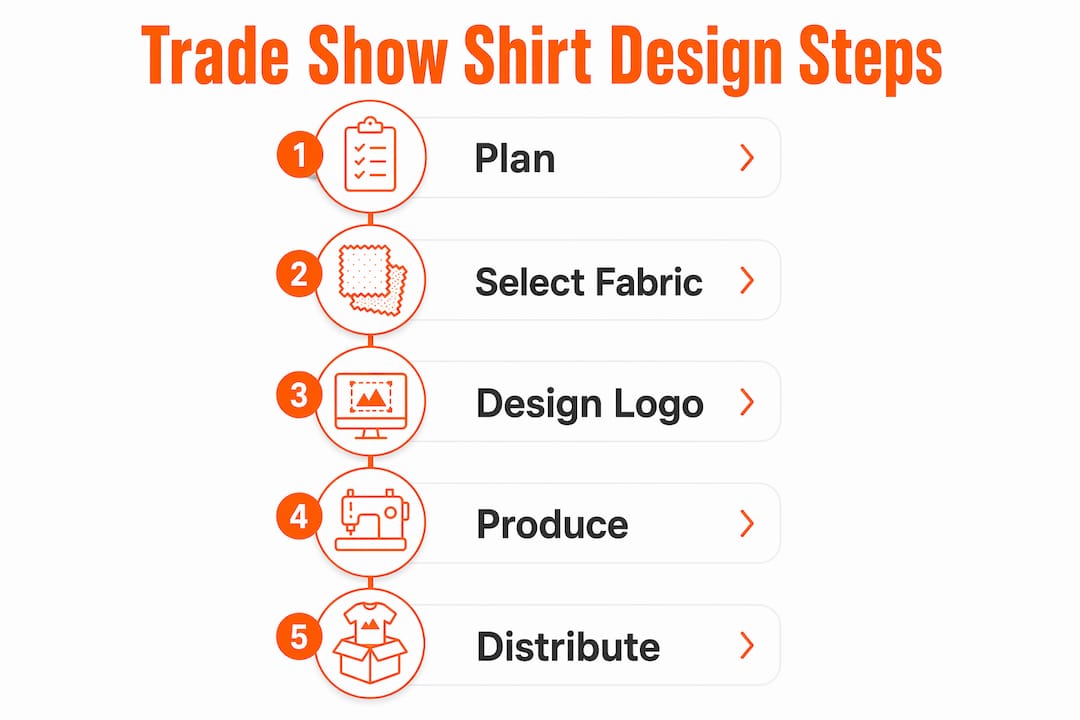
The most common and most expensive mistake in promotional apparel is underestimating lead time. Planning 4–6 weeks ahead avoids rush production fees and quality compromises, and gives you time for proofs, samples, and adjustments. Most planners who miss this window end up paying a premium for expedited production or, worse, arrive at the event with shirts that have a color error no one caught.
Work backward from your event date. That is the only reliable way to build a production schedule.
- Set your event date as day zero. Every deadline flows backward from that date.
- Add a 3-day shipping buffer. Freight delays happen. Build the buffer before you need it.
- Allow 5–10 business days for decoration and production. Screen printing and embroidery on bulk orders require this window. Rush orders compress quality control.
- Allow 2–3 business days for artwork approval. Artwork approval requires this time minimum. Submit vector files, not JPEGs, to avoid revision cycles.
- Lock quantities and sizes 48 hours before artwork submission. Changing quantities after production begins triggers repricing and delays.
- Separate your order tiers before placing the order. Staff shirts, premium lead gifts, and broad giveaway items are three distinct orders with different specs.
Vague quantities and mixing giveaway tiers are the two most common procurement errors in trade show kit planning. Specify exact counts by size and category before submitting any order. A single line item that reads “100 shirts, assorted sizes” will cause problems. “40 medium, 35 large, 25 XL, staff polo” will not.
Organizing giveaways by category — broad giveaways, premium lead gifts, and staff apparel — improves kit usefulness and simplifies order management. Broad giveaways include items like totes and pens. Premium gifts cover tech items and drinkware. Staff apparel is its own category with its own specs and sizing. Keeping these separate from the start prevents the confusion that derails timelines. For planners who want to avoid the most common ordering errors, Jam4apparel’s guide on custom apparel mistakes covers the full list.
What makes giveaway shirts work as brand ambassadors after the event?
A shirt that lives in a drawer after the event is a wasted investment. High-quality giveaway shirts become brand ambassadors when attendees choose to wear them repeatedly, which happens when the design is genuinely appealing and the fabric is comfortable enough to reach for again. The goal is to design something people want to wear on a Saturday, not just something they accept at a booth.
- Add a subtle call to action. A website URL or QR code printed inside the hem or on the sleeve keeps the shirt functional without cluttering the front design.
- Include an event hashtag. Attendees who post photos wearing your shirt extend your reach to their networks at zero additional cost.
- Coordinate shirt colors with booth signage. A cohesive visual system across shirts, banners, and table covers creates a memorable brand impression that photographs well and reads as intentional.
- Track post-event impact. Monitor social media mentions of your hashtag, count booth visits per day, and assess lead quality by shirt tier. That data tells you what to repeat and what to change next time.
The brands that get the most mileage from promotional apparel treat the shirt as a media channel, not a giveaway. Every design decision, from color to placement to fabric weight, affects how long that channel stays active after the event ends.
Key Takeaways
Effective trade show giveaway shirts require clear design, comfortable materials, and a production timeline that starts at least 4–6 weeks before the event.
| Point | Details |
|---|---|
| Clarity drives visibility | Use a bold logo, minimal text, and high-contrast colors readable from 15 feet away. |
| Fabric affects performance | Moisture-wicking and breathable fabrics keep staff energetic and professional all day. |
| Plan 4–6 weeks out | Rushing production risks color errors, size shortages, and expensive rush fees. |
| Separate order tiers | Staff apparel, premium gifts, and broad giveaways each need distinct specs and quantities. |
| Design for repeat wear | Shirts attendees wear after the event extend brand exposure at no additional cost. |
What I’ve learned from watching trade show apparel go right and wrong
The brands that consistently win at trade shows treat their shirts as a system, not a single decision. I’ve seen marketing teams spend weeks on booth design and 20 minutes on apparel, then wonder why their staff looked mismatched and their giveaways ended up in hotel trash cans.
The most effective approach I’ve observed is to start with the shirt design before finalizing booth graphics. When you design the shirt first, you can pull its colors into the booth backdrop, the table cover, and the digital displays. The result is a cohesive visual environment that reads as professional from across the hall. When you design the booth first and the shirt last, you’re always playing catch-up.
Collar style matters more than most planners realize. A polo collar signals authority and approachability at the same time. A crew-neck tee signals energy and accessibility. Neither is wrong, but choosing the wrong one for your audience type creates a subtle disconnect. A fintech company at a B2B expo wearing crew-neck tees with a casual graphic will get fewer serious conversations than the same company in clean performance polos with left-chest embroidery.
The feedback loop is where most teams fail. After every event, ask your staff which shirt they would actually wear again and why. Ask attendees at the booth what they think of the design before handing it over. That real-time feedback is worth more than any post-event survey. Use it to refine the next order, and your apparel will get better every cycle.
— Adam
Jam4apparel’s custom trade show shirts for event planners
Marketing professionals and event planners who need custom event shirts that arrive on time and look sharp on the floor can rely on Jam4apparel’s in-house production team in Lake in the Hills, Illinois.
Jam4apparel specializes in screen printing and embroidery for polos, tees, hoodies, and button-downs across any order size. The team handles artwork approval, proofing, and quality control under one roof, which cuts the back-and-forth that eats into production timelines. Planners working across multiple event types can browse industry-specific apparel solutions to find the right fit for their brand and event format.
FAQ
What is the best shirt style for trade show staff?
Performance polos and dri-fit tees are the best options for most trade show environments. They balance a professional appearance with the breathability staff need during long event hours.
How far in advance should I order trade show shirts?
Order at least 4–6 weeks before your event date. That window covers artwork approval (2–3 business days), production (5–10 business days), and a shipping buffer.
What decoration method works best for trade show shirts?
Left-chest embroidery works best for a professional, polished look on polos and button-downs. Full-front screen printing delivers bold impact on tees and is the better choice for high-visibility giveaway apparel.
How do I make giveaway shirts people actually want to wear?
Choose a comfortable fabric, keep the design clean and visually appealing, and avoid overloading the shirt with sponsor logos or event text. Shirts that look good off the event floor get worn again, extending your brand’s reach.
Should staff shirts and giveaway shirts be the same design?
No. Staff shirts should use a unified, professional design that identifies your team clearly. Giveaway shirts can carry a bolder or more event-specific design. Separating the two tiers keeps your team looking cohesive while giving attendees something distinct to take home.
Recommended
Ready to print your design?
Screen print, embroidery, and DTF — no minimums on many styles.