
Avoid Reordering Hundreds: Proof vs Sample Decision for Apparel Buyers
August 31, 2026
Avoid Reordering Hundreds: Proof vs Sample Decision for Apparel Buyers
A proof verifies the file, layout, and content. A sample verifies the material, color, and production process. Use a proof when your open question is “did we get the design right?” and request a sample when the question is “will this look and feel right once it’s actually made?” Color-critical or high-volume jobs almost always need a physical sample, not just a digital proof, before you sign off.
TL;DR:
- Digital proofs quickly catch layout and content errors but are unreliable for accurate color verification due to monitor limitations.
- Physical samples made on actual or similar materials are essential for assessing texture, structure, and color when brand accuracy or high volume is involved.
- Production-method samples replicate final processes and materials, making them crucial for high-stakes or large-volume projects where color consistency is critical.
- Approving the wrong sample type, such as a PDF instead of a production match, can lead to costly reprints and higher overall project costs.
- Cost and turnaround time increase from PDFs to production-method samples, but paying upfront reduces the risk of expensive rework.
Table of Contents
- What Is a Design Proof vs a Sample?
- What Are the Main Types of Proofs?
- What Are the Common Types of Physical Samples?
- Which Approval Method Covers Which Risk?
- When Should You Request a Proof vs a Sample?
- How Do You Review and Sign Off on Each Type?
- What Do Proofs and Samples Typically Cost?
- What Do Apparel Buyers Get Wrong Most Often?
- How Jam4apparel Makes Approval Easier
- Sources
What Is a Design Proof vs a Sample?
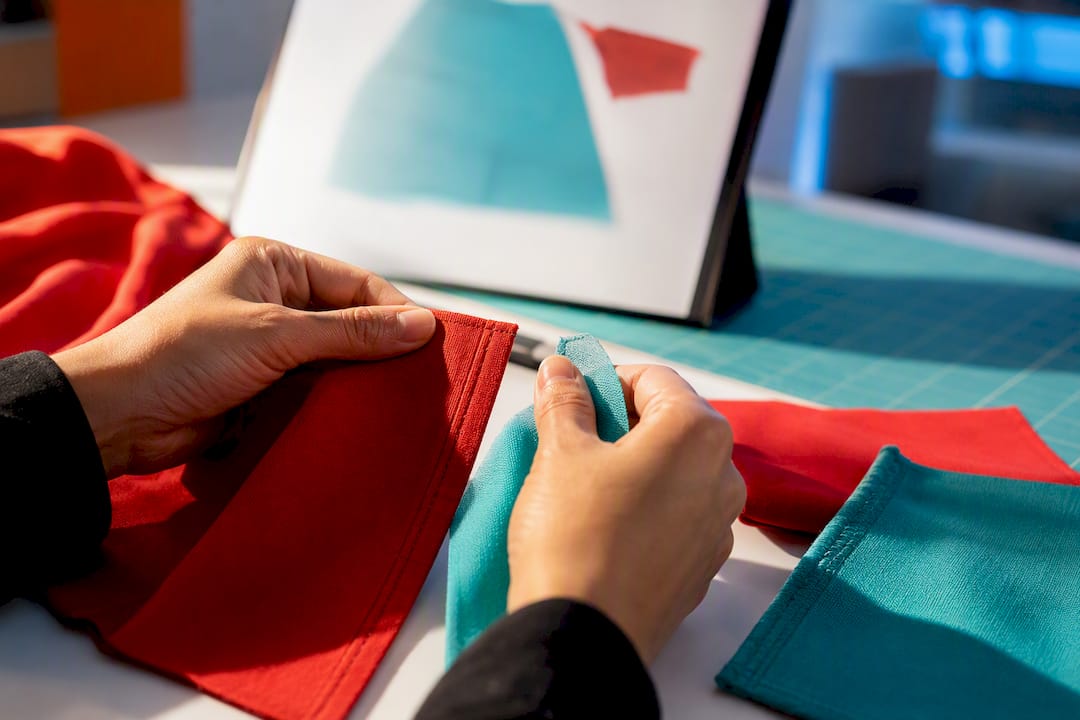
A proof is a representation of your artwork used to check content and layout before production starts. It can be soft (a digital PDF viewed on screen) or hard (a printed physical copy). A sample is a physical object, made using actual or near-actual materials, used to check things a screen simply cannot show you: texture, weight, drape, stitching, and real ink-on-substrate color.
The distinction matters because each one polices a different kind of risk. A proof catches typos, wrong dielines, missing bleed, and layout errors. A sample catches problems with fabric, finish, and process. Proofs control file and content risk while samples control material and process risk — and for mass production runs, a first-off sample confirms the whole batch will come out consistent, not just the first piece.
One caution worth remembering: not every “hard proof” is production-equivalent. A contract proof printed on a proofing device can nail color far better than a monitor, but it still isn’t the same press, ink set, or substrate as your final run. Treat it as a strong simulation, not a guarantee.
- Soft proof (PDF): digital file review, fastest and cheapest, no physical material involved.
- Hard proof: a printed physical copy, usually for color checking, closer to final output than a screen.
- Sample: an actual physical unit made from real or substitute materials and process, used to validate texture, structure, or production-level color.
What Are the Main Types of Proofs?
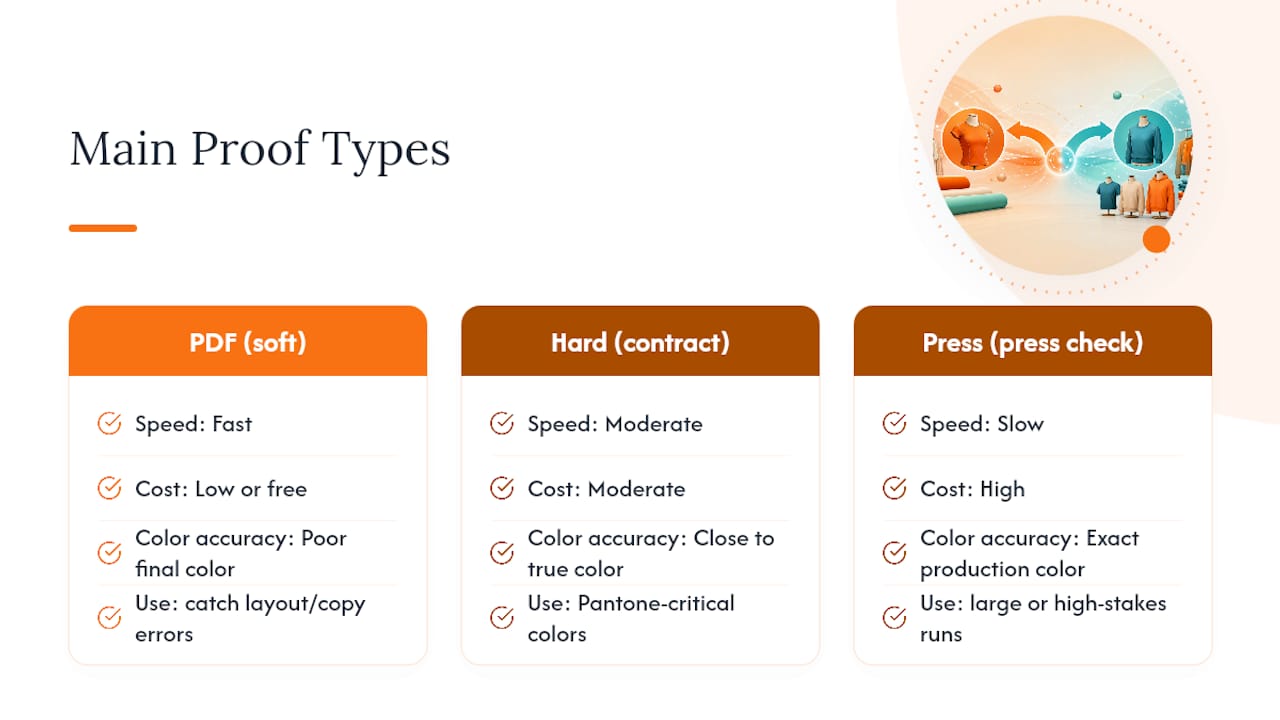
A PDF or soft proof is the workhorse of design validation. It’s fast, free or cheap, and perfect for catching copy errors, wrong logo placement, missing dielines, and layout mistakes before anything gets printed. Its weakness is color. Monitors, even color-calibrated ones, can’t fully replicate how ink behaves on a specific substrate, so approving a PDF as your final color check is a common way projects go sideways.
A hard proof, sometimes called a contract proof, is a physical printed page produced on a calibrated proofing device. It gets you meaningfully closer to true color, which makes it worth requesting anytime brand color accuracy actually matters, like a logo with a strict Pantone match.
A press proof, or press check, is the gold standard. You’re checking output pulled straight from the actual production press, so it reflects exactly what the final run will look like. It costs more and takes longer to arrange, which is why it’s usually reserved for large or high-stakes jobs like retail packaging runs or premium catalog print.
For apparel specifically, screens emit light while printed ink reflects it, so a shirt design can look completely different on-screen than on fabric. Stickers and packaging have their own version of this problem with laminate and coating effects.
Pro Tip: If your job has one Pantone-critical color, like a school mascot red or a corporate logo blue, ask specifically for a hard proof on that color before final approval. Don’t rely on a PDF preview, even a “high-quality” one.
What Are the Common Types of Physical Samples?
A dummy, sometimes called a structural mock, is a physical unit made mostly to check construction rather than final print quality. Think folding, binding, box assembly, or how a patch sits on a jacket seam. It tells you almost nothing about final color, but it’s the fastest way to catch a structural mistake before you commit to a full run.
A digital printed sample uses digital print technology on your actual or a close substitute material. It’s relatively inexpensive and quick, and it gives you a real physical object to hold, which beats any screen for checking layout and general color direction. It’s not, though, a perfect stand-in for a different production method.
A production-method sample, sometimes called a first-off or offset sample, is made using the exact process, ink, and material planned for the full run. It’s the only sample type that fully simulates the selected production process and materials, which makes it the right call for color-critical, high-value, or large-volume orders where a color shift discovered after printing 500 units would be expensive.
- Dummy: structural and assembly checks only, no color reliability.
- Digital printed sample: affordable, physical, good for layout and general color.
- Production-method sample: closest match to the real thing, worth it when the stakes are high.
For team uniforms or branded merchandise, an actual garment sample printed with the chosen ink method matters more than most buyers expect, since fabric absorbency changes how ink lays down. It’s common to run a dummy for structure and a production sample for color on the same order when both risks are live.
Which Approval Method Covers Which Risk?
Different approval steps are reliable for different questions and unreliable for others. Matching the method to the actual open risk, instead of defaulting to “just send a PDF,” is the single biggest lever for avoiding a reprint.
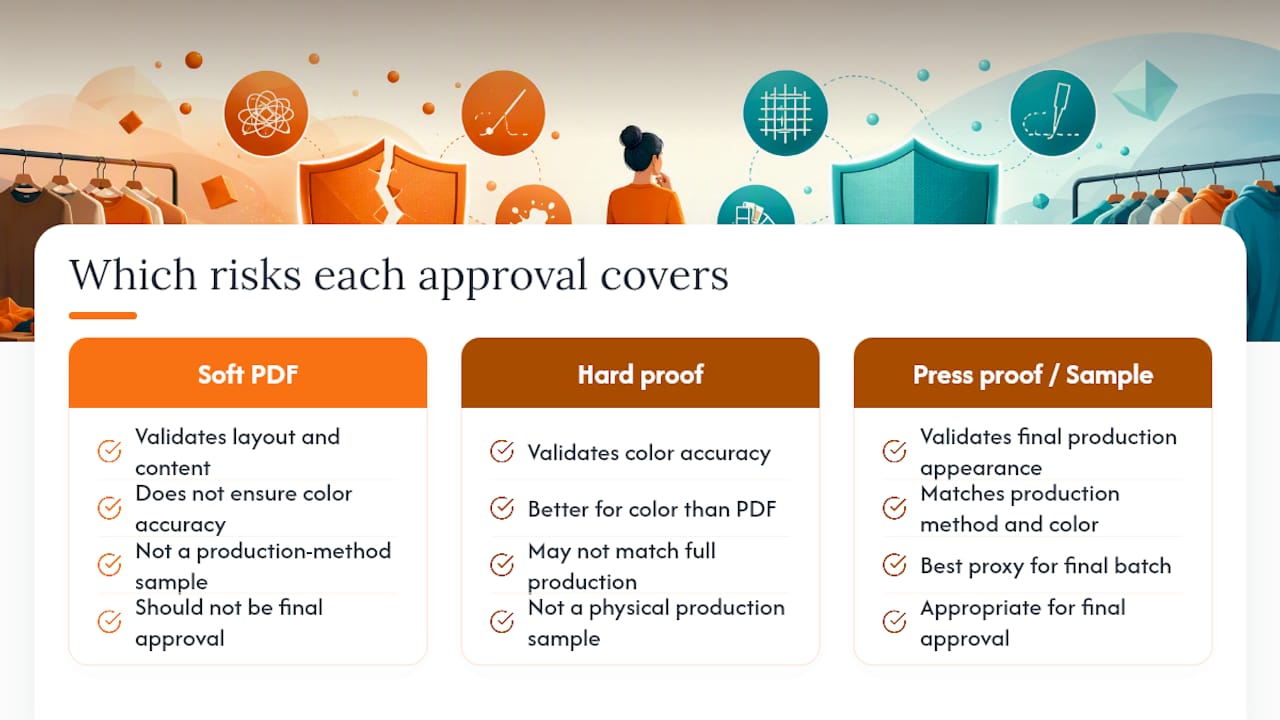
Approving the wrong step as “final” is a well-documented failure mode. Signing off on a digital print as if it were a production-method sample is a recurring cause of costly reprints, because the buyer thinks they’ve locked in color when they’ve only locked in layout. Reprint costs, once a full batch is already committed, routinely dwarf what an extra proofing or sampling round would have cost.
When Should You Request a Proof vs a Sample?
Run this as a quick mental flow before you approve anything:
- Ask what’s actually unresolved. If it’s spelling, layout, or placement, a PDF proof settles it.
- Ask if color is brand-critical. If yes, request a hard proof at minimum, ideally on the real substrate.
- Ask if structure or fit matters. Folding boxes, garment sizing, patch placement on a seam: get a dummy or physical sample.
- Ask about volume and value. A 20-piece youth sports order tolerates more risk than a 2,000-unit corporate rollout. Scale the approval investment to match.
- When two risks are live at once (say, color and structure), don’t force one sample to do both jobs. Order a dummy for structure and a production-method sample for color, or combine them if your vendor offers it.
A youth soccer team ordering 30 event tees can usually get away with a PDF proof plus a quick digital sample check. A company rolling out corporate polos across 15 locations should insist on a production-method sample, because a color mismatch discovered after the fact means reordering hundreds of pieces. A premium retail catalog client putting a logo on packaging that will sit on store shelves should treat a press proof as non-negotiable.
Pro Tip: If you’re unsure which risk is live, ask your printer directly: “What can this proof NOT tell me?” A good vendor will name the gap instead of letting you assume the proof covers everything.
How Do You Review and Sign Off on Each Type?
For a PDF proof, check version number against what you last approved, confirm dielines and bleed marks are present, verify fonts are embedded or outlined, and check that barcodes scan-test correctly if applicable. Note explicitly whether colors are shown as CMYK simulation or named spot colors, since that distinction gets lost fast in email threads.
For a physical sample, check color under consistent, neutral lighting rather than under office fluorescents or near a window. Confirm the actual substrate matches spec, check any coating or finish (matte, gloss, soft-touch), verify registration where multiple colors or elements overlap, and run any functional test relevant to the product, like whether a zipper or clasp actually works.
Recordkeeping matters more than most buyers realize. Documenting exactly what a sample was made to represent, including materials, ink, and process, and logging it with a sample ID and named signatory, prevents the classic dispute where one side thought the sample was final and the other thought it was directional. Our logo placement guide covers placement tolerances worth checking at this stage too.
- Confirm sample ID and date match your records before final approval.
- Note who signed off and what scope they approved, not just that “it’s approved.”
- Keep a hold point before bulk production even after a sample passes.
What Do Proofs and Samples Typically Cost?
PDF proofs are usually free or nearly free and turn around in hours. Hard proofs add real cost and a few days of lead time. Digital printed samples land in the middle on both dollars and days. Production-method samples cost the most and take the longest, often a week or more depending on the process.
- PDF proof: low cost, fast turnaround (hours to a day).
- Hard proof: medium cost, medium turnaround (a few days).
- Digital sample: medium cost, medium turnaround.
- Production-method sample: highest cost, longest turnaround (often a week-plus).
The math almost always favors paying for the extra step upfront. Soft proofs are cheap while hard proofs and production samples add cost but cut reprint risk, and a full reprint after a bad approval decision costs far more in materials, labor, and lost time than any preproduction sample would have.
What Do Apparel Buyers Get Wrong Most Often?
Jam4apparel is comfortable approving PDF-only for text-heavy, single-color jobs where the client already knows our print quality: think a spirit wear order using stock ink colors. We push back and recommend a physical sample the moment brand color, a new fabric, or a first-time client relationship is involved.
The most common mistake we see is a client approving color straight off a laptop screen, then being surprised when the shirts arrive slightly warmer or cooler than expected. The second most common: nobody writes down what the sample was supposed to prove, so a structural mock gets treated as a color guarantee weeks later. Our shortcut: pair a fast digital proof for layout with a small physical print run on the actual shirt and ink method before the full order goes to press, as demonstrated by T-Shirt printing Galway for group cycling events. It adds a day, not a week, and it catches the problems that actually cause reprints. Our DTF vs screen printing guide breaks down how decoration method changes what a sample needs to show.
— Adam
How Jam4apparel Makes Approval Easier
Jam4apparel is the shortcut around the guessing game most apparel buyers face when deciding what to approve. Every order includes a free design proof covering layout, placement, and copy, and because our screen printing and embroidery happen in-house at our Lake in the Hills shop, we can turn around a physical sample fast when color or fabric is on the line, without routing your job through a third-party printer first.
If you need a production sample rather than just a proof, send us your artwork file, any dieline or spec sheet, and your deadline, and we’ll quote turnaround and cost together so you’re not choosing blind. Browse custom apparel by industry to see how teams, schools, and businesses similar to yours have approached this, or head straight to our screen printing page to start a quote request today.
Sources
For deeper reference on proofing and sampling standards, see QinPrinting’s guide to hard proofs and samples and PouchesPack’s breakdown of digital proof vs production sample.
- Proofing in digital printing — ColorGate blog
- Proof vs Sample Printing vs Mass Production: What’s the Difference? - YAHORA
- A Practical Guide to Digital and Hard Proofs and Samples for Offset Printing - QinPrinting
Recommended
Ready to print your design?
Screen print, embroidery, and DTF — no minimums on many styles.