
Design Championship Tournament Shirts That Teams Keep Forever
June 11, 2026
Design Championship Tournament Shirts That Teams Keep Forever
Championship tournament shirts are purpose-built garments that commemorate competitive achievement, unify a roster, and serve as lasting proof of a team’s success. Unlike standard practice gear, well-designed championship apparel carries the weight of the moment. Coaches and organizers who invest in the right materials, artwork, and print methods end up with shirts players actually wear years later. This guide covers everything you need to design championship tournament shirts that look professional, hold up over time, and arrive on schedule. Tools like Adobe Illustrator, Pantone color systems, and production methods including screen printing, embroidery, and DTF transfers all play a role in getting this right.
What materials and styles work best for championship tournament shirts?
Fabric choice determines how a shirt looks on day one and whether it survives a decade of washes. The two primary categories are polyester blends and cotton blends, and each serves a different purpose. Polyester, especially moisture-wicking versions like the Sport-Tek ST350LS, works well for active tournament play because it pulls sweat away from the body and resists shrinking. Cotton blends feel softer against the skin and photograph better, making them the preferred choice for commemorative tees that double as keepsakes.
For hoodies and heavier championship gear, fabric weight is the deciding factor between a forgettable giveaway and a garment people treasure. Premium championship apparel uses 450GSM fleece for hoodies compared to the standard 350GSM, and that difference is immediately noticeable in hand feel and durability. Heavier fabric also holds embroidered patches and reinforced stitching without puckering or distorting over time. If your tournament produces a hoodie as the signature championship item, go heavy.
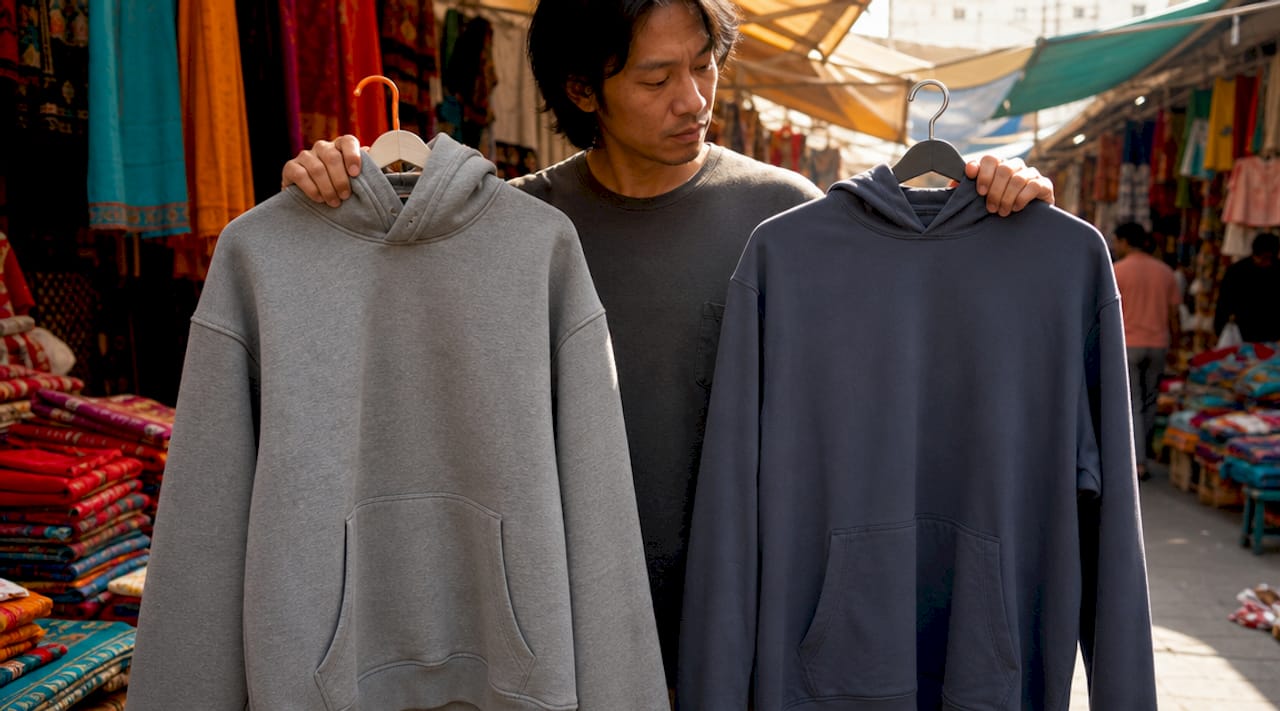
Style selection should match the event format and your audience. Jerseys work for active sports like basketball, soccer, and volleyball where breathability matters. Hoodies and crewnecks suit fall and winter tournaments or serve as the commemorative item coaches and players wear off the field. T-shirts remain the most cost-effective option for large participant counts. Tracksuits and warm-up sets signal a higher production value and work well for elite or invitational events where the apparel itself communicates prestige.
Pro Tip: Order a sample garment in the exact fabric weight and style before committing to a full run. Colors print differently on polyester versus cotton, and what looks correct on screen may shift noticeably on the actual fabric.
| Style | Best use case | Key feature |
|---|---|---|
| Moisture-wicking jersey | Active play, warm weather | Breathability, sweat resistance |
| 450GSM hoodie | Commemorative championship gear | Durability, premium hand feel |
| Cotton blend tee | Large participant counts, keepsakes | Soft feel, print clarity |
| Tracksuit set | Elite or invitational events | Prestige, coordinated look |
How to design championship tournament shirts: artwork, colors, and branding
Artwork quality is the single biggest variable between a shirt that looks professional and one that looks rushed. The foundation of any print-ready design is a vector file. Vector artwork in AI or EPS format is required for final production because raster images like JPGs and PNGs cannot scale without losing quality. Submitting a raster file forces the print shop to redraw your artwork from scratch, which adds cost and delays your timeline. If your designer works in Adobe Illustrator or CorelDRAW, you are already in the right format.
Color discipline separates amateur designs from professional ones. Professional tournament shirt design contests, including the USTA PNW’s annual competition, restrict submissions to three colors maximum with specific Pantone matches required for accuracy. Three colors is not a creative limitation. It is a production reality that keeps costs manageable and ensures color consistency across a large print run. Pantone’s Matching System, specifically spot colors like Pantone 7441C, gives your print provider an exact reference that eliminates guesswork.
Print placement and sizing follow practical rules that most first-time organizers overlook. A standard chest print should not exceed 10 inches by 10 inches, which is the maximum artwork size recognized in professional tournament design guidelines. Back prints can run larger, typically up to 12 inches wide, but the chest placement is where your primary logo or tournament name should live. Secondary elements like the year, division, and achievement text belong on the sleeve or back.
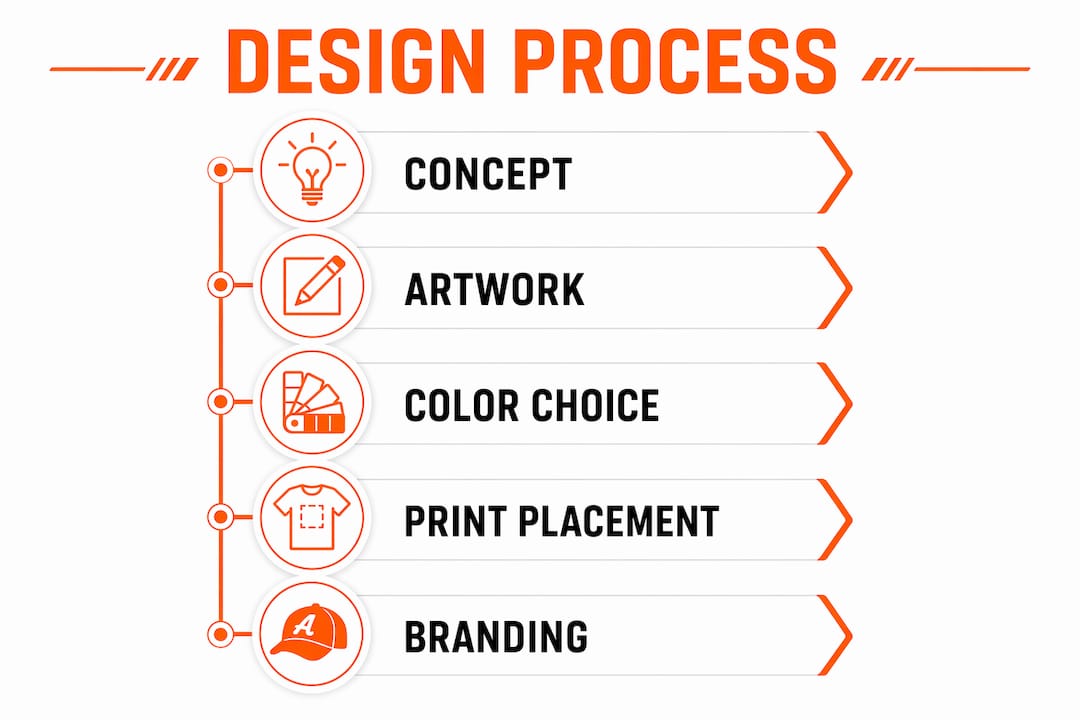
Branding elements that make championship shirts memorable include the tournament name, the year, a division or bracket identifier, and a short achievement phrase. “2026 Regional Champions” reads better than a generic team name alone. Customization options like player names, numbers, captain badges, and tournament achievement markers significantly increase the perceived value of the finished garment. Players are far more likely to keep and wear a shirt that has their name on it.
Pro Tip: Run a design contest among players, parents, or fans before finalizing artwork. Fan-driven design contests transform tournament apparel into legacy memorabilia rather than simple merchandise, and the winning designer becomes a built-in ambassador for the shirt.
Key design elements to include on championship tournament shirts:
- Tournament name and year in a prominent, readable font
- Team or organization logo in vector format
- Division, bracket, or achievement designation
- Player names and numbers for personalized versions
- Captain badges or special role identifiers
- A short achievement phrase or slogan
What are the steps and timelines for ordering custom championship shirts?
Ordering custom championship apparel follows a predictable sequence, and knowing each step prevents the most common delays. Start with a confirmed design file in vector format, a finalized size breakdown across your roster, and a clear delivery deadline. Work backward from that deadline to set your order submission date.
Here is the standard ordering sequence for tournament shirts:
- Finalize artwork in AI or EPS format with Pantone color references confirmed.
- Submit your size run including player sizes, staff sizes, and any fan or spectator quantities.
- Request a digital proof from your print provider and approve it in writing before production begins.
- Confirm your order quantity against the minimum order requirement. Tournament-grade championship jerseys and hoodies typically carry a minimum order quantity of 50 units at approximately $18 per piece.
- Select your production timeline. Standard production averages 5 business days, with rush options compressing that to 3 business days when expedited shipping is added.
- Arrange delivery logistics to confirm the shirts arrive before the tournament date, not the day of.
One underappreciated advantage of championship orders specifically is production priority. Championship orders often receive priority queue status, which can reduce lead times from 18 days down to 12 to 15 days compared to standard team apparel runs. Communicate to your print provider that this is a championship order with a hard event deadline, and ask explicitly whether priority production is available.
| Order type | Standard timeline | Rush timeline |
|---|---|---|
| Standard custom tees | 5 business days | 3 business days |
| Championship hoodies | 12 to 15 days | Available on request |
| Embroidered patches | 7 to 10 days | Varies by provider |
How to choose the right printing and customization methods
Print method selection affects cost, durability, and how well your design translates from screen to fabric. Each method has a clear use case, and choosing the wrong one for your design complexity or fabric type is a common and expensive mistake.
Screen printing is the standard for high-volume championship tees. It produces sharp, vibrant colors at a low per-unit cost once the screens are set up, making it ideal for orders of 50 units or more with a design that uses three colors or fewer. Jam4apparel’s bulk screen printing service handles exactly this type of order, with in-house production that keeps turnaround times tight.
Embroidery adds a textured, three-dimensional quality that screen printing cannot replicate. It is the right choice for captain badges, team crests, and any element where durability and prestige matter more than fine detail. Embroidered patches and specialized embellishments significantly increase the perceived value of championship gear, which is why you see them on varsity jackets and high-end tournament hoodies. Jam4apparel’s custom embroidery services cover hats, polos, and apparel with the same in-house quality control.
DTF (Direct-to-Film) transfers handle full-color, photographic, or gradient-heavy designs that screen printing cannot reproduce cleanly. If your championship logo includes a detailed illustration or more than four colors, DTF is the technically correct choice. Sublimation works similarly but bonds dye directly into polyester fibers, making it permanent and ideal for all-over printed jerseys where the design covers the entire garment surface.
Comparing print methods for championship tournament shirts:
- Screen printing: Best for simple logos, high volume, low cost per unit, 1 to 3 colors
- Embroidery: Best for patches, badges, crests, and premium hoodies where texture signals quality
- DTF transfers: Best for full-color or complex artwork on cotton and blended fabrics
- Sublimation: Best for all-over printed polyester jerseys with no color count limits
What common mistakes to avoid when ordering championship shirts
Most ordering problems trace back to a small set of preventable errors. Catching them before you submit your order saves time, money, and the specific stress of shirts arriving wrong the week of your tournament.
- Submitting raster artwork. JPG and PNG files cause production delays because print shops must redraw the design as a vector. Always provide AI or EPS files.
- Exceeding color count limits. Designs with more than three colors cost significantly more to screen print and may require a method switch to DTF.
- Underestimating lead time. Five business days is the standard, but that clock starts after proof approval, not after you submit the order.
- Skipping proof approval. A digital proof catches placement errors, color shifts, and spelling mistakes before they are printed on 100 shirts.
- Ignoring size distribution. Most adult groups skew toward medium, large, and XL. Ordering equal quantities across all sizes leaves you short on the most common sizes.
- Overlooking fabric suitability. Screen printing on a moisture-wicking polyester without the right ink type causes cracking and color fade after a few washes.
Pro Tip: Build a two-day buffer between your confirmed delivery date and your tournament date. Shipping delays happen, and having 48 hours of margin means a late delivery is an inconvenience rather than a crisis.
Key takeaways
Designing championship tournament shirts that last requires vector artwork, disciplined color choices, the right print method for your fabric, and a production timeline that accounts for proof approvals and shipping.
| Point | Details |
|---|---|
| Start with vector artwork | Submit AI or EPS files to avoid production delays and extra redraw costs. |
| Limit colors to three | Three Pantone-matched colors keep costs predictable and print quality consistent across large runs. |
| Match print method to design | Use screen printing for simple logos, embroidery for badges, and DTF for full-color artwork. |
| Plan for 50-unit minimums | Championship-grade apparel typically starts at 50 units around $18 per piece. |
| Build in timeline buffer | Standard production runs 5 business days. Add 2 days of shipping margin before your event date. |
Why the shirt matters more than most organizers realize
I have seen tournaments spend months on bracket logistics and three days on shirts. The shirts are what people take home. The bracket is forgotten by Monday.
What I have learned from working with teams and organizers over the years is that the design process itself has value beyond the finished product. When you involve players in choosing the color scheme or run a quick vote on the logo, you are building investment in the event before it even starts. That engagement is real, and it shows up in how people treat the shirt afterward. They do not stuff it in a drawer. They wear it.
The other thing most organizers underestimate is the difference between a shirt that looks like it was made for this tournament and one that looks like it was made for any tournament. That difference lives in the details: the year on the sleeve, the division name on the back, the captain badge on the chest. Those specifics are what make a shirt a keepsake rather than just apparel. Team apparel design done well communicates that the event mattered and that the people who competed in it mattered.
My honest advice: do not treat the shirt as the last item on your planning checklist. Treat it as part of the event experience. The players who win your tournament will wear that shirt for years. Make it worth wearing.
— Adam
Get your championship shirts made right with Jam4apparel
Jam4apparel handles custom championship tournament shirts from initial design through final delivery, with in-house screen printing, embroidery, and DTF production based in Lake in the Hills, Illinois. Whether you need 50 jerseys for a regional bracket or 500 commemorative tees for a large-scale invitational, the team at Jam4apparel works directly with coaches and organizers to get artwork print-ready, select the right fabric and method, and hit your event deadline. Fast turnaround, competitive pricing, and no outsourced production mean fewer surprises between order submission and delivery day. Reach out to start your order and get a proof before you commit to a full run.
FAQ
What file format do I need to submit for championship shirt printing?
Vector files in AI or EPS format are required for print production. JPG and PNG files are acceptable for design previews only and will cause delays if submitted as final artwork.
How many colors should a championship tournament shirt design use?
Three colors is the professional standard for screen-printed tournament shirts. Staying at three Pantone-matched colors keeps per-unit costs predictable and ensures color accuracy across the full print run.
What is the minimum order quantity for championship tournament shirts?
Most championship-grade apparel providers set a minimum order quantity of 50 units, with base pricing around $18 per piece. Smaller quantities typically require a switch to DTF or digital printing methods.
How far in advance should I order championship shirts?
Submit your order at least two weeks before your event date. Standard production runs 5 business days after proof approval, and championship orders with priority queue status can compress that to 12 to 15 days total including shipping.
What is the difference between screen printing and embroidery for tournament shirts?
Screen printing applies ink directly to the fabric surface and works best for flat logos and text at high volume. Embroidery stitches the design into the fabric and is the right choice for patches, badges, and any element where texture and durability signal premium quality.
Recommended
Ready to print your design?
Screen print, embroidery, and DTF — no minimums on many styles.