Custom Patch Cost: What to Budget in 2026
August 22, 2026
Custom Patch Cost: What to Budget in 2026
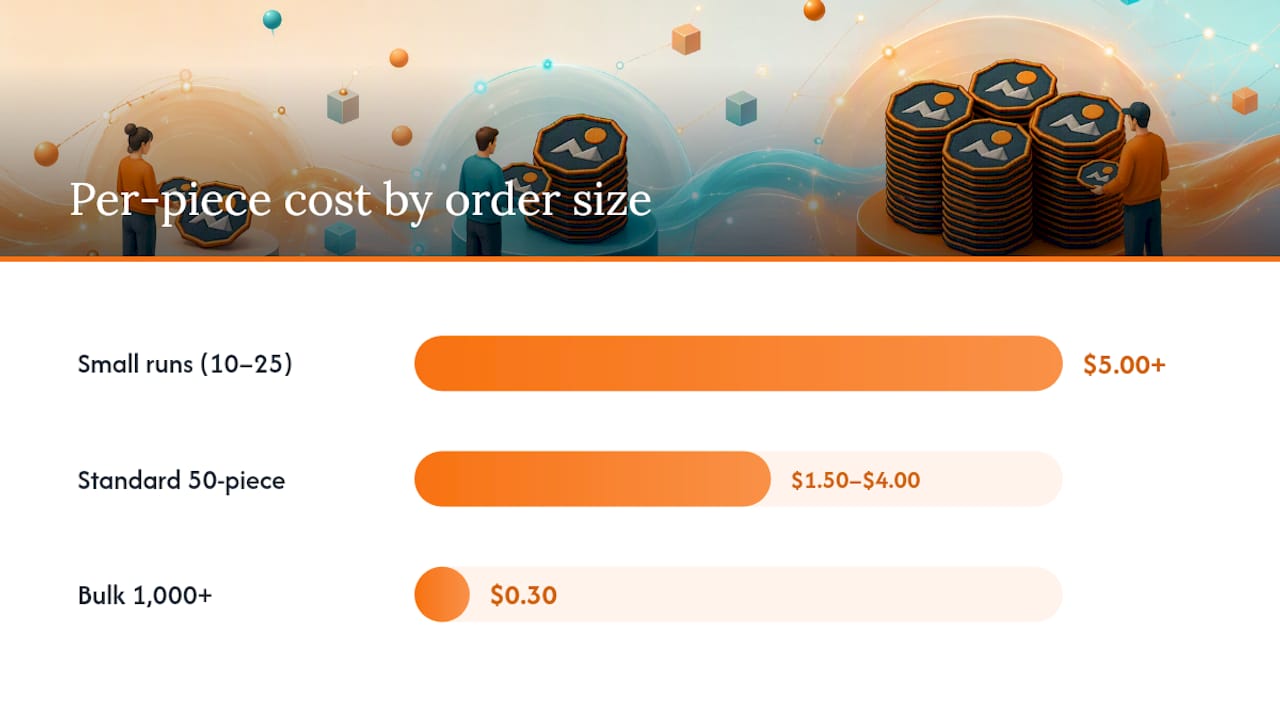
A standard order of 50 embroidered patches typically runs $1.50 to $4.00 per piece, small runs of 10 to 25 patches often cost $5.00 or more per unit, and bulk orders of 1,000 or more can drop close to $0.30 per piece. Three things move that number more than anything else: quantity, patch type, and one-time setup costs like digitizing or PVC mold fees.
-
Small runs (10-25 pieces): $5.00+ per patch
-
Standard orders (50 pieces): $1.50 to $4.00 per patch
-
Bulk orders (1,000+ pieces): as low as $0.30 per patch
Statistic Callout: A 50-piece embroidered patch order priced at $2.50 per unit lands around $125 before backing, shipping, or rush fees enter the math.
Key Takeaways
Custom patch cost depends primarily on quantity, patch type, and one-time setup fees, with per-piece prices ranging from $0.30 in bulk to $5.00 or more for small runs.
| Point | Details |
|---|---|
| Quantity drives price | Crossing thresholds like 50, 100, or 500 pieces often cuts per-piece cost more than any other change. |
| Material choice matters | Chenille and leather stay pricier at volume; PVC and embroidered patches drop fastest with quantity. |
| Backing adds up | Velcro backing can add $0.40 to $0.70 per patch, iron-on adds $0.10 to $0.20. |
| Calculate landed cost | Add shipping, packaging, and handling to the invoice total before setting a resale price. |
| Get a real quote | Jam4apparel offers in-house digitizing and free proofs to keep pricing transparent and turnaround fast. |
Table of Contents
- How Patch Type Changes Your Custom Patch Cost
- What Line Items Actually Drive Custom Embroidery Patch Prices?
- How Much Will My Order Actually Cost? Worked Examples
- What Extra Fees Should I Expect Beyond the Base Price?
- How Can I Lower My Custom Patch Cost?
- Why Most Pricing Confusion Comes Down to One Missing Question
- Get an Accurate Quote for Your Custom Patches
- Frequently Asked Questions
- Sources
How Patch Type Changes Your Custom Patch Cost
Material choice swings your per-piece price as much as quantity does, sometimes more. Each type carries its own production method, and that method drives both the base cost and how much you save by ordering more.
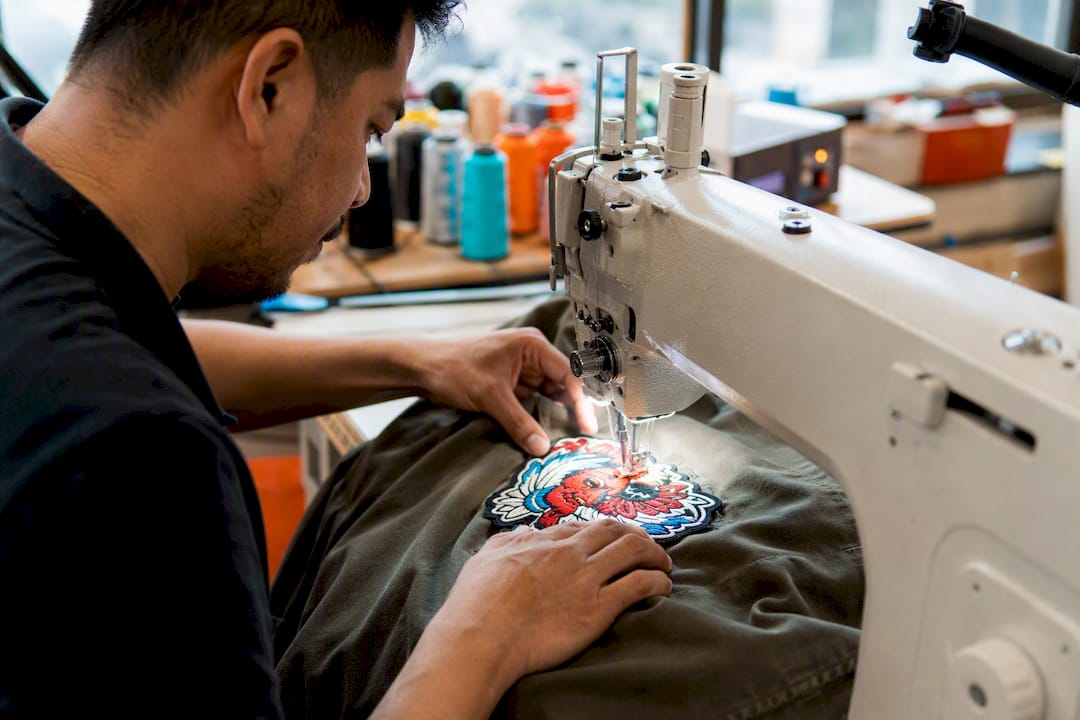
- Embroidered patches: The default for uniforms, hats, and team jackets. Standard 50-piece orders run $1.50 to $4.00 per piece, with heavier stitch coverage pushing costs up; see examples and details at Embroidered Logo Patches – High Class Tackle Co.®.
- Woven patches: Best for fine text or detailed logos that embroidery flattens. Pricing sits close to embroidered but often runs slightly cheaper since woven patches use thinner thread with tighter detail.
- Printed patches: The budget option for full-color designs, gradients, or photo-realistic art. Usually the cheapest per piece, especially at low quantities.
- PVC patches: Popular for tactical gear, outdoor brands, and 3D logos. Small runs carry real sticker shock because of the required injection mold, but that same table shows unit prices dropping from several dollars at low volume to $0.15 to $0.37 per piece at high volume.
- Leather patches: Common on varsity jackets and caps. The backing material itself adds cost, and leather rarely gets as cheap as embroidery even in bulk.
- Chenille patches: The raised, fuzzy letter patches on varsity jackets. Labor-intensive construction keeps chenille the most expensive type per piece at almost any quantity.
Pro Tip: PVC and embroidered patches see the steepest price drops as quantity climbs, because their upfront tooling and digitizing costs get spread across more units. Chenille and leather stay relatively expensive even at 1,000 pieces, since most of their cost is in materials and hand assembly rather than setup.
What Line Items Actually Drive Custom Embroidery Patch Prices?
Every supplier quote is really a stack of separate charges, not one flat number. Knowing what each line covers helps you spot where a quote is padded and where it’s fair.
- Digitizing/setup fee: A one-time charge to convert your artwork into a stitch file or, for PVC, a mold. This fee gets waived on many high-volume orders but hits small runs hard.
- Stitch count/coverage: More thread coverage means more machine time, which raises the per-piece rate on embroidered and woven patches.
- Backing type: Iron-on, Velcro/hook, and sew-on all price differently, with sew-on usually the cheapest baseline.
- Border style: Merrowed (rolled edge) borders versus heat-cut edges affect finishing time.
- Thread colors and complexity: More colors and finer detail add machine passes.
- Artwork revisions and samples: Free proofs are common, but physical pre-production samples often cost extra.
Domestic shops tend to bundle these costs into a clean quote with shorter lead times. Overseas manufacturers can undercut on unit price but add shipping, customs, and longer production windows that eat into the savings.
How Much Will My Order Actually Cost? Worked Examples
Price tables make this concrete. Here’s a representative breakdown by size and quantity for standard embroidered patches, based on typical vendor pricing structures:
| Quantity | 1-inch | 2-inch | 3-inch |
|---|---|---|---|
| 25 | $5.00+ | $5.00+ | $5.00+ |
| 50 | $4.00 | $4.00 | $4.00 |
| 100 | $2.50 | $2.50 | $2.50 |
| 500 | $0.30 to $0.37 | $0.30 to $0.37 | $0.35 |
| 1,000 | $0.35 | $0.40 to $0.70 | $0.40 to $0.70 |
Two worked examples:
- 50 embroidered 3-inch sew-on patches: 50 × $4.00 = $200.00 total. No backing add-on since sew-on is typically the base price.
- 1,000 custom-shaped PVC patches with a mold fee: 1,000 × $0.35 (per the PVC price list’s high-volume tier) = $350.00, plus a one-time mold fee that’s usually a flat charge regardless of quantity, making the per-piece impact shrink as you order more.
Don’t stop at the invoice total. Add shipping, packaging, and any per-unit handling fee to get your real landed cost, which is what determines your actual margin if you’re reselling the patches.
What Extra Fees Should I Expect Beyond the Base Price?
Backing and finishing choices add up fast, and most vendors list them as separate line items rather than folding them into the base price.
- Iron-on backing: adds a small per-patch charge
- Velcro/hook backing: adds a higher per-patch charge
- Heat-seal film: usually a smaller add-on, priced per piece
- Packaging (individual poly bags, boxed sets): varies by order size
- Sample/prototype fees: often charged separately from the main order
Statistic Callout: Velcro backing alone can add $0.40 to $0.70 per patch, which on a 500-piece order means $200 to $350 in backing costs before you’ve paid for the patches themselves.
Minimums vary by supplier, and setup fees typically apply below a certain quantity threshold, often in the 25 to 50 piece range. Free proofs are standard practice at most shops, but rush production and expedited shipping almost always cost extra on top of standard turnaround, which usually runs one to two weeks for domestic orders.
How Can I Lower My Custom Patch Cost?
Small adjustments to your order specs often save more than switching suppliers.
- Push your quantity up to the next price break, even by a few units, since crossing thresholds like 50, 100, or 500 changes the math more than almost any other lever.
- Simplify stitch coverage by reducing fill areas and fine detail.
- Choose sew-on backing over Velcro or iron-on when your use case allows it.
- Consolidate thread colors to reduce machine passes.
- Stick to standard shapes (circle, rectangle, shield) instead of custom die-cut outlines that add tooling cost.
- Ask suppliers directly: What’s your digitizing fee? How many proofs are included? What backing options do you offer? What’s standard turnaround versus rush? Do you charge a mold fee for custom shapes? Is shipping included in the quote?
Pro Tip: Ask if you can get a one-off sample using an existing digitized file from a similar project instead of paying full setup for a brand-new design. And if you only need a handful of iron-on patches, ask for sew-on or adhesive-backed patches instead. A home iron applies just as well and skips the machine backing fee entirely.
Why Most Pricing Confusion Comes Down to One Missing Question
Most people who reach out for a quote skip the one question that actually matters: what quantity gets you to the next price break? I’ve seen clients order exactly what they need and pay double per piece compared to rounding up to the next tier.
At Jam4apparel, we digitize in-house and provide free proofs before production starts, so there’s no third-party markup hiding in your quote and no surprise fee showing up after you’ve already committed.
Get an Accurate Quote for Your Custom Patches
Every price range in this guide is a starting point, not a final number. Your actual custom patch cost depends on your artwork, quantity, backing choice, and turnaround needs, and the only way to know for sure is to get a real quote against your specific design.
Jam4apparel handles digitizing, proofing, and production in-house at our Lake in the Hills, Illinois shop, which means fewer middlemen marking up your invoice and faster answers when you need a number fast. To get a quote, send us your artwork, target size, quantity, and preferred backing (sew-on, iron-on, or Velcro), and we’ll build a proof and price around what you actually need instead of a generic template. Schools, teams, and small businesses ordering patches alongside uniforms or spirit wear can also browse options by industry to see how patches fit into a larger apparel order. Ready to see real numbers? Visit Jam4apparel and request your free design proof today.
Frequently Asked Questions
How much do custom patches cost on average? A standard 50-piece embroidered order typically costs $1.50 to $4.00 per patch. Small runs of 10 to 25 pieces often run $5.00 or more per unit, while bulk orders of 1,000 or more can fall near $0.30 per piece.
What’s the difference between custom embroidery patch prices and PVC patch pricing? Embroidered patches price based on stitch coverage and thread colors, while PVC patch pricing depends heavily on mold fees that get amortized over larger quantities. Small PVC runs cost more upfront, but bulk PVC orders often land cheaper per piece than embroidery.
Are there hidden fees I should watch for in custom patch pricing? Yes. Backing (Velcro adds $0.40 to $0.70, iron-on adds $0.10 to $0.20), digitizing or mold fees, sample charges, and rush production fees are the most commonly overlooked line items on a quote.
How can I get affordable custom patches without sacrificing quality? Order to the next quantity price break, simplify your design’s stitch coverage or color count, and choose sew-on backing over Velcro when your application allows it. These changes lower your custom patch cost without changing suppliers.
Does shipping affect the total cost of custom patches? Yes. Always calculate landed cost, meaning the patch price plus shipping, packaging, and handling, before comparing quotes or setting a resale price. Overseas suppliers often show a lower unit price but add shipping and customs costs that close the gap.
Sources
Recommended
Ready to print your design?
Screen print, embroidery, and DTF — no minimums on many styles.