Custom Athletic Apparel for Teams: What to Ask a Supplier
August 6, 2026
Custom Athletic Apparel for Teams: What to Ask a Supplier
If you need custom athletic apparel for a team, school, or event, Jam4apparel delivers performance fabrics, multiple decoration methods, and in-house production from Lake in the Hills, Illinois. Start with a free proof and quote request. Gather your headcount, pull together a vector logo file, and reach out through the online quote form. You’ll get a design proof before anything goes to production.
Here’s what the rest of this guide covers so you can move fast:
- Garment types: performance tees, jerseys, hoodies, polos, compression wear, socks, and warmup sets
- Decoration methods: screen printing, embroidery, DTF, sublimation, and patches, with tradeoffs for each
- Pricing drivers: garment cost, decoration method, color count, quantity, and setup fees
- Lead times: standard production runs typically require 2–8 weeks from order to shipment, depending on complexity; DTF no-minimum orders can ship faster
- Ordering flow: quote, proof approval, size confirmation, production, and shipment
- Sizing logistics: how to collect sizes, manage team stores, and plan reorder buffers
Table of Contents
- What garment types count as custom athletic apparel?
- Which decoration method is right for your order?
- What fabrics should you specify for performance team wear?
- How does pricing work, and what minimums should you expect?
- What lead times and shipping should you plan for?
- How do you place an order from start to finish?
- How do you manage sizing and logistics for a full team order?
- Why Jam4apparel is a reliable supplier for team and event orders
- Key Takeaways
- What actually matters when you order custom team gear
- Ready to order custom athletic apparel with Jam4apparel?
- Useful resources for your order
What garment types count as custom athletic apparel?
Custom sportswear covers far more than a printed T-shirt. The category spans everything a team wears from warmup to final whistle, plus the spirit wear and event gear that surrounds game day.
- Hoodies and outerwear: custom hoodies for sports teams serve warmup, travel, and spirit wear roles simultaneously
- Event T-shirts: — race shirts, fundraiser tees, and tournament giveaways, often ordered in large quantities with a single design
Common additions include individual name and number personalization, role-specific designs (player vs. coach vs. staff), and event-specific bulk orders for tournaments or charity runs. Spirit wear stores let families and fans buy on their own schedule without the organizer collecting sizes upfront.
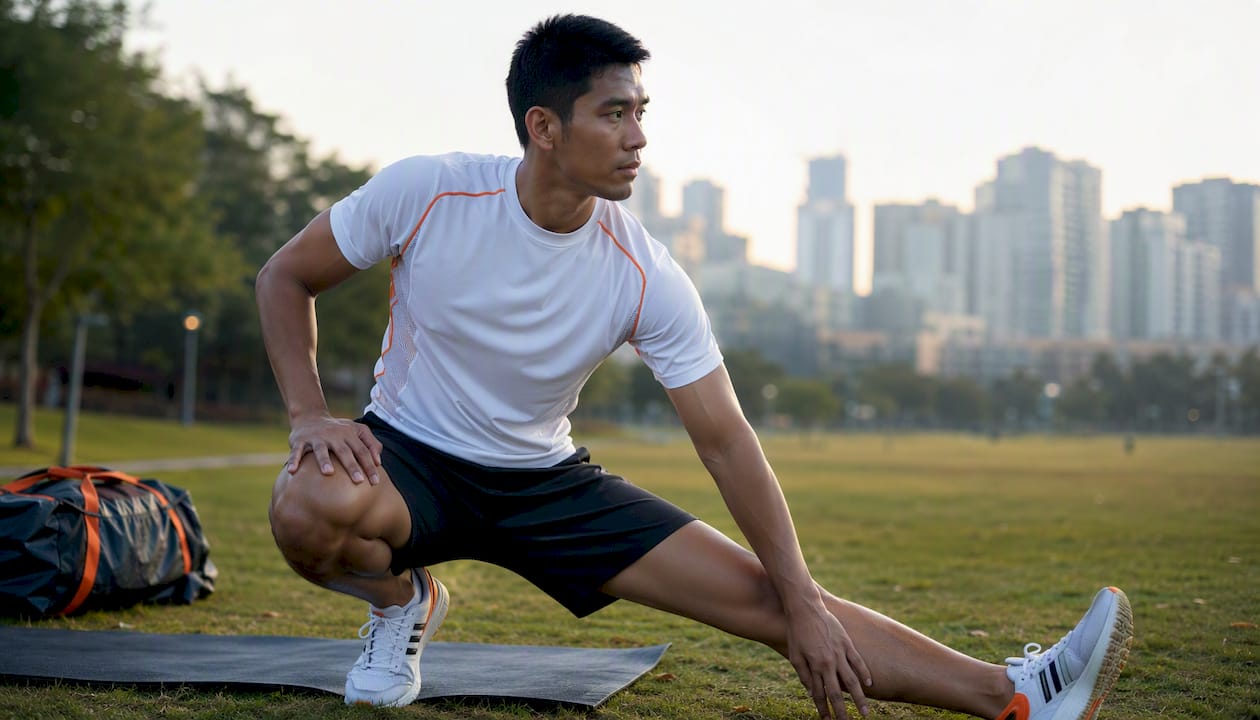
Pro Tip: Match garment cut and fabric to the sport’s physical demands. Flatlock seams reduce chafing in contact sports like wrestling and lacrosse. Compression base layers worn under jerseys need four-way stretch; order them as a separate line item with the jersey set.
Which decoration method is right for your order?
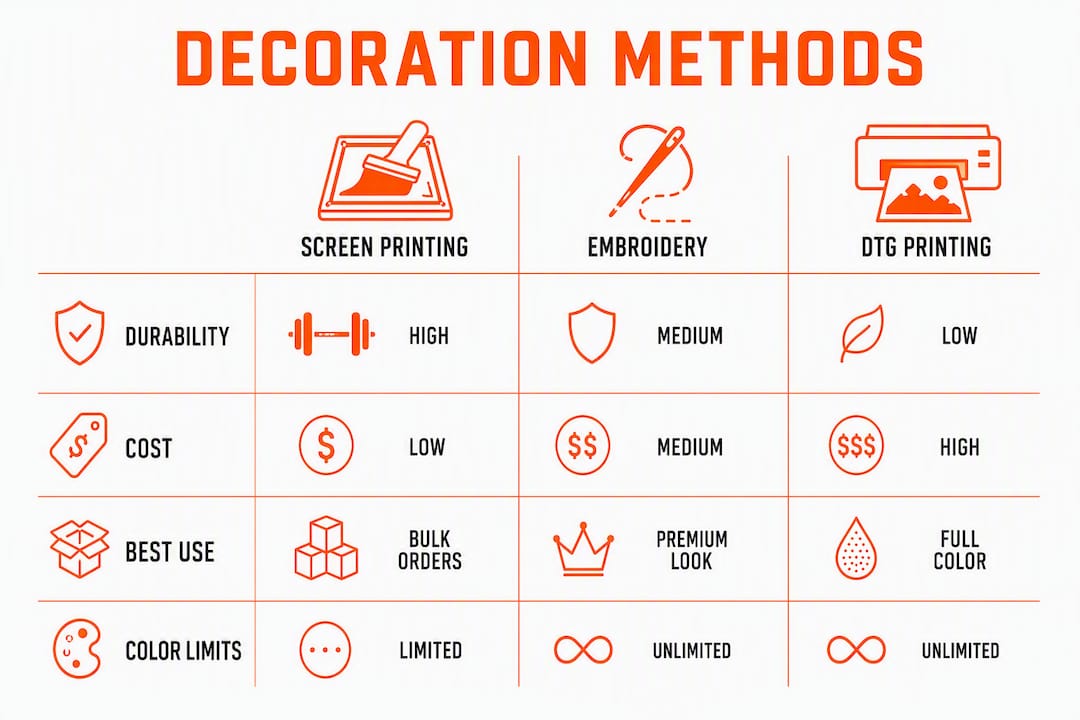
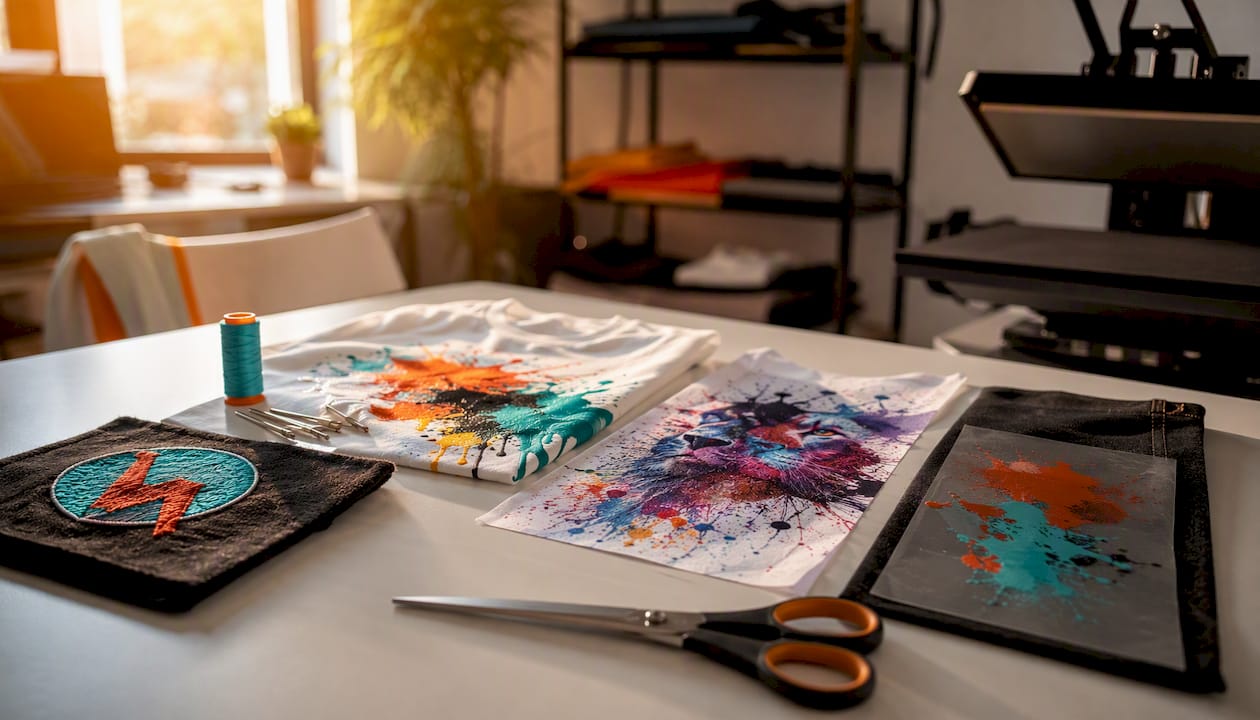
The decoration method you choose affects durability, cost, and how the finished garment looks after 50 washes. Here’s how the main options stack up.
| Method | Durability | Best Look | Relative Cost | Color Limits | Best For |
|---|---|---|---|---|---|
| Screen printing | High | Bold, flat graphics | $ (bulk) | Spot colors only | Large runs, single-color or limited-color logos |
| Embroidery | Very high | Premium, textured | $$ | Thread colors | Polos, hats, staff apparel |
| DTF (Direct-to-Film) | High | Full color, photo-quality | $$ | Unlimited | Small runs, complex art, no minimums |
| Sublimation/DTG | Very high | Full-bleed, vibrant | $$–$$$ | Unlimited | All-over jerseys, polyester performance wear |
| Tackle twill / heat-seal | High | Classic athletic letters | $$ | Limited | Varsity letters, numbers, name plates |
| Custom patches | Very high | Dimensional, collectible | $$–$$$ | Limited | Jackets, bags, specialty items |
Screen printing remains the most cost-effective method for bulk orders. Per-unit cost drops significantly as quantity rises, making it the standard choice for tournament shirts and school spirit wear. The tradeoff is that each additional ink color adds to the setup cost, so designs with gradients or photographic detail get expensive fast.
Embroidery is the right call when the garment needs to look premium after years of use. Stitched logos on polos and caps hold up through commercial laundering in a way that printed transfers simply don’t. The stitch count drives cost, so keep embroidered logos clean and not overly detailed.
DTF printing transfers a full-color film directly onto the fabric, with no minimum order requirement. That makes it practical for small teams, one-off event giveaways, or orders where every shirt needs a different name. Per-unit cost runs higher than bulk screen printing, but the flexibility is real.
Sublimation dyes go into the fiber rather than sitting on top of it, which means the print won’t peel or fade even after repeated washing and heavy game-day wear. Sublimation suits full-coverage designs and polyester athletic jerseys best; it doesn’t work on natural fibers like cotton.
Multi-method combinations are common and often the smartest approach. An embroidered chest logo paired with screen-printed player numbers gives you the premium look of embroidery where it’s most visible and the cost efficiency of printing for the back.
Pro Tip: When artwork requires fine gradients or a full-bleed all-over design on a jersey, sublimation is the only method that delivers without compromise. For a clean logo on a polo or staff hat, embroidery for youth sports gear and adult staff apparel consistently outperforms every printed alternative on longevity.
What fabrics should you specify for performance team wear?
Activewear and athleisure trends have pushed performance fabric expectations higher across every category, from recreational leagues to school uniforms. Buyers who specify fabrics get better results than those who leave it to the supplier’s default.
- Polyester microknit: lightweight, breathable, and the standard for game-day jerseys and performance tees; holds sublimation and screen printing well
- Polyester/spandex blends (4-way stretch): the right choice for compression wear, fitted jerseys, and any garment that needs to move with the athlete
- Moisture-wicking knits: pull sweat away from the skin; request this finish explicitly on any garment worn during competition or training
- Cotton/poly blends: softer hand feel, better for casual fanwear, spirit wear, and event T-shirts where performance isn’t the priority
- Lightweight compression Lycra: base layers and compression shorts; order with the jersey set for a coordinated look
Performance features worth requesting by name: moisture-wicking finish, quick-dry treatment, UPF sun protection for outdoor sports, mesh ventilation panels on the back or underarms, anti-odor finishes for year-round indoor sports, and flatlock seams for contact athletes.
Cotton blends make sense for spirit wear, fundraiser shirts, and casual team merch. For anything worn during actual play, polyester or a polyester/spandex blend is the practical choice. The fabric also affects which decoration method works. Sublimation requires high-polyester content; embroidery works on virtually any fabric; DTF adheres well to both cotton and poly.
Pro Tip: Include fabric care instructions on your team store or order confirmation page. Screen-printed and embroidered garments last significantly longer when washed inside-out in cold water. One line of guidance saves you reorder requests from players whose prints cracked after three hot-cycle washes.
How does pricing work, and what minimums should you expect?
Pricing for custom team sportswear comes down to five variables: the garment’s base cost, the decoration method, the number of print locations, the ink or thread color count, and the total quantity ordered.
- Garment cost: blank apparel ranges from budget basics to premium performance cuts; the blank is often 40–60% of the total per-unit price
- Decoration method: screen printing at volume is the lowest per-unit cost; embroidery and sublimation run higher
- Color count: each additional screen color in screen printing adds a setup fee; DTF and sublimation have no color-count surcharge
- Print locations: a front chest logo plus a back number counts as two locations, each with its own setup cost
- Quantity: bulk pricing breakpoints typically fall at 12, 24, 48, and 100+ pieces; per-unit cost drops meaningfully at each tier
Relative cost guide:
| Method | Small run (under 24 pcs) | Bulk (48+ pcs) |
|---|---|---|
| Screen printing | $$–$$$ | $ |
| DTF | $$ | $$ |
| Sublimation | $$$ | $$–$$$ |
| Embroidery | $$ | $$ |
No-minimum options, primarily DTF, carry a higher per-unit cost but eliminate the risk of over-ordering. For small teams or event giveaways, opting for no-minimum options can be more financially sensible than ordering larger minimum quantities and holding excess stock.
Questions to ask any supplier before committing:
- Are setup/screen fees included in the quoted price, or charged separately?
- Is the design proof free, or does it cost if you don’t proceed?
- What are the reorder minimums and pricing for repeat runs?
- Are rush fees a flat rate or a percentage of the order?
- Who pays for shipping, and is it included in the quote?
What lead times and shipping should you plan for?
Production timelines vary more than most buyers expect, and the biggest delays almost never come from the press or the embroidery machine. They come from art approval hold-ups, back-ordered blanks, and last-minute design changes.
| Order type | Typical lead time | Suggested order-by date |
|---|---|---|
| DTF / no-minimum small run | 3–10 business days | 2–3 weeks before event |
| Standard screen print or embroidery | 2–3 weeks | 4–5 weeks before event |
| Complex multi-decoration or large bulk | 6–8 weeks | 6–8 weeks before event |
| Handcrafted specialty (tackle twill, multi-layer embroidery) | 6–8 weeks | 10 weeks before event |
Rush options exist at most suppliers, including Jam4apparel, but they typically add a fee and depend on press availability. The elements that most reliably cause delays:
- Art files submitted as low-resolution JPEGs instead of vector files
- Design changes requested after the proof is approved
- Back-ordered garment styles or sizes
- Multi-decoration jobs where embroidery and printing must be sequenced
For bulk team orders, a single pallet shipment is usually the most cost-effective. If your team is spread across multiple cities, ask about split shipments or individual direct-ship options. For U.S. domestic orders, standard ground shipping adds additional days to the production lead time.
How do you place an order from start to finish?
The ordering process at Jam4apparel follows a straightforward sequence. Knowing each step in advance cuts the back-and-forth in half.
- Request a quote: submit your garment type, decoration method, quantity, event date, and budget through the online quote form. The more detail you provide, the faster the turnaround on the estimate.
- Approve the design proof: Jam4apparel provides a free design proof before production begins. Review it carefully. This is your last clean opportunity to catch color, spelling, or layout issues.
- Confirm sizes, quantities, and payment: lock in your size breakdown and pay the deposit or full amount per the supplier’s terms. Changes after this point can delay production.
- Production: the order moves to the press or embroidery machine. In-house production at Jam4apparel means no outsourcing delays.
- Final inspection and shipment: garments are checked before packing. You receive tracking information once the order ships.
Artwork file requirements:
- Preferred formats: vector files (AI, EPS, PDF) for logos and text
- Raster minimum: 300 DPI at print size for any photo or raster element
- Color mode: CMYK for printing; Pantone/PMS spot colors for exact brand color matching
- Background: transparent PNG or vector with no white fill behind the logo
- Fonts: convert all text to outlines/curves before submitting to avoid font substitution
Common mistakes that slow orders down include submitting a low-resolution JPEG logo, requesting a design change after proof approval, and providing inaccurate size counts. Jam4apparel’s ordering mistakes guide covers the full list with fixes.
How do you manage sizing and logistics for a full team order?
Collecting sizes from a team of 30 people is, genuinely, one of the harder parts of the whole process. People respond late, forget youth vs. adult sizing distinctions, and change their minds after the deadline.
- Use a standardized size form with a measurement guide attached, not just S/M/L/XL options
- Specify whether sizes are adult or youth on every line item; the two scales are not interchangeable
- Set a firm size-confirmation deadline 2–3 weeks before production starts and communicate it clearly
- Build in a 5–10% quantity buffer for replacements, late additions, and merchandise sales
- Confirm with the supplier whether they can accommodate a small add-on order after the main run ships
Team stores solve the size-collection problem for larger organizations. Instead of the organizer collecting every size, a team store lets each player or family member order and pay individually, with all orders batched and produced together. Jam4apparel supports spirit wear stores for schools, clubs, and organizations that want this model.
For reorders, the process is significantly faster once the original artwork and garment specs are on file. Jam4apparel’s reorder guide walks through how to maintain consistent colors and sizing across multiple production runs.
Pro Tip: Require a final size-confirmation deadline 2–3 weeks before production. Any size submitted after that date goes on a separate reorder at standard pricing. Communicating this upfront eliminates the last-minute scramble that delays the entire team’s order.
Why Jam4apparel is a reliable supplier for team and event orders
Jam4apparel operates with in-house screen printing, embroidery, DTF printing, custom patches, and spirit wear store setup, all from its facility in Lake in the Hills, Illinois. In-house production means the team controls quality at every step rather than routing jobs through a third-party decorator.
Key capabilities and trust signals:
- Free design proof on every order before production begins
- Multiple decoration methods under one roof: screen printing, embroidery, DTF, and custom patches
- No-minimum DTF orders for small teams and event giveaways
- Spirit wear stores for schools, clubs, and nonprofits that need ongoing apparel sales
- Industry-specific packages for teams, schools, corporate clients, and events via the industries page
- Fast turnaround supported by in-house production, not outsourced fulfillment
When evaluating any custom apparel supplier, ask for print and stitch close-up photos, request a sample garment if the order is large, and ask for references from similar organizations (schools, youth leagues, nonprofits). A supplier who hesitates on any of those requests is a red flag.
Guarantees to confirm before ordering: art approval before production, a clear reprint or correction policy for production errors, and QA inspection before shipment.
Key Takeaways
The most effective approach to ordering custom athletic apparel is to lock in your garment type, decoration method, and artwork files before requesting a quote, then confirm sizes at least two weeks before production begins.
| Point | Details |
|---|---|
| Match garment to activity | Choose polyester microknit for performance; cotton blends for spirit wear and casual fanwear. |
| Pick decoration by durability and budget | Screen printing wins on bulk cost; embroidery lasts longest; DTF handles small runs with no minimum. |
| Confirm artwork early | Submit vector files and approve the design proof before production starts to avoid delays. |
| Plan lead time realistically | Standard production orders typically require 6–8 weeks from order to shipment for handcrafted and specialty items; DTF no-minimum orders can ship faster. |
| Use Jam4apparel for U.S. team orders | In-house production, free design proof, and no-minimum DTF options make Jam4apparel a strong fit for teams, schools, and events. |
What actually matters when you order custom team gear
Most buyers spend their energy on the design and almost none on the production details that actually determine whether the order arrives on time and looks right. The decoration method, the artwork file format, and the size-confirmation deadline matter more than the exact shade of red in the logo.
The free design proof is the most underused protection in the whole process. Buyers approve it quickly because they’re focused on the event date, then call back two weeks later because a player’s name is misspelled. Slow down on the proof. Read every word. Check every number. That’s the moment the order is still free to fix.
The other thing buyers consistently underestimate is how much the garment blank affects the final result. A great print on a cheap, stiff polyester shell still feels like a cheap shirt. Spending a dollar or two more per unit on a better blank, especially for a team that wears the gear all season, pays off in how the apparel represents the organization.
Ready to order custom athletic apparel with Jam4apparel?
Jam4apparel gives teams, schools, and event organizers a direct line to in-house production without the agency markup or the outsourced-decorator delays. You get a free design proof on every order, no-minimum options for small runs via DTF printing, and a full range of decoration methods from screen printing to embroidery to custom patches, all produced in-house in Lake in the Hills, Illinois.
Whether you’re outfitting a 10-person staff team or ordering 500 tournament shirts, the process starts the same way: a quote, a proof, and a confirmed size list. Browse team and event solutions by industry to find the package that fits your organization, or go straight to the screen printing service page to request a quote and get your free design proof started today.
Useful resources for your order
- Jam4apparel home: screen printing, embroidery, and in-house production
- DTF printing with no minimum orders
- Custom embroidery for hats, polos, and apparel
- Custom apparel solutions by industry
- Common ordering mistakes and how to avoid them
- How to reorder custom branded apparel
- Custom hoodies guide for sports teams
- Why custom apparel builds lasting brand identity
- Activewear fashion and fabric trends
- Athleisure wear: comfort, style, and versatility
Recommended
Ready to print your design?
Screen print, embroidery, and DTF — no minimums on many styles.