Custom Apparel Order Process Explained for Illinois Brands
June 29, 2026
Custom Apparel Order Process Explained for Illinois Brands
The custom apparel order process is a structured sequence of steps that takes your brand from a design idea to finished, decorated garments ready for distribution. Industry professionals call this workflow “apparel decoration fulfillment,” and it covers five core stages: inquiry and quoting, artwork proofing, production, quality inspection, and delivery. Understanding each stage helps Illinois entrepreneurs and organizations avoid costly mistakes, budget accurately, and set realistic timelines before placing a single order.
What are the essential steps in the custom apparel order process?
Ordering custom apparel starts with selecting your garment style and submitting your artwork, and production only begins after you approve a digital proof. That sequence is non-negotiable at every reputable shop. Skipping or rushing any step is the single most common reason orders come back wrong.
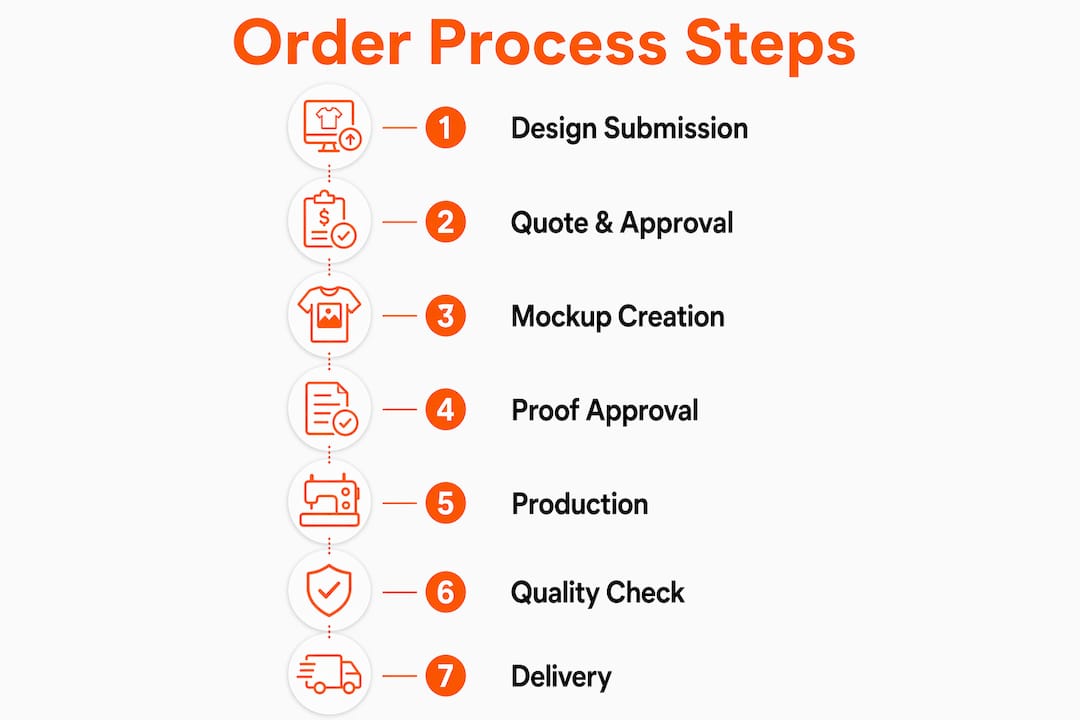
Here is how the full custom clothing ordering process unfolds:
-
Inquiry and quote submission. Contact your decorator with your garment style, quantity, decoration method, and artwork files. The more detail you provide upfront, the faster and more accurate your quote will be. Vague requests generate vague quotes, which leads to surprise charges later.
-
Digital mockup creation. Your decorator builds a digital proof showing exactly how your design will appear on the garment, including placement, size, and color. Review this carefully. Check spelling, logo proportions, and color values against your brand guidelines.
-
Proof approval. You sign off on the digital proof before any production begins. This approval is your legal confirmation that the design is correct. Changes after approval can trigger additional setup fees and delay your order.
-
Physical sample review (optional but recommended). Physical samples add 5–7 days but are strongly recommended for orders over 100 pieces or those with strict fit requirements. That added time is cheap insurance against a full run of garments that miss the mark.
-
Production. The decorator applies your design using screen printing, embroidery, or DTF (Direct-to-Film) transfers. Each method has different setup requirements and color limitations, so your choice here affects both cost and timeline. You can compare DTF vs screen printing to decide which method fits your project.
-
Quality inspection and packing. Finished garments go through inspection before shipping. A reputable shop checks print placement, color accuracy, and stitching integrity on every run.
-
Shipping and delivery. Domestic shipping typically adds 1–5 business days depending on your location in Illinois and the carrier used. Ask for tracking information at the time of shipment.
Pro Tip: Submit vector artwork files (AI or EPS format) whenever possible. Raster images like JPEGs force the decorator to redraw your design, which adds time and cost to your order.
How do pricing and quantities affect your custom apparel order?

Pricing is driven by five factors: garment cost, decoration method, number of colors in the design, order size, and setup fees. Bulk orders typically receive per-unit discounts that lower the overall cost. Understanding each factor before you request a quote puts you in control of your budget.
Key cost drivers to know before you order:
- Garment cost. The base shirt, hoodie, or polo makes up a significant portion of your total. Premium blanks like the American Apparel 2007 cost more per unit than standard wholesale blanks, but they hold prints better and last longer.
- Decoration method. Screen printing is cost-effective at high volumes. Embroidery carries a digitizing fee but produces a premium look on polos and hats. DTF transfers work well for small runs and complex, full-color artwork.
- Color count. Screen printing charges per color per location. A four-color front print costs more to set up than a one-color print. Reducing your design to fewer colors is one of the fastest ways to lower your quote. Read the screen printing color limits guide before finalizing your artwork.
- Order size. Minimum order requirements exist because setup costs are fixed regardless of quantity. Spreading those costs across more units lowers your per-piece price. For a full breakdown, the minimum order guide for small businesses explains how to plan around quantity thresholds.
- Setup fees. Screen setup, digitizing, and art preparation fees are often charged separately. Ask for an itemized quote so you know exactly what you are paying for.
Standard payment terms are 50% deposit before production and 50% before shipping. Long-term clients at some shops may qualify for invoiced billing. Budget for this split payment structure when planning your cash flow.
Pro Tip: Lock in your design before requesting a quote. Last-minute artwork changes after proof approval are one of the most common causes of unexpected cost increases and production delays.
What are typical turnaround times for custom apparel orders?
A standard custom apparel order takes 4–5 weeks from quote to delivery. That timeline includes every stage of the process, not just production. Illinois organizations planning for events, uniform launches, or seasonal merchandise need to build this full window into their schedules.
| Order stage | Typical timeframe |
|---|---|
| Quote response | 24–48 hours |
| Mockup creation and approval | 3–5 business days |
| Physical sample (if requested) | Add 5–7 business days |
| Production | 2–3 weeks |
| Domestic shipping | 1–5 business days |
Several factors push timelines longer. Large orders with multiple garment styles, complex embroidery digitizing, or multi-location prints all require more production time. Rush orders are available at most shops but carry a premium fee. For a detailed breakdown of what affects delivery speed, the turnaround time guide covers each variable clearly.
Proactive communication cuts delays significantly. Respond to proof requests within 24 hours. Delays in your approval stage push the entire production schedule back by the same number of days you wait. Treat proof approval as a deadline, not a suggestion.
What quality checks protect your custom apparel order?
Quality assurance in custom apparel decoration runs through multiple checkpoints, not just a final glance before boxing. Each checkpoint catches a different category of defect, and skipping any one of them increases the risk of receiving an order that does not meet your standards.
The key quality control stages are:
- Pre-production artwork review. The decorator checks your file for resolution, color mode, and bleed before building screens or digitizing. This step catches artwork problems before they become production problems.
- Fabric inspection. Garments are checked for defects, inconsistent sizing, and color variation before decoration begins. Shirt material directly affects print quality, so fabric inspection is not optional on quality-focused runs.
- Mid-production print and stitch verification. The first decorated piece off the line is inspected against the approved proof for placement, color accuracy, and registration. Any deviation stops production for correction.
- Post-production inspection. Small businesses should check 10% of units for color accuracy and placement before accepting delivery. Skipping this step is a common mistake that leads to unhappy customers and expensive rework.
- Pre-ship inspection. Quality control includes fabric inspection, print verification, stitching audit, and a pre-ship check to confirm the final product meets agreed standards. Orders should not leave the production floor without passing each gate.
Jam4apparel runs in-house production, which means quality control happens under one roof rather than being outsourced across multiple vendors. That single-facility model reduces the handoff errors that cause the most common quality failures in custom apparel runs.
Key Takeaways
The custom apparel order process requires completing seven sequential stages, from artwork submission through quality inspection, to receive garments that match your approved proof on time and within budget.
| Point | Details |
|---|---|
| Proof approval is mandatory | Production never starts until you sign off on a digital mockup. |
| Budget for five cost drivers | Garment cost, decoration method, color count, order size, and setup fees all affect your final price. |
| Plan for a 4–5 week window | A standard order from quote to delivery takes 4–5 weeks; rush options cost more. |
| Request samples for large runs | Physical samples add 5–7 days but prevent costly errors on orders over 100 pieces. |
| Inspect 10% of units on delivery | Post-production inspection catches color and placement errors before they reach your customers. |
What I’ve learned watching Illinois brands order custom apparel
The biggest mistake I see Illinois entrepreneurs make is treating the proof approval stage as a formality. They glance at the mockup, click approve, and then call frustrated when the finished shirts show a logo that is slightly off-center or a color that reads differently on fabric than it did on screen. The proof is your last free correction. Use it like one.
The second pattern I notice is skipping physical samples on large orders to save a week. Samples eliminate the risk of dissatisfaction on bulk production runs. A week’s delay on the front end is far less painful than reprinting 500 shirts because the fit was wrong. For any order above 100 pieces or any order tied to a public event, request the sample.
Long-term relationships with a single reliable decorator also change the math on reorders. Suppliers with stored artwork skip the design-briefing phase entirely on repeat orders, which can cut your lead time by several days. Jam4apparel maintains order history and artwork files for exactly this reason. If you are placing recurring orders for uniforms, spirit wear, or branded merchandise, building that relationship early pays off every time you reorder.
— Adam
Jam4apparel makes custom apparel ordering straightforward in Illinois
Illinois entrepreneurs and organizations can place custom screen printing and embroidery orders with Jam4apparel and get in-house production, expert artwork support, and fast turnaround times without the back-and-forth that slows most orders down.
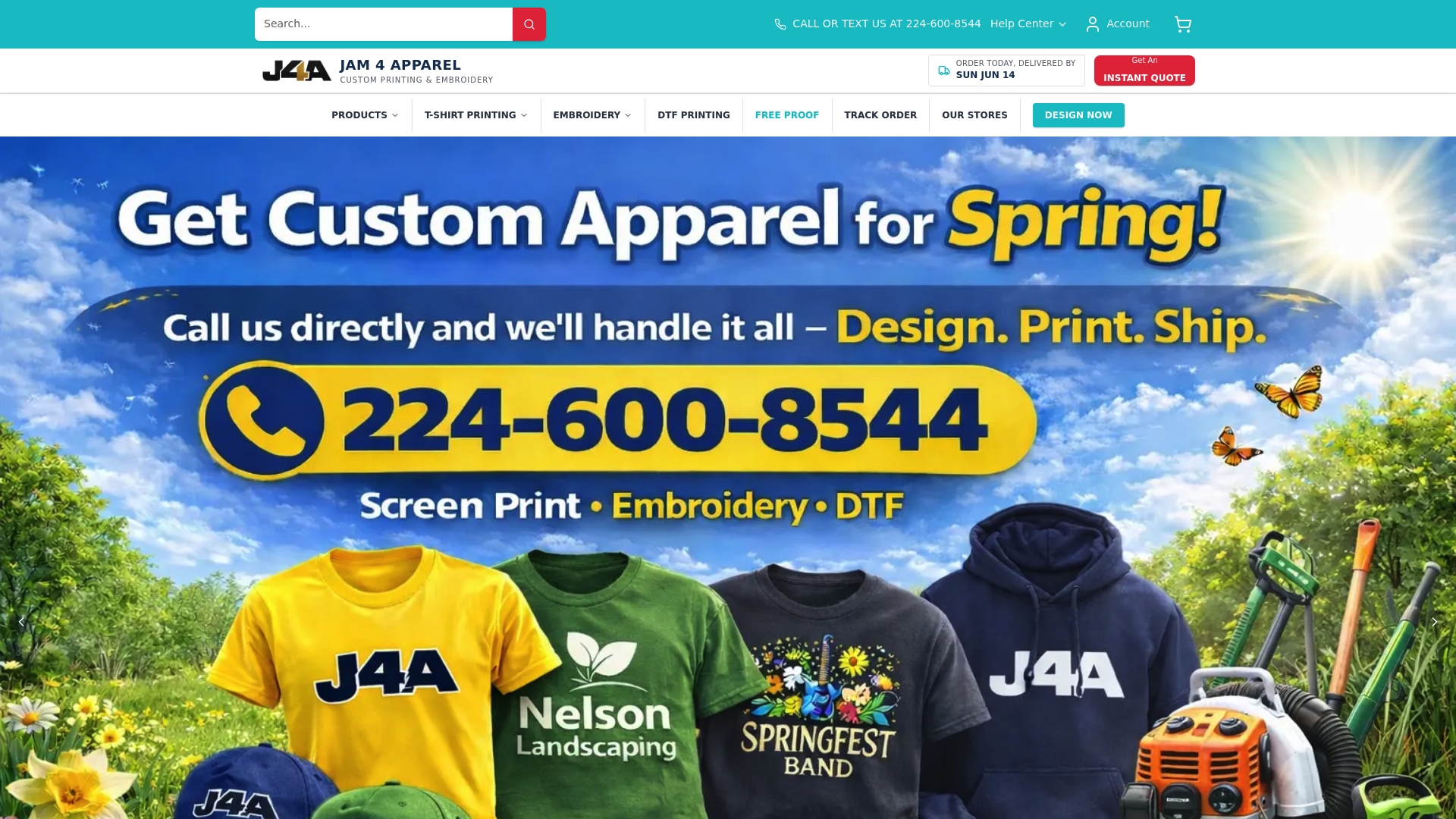
Jam4apparel serves the Chicagoland area from its Lake in the Hills facility, with dedicated service pages for McHenry, Barrington, and Elgin. Whether you need 12 embroidered polos for your team or 1,000 screen-printed event shirts, the ordering process starts with a simple quote request. Jam4apparel handles screen printing, embroidery, DTF transfers, custom patches, and spirit wear stores, all under one roof. Before you place your next order, review the common ordering mistakes guide to avoid the pitfalls that cost Illinois brands time and money every year.
FAQ
What information do I need to start a custom apparel order?
You need your garment style, quantity, decoration method, and artwork files ready before requesting a quote. The more detail you provide upfront, the faster and more accurate your quote will be.
How long does a custom apparel order take from start to finish?
A standard order takes 4–5 weeks from quote to delivery, covering quoting, proofing, production, and shipping. Rush options are available but carry an additional fee.
Do I need a minimum quantity to order custom apparel?
Most decorators require a minimum order quantity because setup costs are fixed regardless of how many pieces you order. Spreading those costs across more units lowers your per-piece price significantly.
What is the difference between screen printing, embroidery, and DTF?
Screen printing is best for high-volume orders with limited colors. Embroidery produces a premium textured look on hats and polos. DTF transfers handle small runs and full-color, detailed artwork without per-color setup fees.
Can I make changes after approving my proof?
Changes after proof approval typically trigger additional setup fees and push back your production timeline. Review your mockup carefully before approving, because that sign-off starts the production clock.
Recommended
Ready to print your design?
Screen print, embroidery, and DTF — no minimums on many styles.