Custom Apparel for Nonprofit Events: 2026 Guide
June 19, 2026
Custom Apparel for Nonprofit Events: 2026 Guide
Custom apparel for nonprofit events is the most direct way to turn participant enthusiasm into visible branding and measurable fundraising revenue. A well-chosen shirt, hoodie, or pair of socks does three jobs at once: it identifies your team, rewards your supporters, and generates income for your mission. The industry term for this category is promotional event apparel, and it covers everything from screen-printed t-shirts to embroidered polos. This guide breaks down the best products, print methods, timelines, and pricing strategies so you can plan with confidence.
1. What are the best custom apparel products for nonprofit events?
The right product mix determines how much you raise and how long your brand stays visible after the event ends. These are the top options worth considering.
- T-shirts are the foundation of any nonprofit event merchandise program. They sell at $25–$30 with $9–$18 profit per unit, making them the highest-volume item at most fundraisers. Supporters wear them to the gym, the grocery store, and the next charity event, extending your brand’s reach for free.
- Hoodies command $45–$55 at retail with profit margins of $5–$29 per unit depending on your cost negotiation and print method. They sell in smaller volumes than t-shirts but attract donors who want a premium item.
- Custom socks are the sleeper product in nonprofit fundraising. They carry 40–70% gross margins and retail at $12–$15 per pair. Supporters buy multiples, and the low price point removes hesitation at the point of sale.
- Hats and caps work best for outdoor events like 5K runs, golf tournaments, and walk-a-thons. Embroidered logos on structured caps look professional and hold up through repeated wear.
- Polos serve volunteer coordinators and staff well. They signal authority at the event and photograph cleanly for social media and press coverage.
Pro Tip: Mix at least three price points at your merch table. A $12 sock, a $28 t-shirt, and a $50 hoodie gives every supporter a way to contribute, regardless of budget.
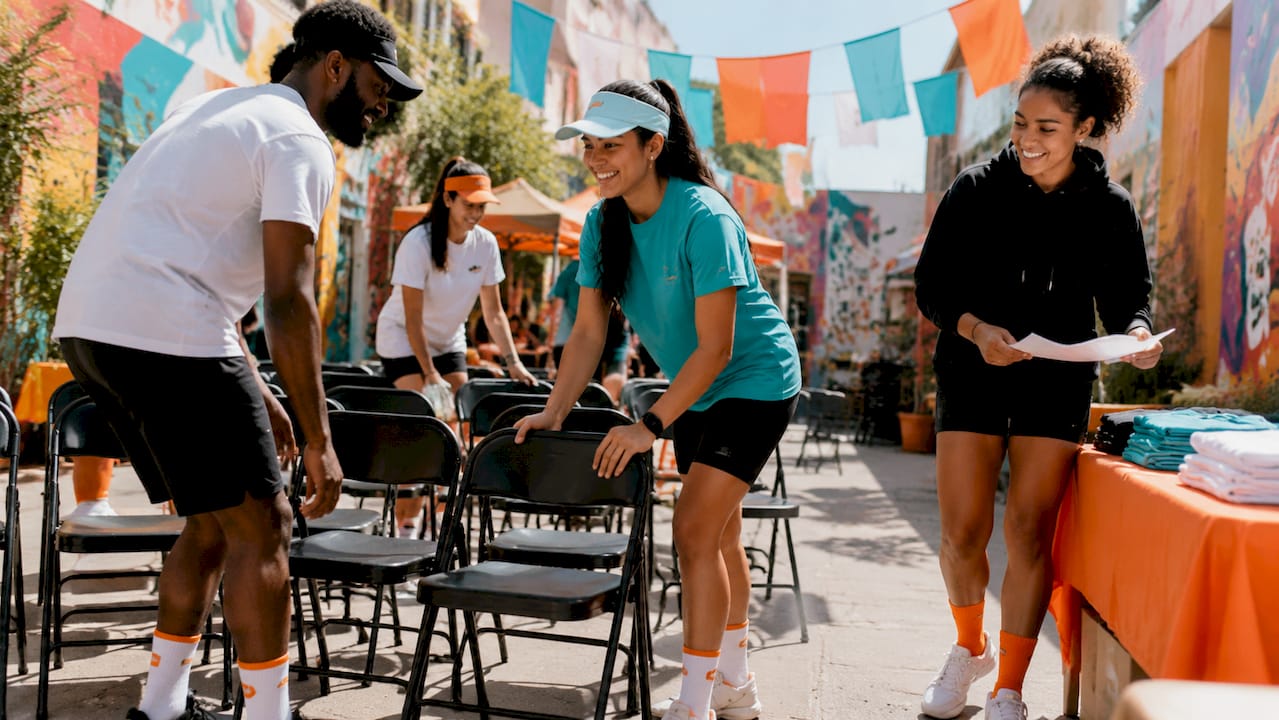
Branded apparel also solves a practical problem: it makes volunteers instantly recognizable. When 200 participants show up at a charity walk, a color-coded shirt system tells everyone who is staff, who is a sponsor rep, and who is a general participant. That clarity reduces confusion and improves the event experience.
2. How to choose the right printing method for your event apparel
Print method selection controls your cost per piece, your design flexibility, and your turnaround speed. The three methods most relevant to nonprofit event planners are screen printing, DTF printing, and embroidery.
- Screen printing delivers the best cost per piece for orders of 24 or more items with simple artwork. It produces vivid, durable prints that hold up through hundreds of washes. The tradeoff is setup cost, which makes it less practical for very small runs.
- DTF (Direct-to-Film) printing offers no-minimum, full-color runs ideal for complex designs and smaller quantities. If your event logo uses gradients, photographs, or more than four colors, DTF is the right call. Jam4apparel’s DTF printing services handle these runs with fast turnaround and no order floor.
- Embroidery is the premium choice for hats, polos, and staff jackets. It adds texture and perceived value that print methods cannot replicate. Jam4apparel’s custom embroidery services cover structured caps, polos, and outerwear for nonprofits that want a polished look for leadership and volunteers.
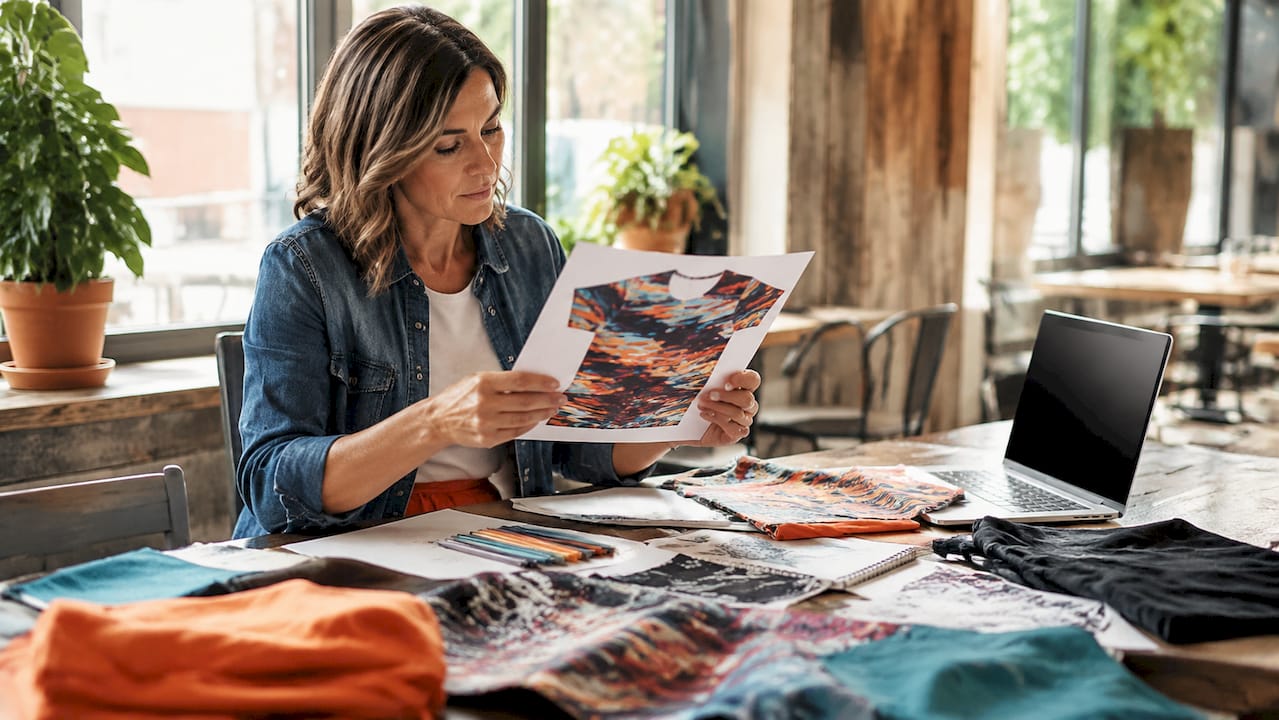
Pro Tip: Separate your design approval process from your logistics approval process. Lock in the artwork before you start collecting size counts. Mixing those two workflows is the most common cause of production delays.
Separating creative and logistics approvals reduces delays and keeps your production timeline on track. Assign one person to own the design file and one person to own the size spreadsheet. They should never be waiting on each other.
3. What is the ideal timeline for ordering nonprofit event apparel?
Planning 4–8 weeks ahead of your event is the standard recommendation for custom apparel orders. That window gives you full access to color options, style selections, and competitive pricing.
- 8+ weeks out: Finalize your event concept, logo, and color palette. Request quotes from vendors and confirm your decoration method. This is also the time to approach sponsors about logo placement on the back of shirts.
- 6 weeks out: Submit your design files for approval. Lock in your product selection and confirm your size breakdown. Orders placed at this stage have the most flexibility for revisions.
- 4 weeks out: Place your order. Orders placed 2–3 weeks before an event limit your color and style options. Under two weeks triggers rush pricing and forces simpler designs.
- 2 weeks out: Confirm your delivery address and contact. Plan for sorting, bagging by size, and any last-minute swaps.
- 2–3 days before the event: Receive your order. Working backward from your in-hands date rather than the event date gives you time to sort sizes, handle any discrepancies, and set up your merch table without stress.
Pro Tip: Add a custom apparel turnaround buffer of at least two business days between your expected delivery and your event date. Shipping delays happen, and a two-day cushion costs nothing but prevents a crisis.
Rush apparel orders require simplified decoration, limited colors, and often carry additional fees. Fewer vendors can handle last-minute nonprofit apparel needs reliably. If you find yourself inside two weeks, DTF printing with no minimums is your best option for a fast, full-color result.
4. How to maximize fundraising revenue with nonprofit event apparel
Pricing strategy for fundraising apparel is not about maximizing margin on a single item. It is about maximizing total dollars raised across your full product mix.
| Product | Retail Price | Estimated Profit per Unit | Best Use Case |
|---|---|---|---|
| T-shirt | $25–$30 | $9–$18 | High-volume general sales |
| Hoodie | $45–$55 | $5–$29 | Premium supporter gift |
| Socks (single pair) | $12–$15 | 40–70% margin | Impulse purchase, low barrier |
| Sock bundle (3 pairs) | $35–$45 | Higher total revenue | Bundle upsell at merch table |
Bundles like three pairs of socks for $45 consistently outperform single-item sales in total revenue. The math is simple: a supporter who buys one pair at $13 generates $13. The same supporter who buys a bundle at $40 generates $40. Your cost per unit drops with volume, so your margin improves too.
Sponsor logo placement on the back of event shirts is one of the most underused cost-reduction strategies in nonprofit apparel. A local business pays $300–$500 for back-of-shirt visibility at a 300-person event. That payment can cover your entire print run, making every shirt sold pure profit for your mission.
Pre-order models eliminate inventory risk entirely. Open a pre-order window two to three weeks before the event, collect sizes and payments online, and order exactly what you sold. You carry zero leftover inventory and know your revenue before production starts. Pair this with a branded volunteer shirt strategy to keep your staff looking unified while your supporters shop.
Pro Tip: Set your t-shirt price at $28, not $25 or $30. Odd pricing near a round number feels like a deal without sacrificing margin. That $3 difference adds up to $900 on a 300-unit run.
Key takeaways
The most effective custom apparel strategy for nonprofit events combines a three-tier product mix, sponsor-funded production costs, and a pre-order model to eliminate inventory risk.
| Point | Details |
|---|---|
| Start with a three-tier product mix | Offer socks, t-shirts, and hoodies to capture every budget level at your merch table. |
| Use sponsor logos to offset costs | Back-of-shirt sponsor placement can cover your full print run, turning every sale into mission revenue. |
| Order 6–8 weeks before your event | This window gives you full design flexibility, competitive pricing, and time to correct errors. |
| Match print method to order size | Use screen printing for 24+ pieces and DTF for small runs or complex, full-color designs. |
| Pre-sell to eliminate inventory risk | Pre-orders let you produce exactly what you sold, removing leftover stock and guesswork. |
What I’ve learned from watching nonprofits get apparel right (and wrong)
The biggest mistake I see nonprofit event planners make is treating apparel as an afterthought. They finalize the venue, the speakers, and the catering, then try to order 200 shirts three weeks out. That timeline forces rushed decisions, limits options, and often results in a product that looks generic.
The organizations that do this well treat apparel as a line item in the event budget from day one. They assign one person to own the design file and another to own the size spreadsheet, and those two tracks run in parallel. That separation alone cuts production delays by more than half in my experience.
The other thing I tell every planner: choose apparel that people will actually wear after the event. A well-designed shirt with a clean logo and a comfortable fit becomes a walking billboard for your cause for years. A shirt that looks like a corporate giveaway gets thrown in a drawer. Investing an extra dollar or two per unit in a better blank, like an American Apparel 2001 style, pays back in brand visibility every time someone wears it to the coffee shop.
Working with a local printer also matters more than most planners realize. When you need to swap 10 mediums for larges two days before the event, a local shop can make that happen. A national fulfillment center cannot.
— Adam
How Jam4apparel supports nonprofit event apparel
Jam4apparel is a custom apparel and promotional products company based in Lake in the Hills, Illinois, serving nonprofits throughout the Chicagoland area with screen printing, embroidery, and DTF printing. Whether you need 12 staff polos or 500 fundraiser t-shirts, Jam4apparel’s in-house production delivers fast turnaround and competitive pricing without sacrificing quality.
Jam4apparel’s custom screen printing services handle bulk nonprofit orders with expert design support and local delivery. For smaller runs or full-color designs, the no-minimum DTF option keeps your costs low and your timeline tight. Contact Jam4apparel to get a quote for your next fundraiser or charity event.
FAQ
What is the best apparel item for nonprofit fundraising?
T-shirts are the top-selling item at most nonprofit fundraisers, generating $9–$18 profit per unit at a $25–$30 retail price. Custom socks are a strong second choice, with 40–70% gross margins and a low price point that drives impulse purchases.
How far in advance should I order custom event apparel?
Order at least 6–8 weeks before your event for the best selection and pricing. Orders placed under two weeks before the event require rush production, which limits design options and adds fees.
What print method is best for small nonprofit apparel orders?
DTF (Direct-to-Film) printing is the best option for small runs because it has no order minimums and supports full-color, complex designs. Screen printing becomes more cost-effective at 24 or more pieces with simpler artwork.
Can sponsor logos on shirts reduce my apparel costs?
Yes. Placing a sponsor’s logo on the back of event shirts is a proven way to offset production costs. Sponsors pay for the visibility, which can cover part or all of your print run and turn shirt sales into direct mission revenue.
How do I avoid leftover inventory after my event?
Use a pre-order model. Open sales two to three weeks before the event, collect sizes and payments, then order exactly what was purchased. This approach eliminates unsold stock and gives you confirmed revenue before production begins.
Recommended
Ready to print your design?
Screen print, embroidery, and DTF — no minimums on many styles.