
Cut Dead Stock: 6 Branded Merchandise Kits for Merch Teams
September 9, 2026
Cut Dead Stock: 6 Branded Merchandise Kits for Merch Teams
The best branded merchandise ideas for 2026 split into two winning categories: apparel people actually wear in public and daily-use items like insulated bottles or desk accessories. The dominant trend is premium materials with subtle branding over loud logos, sustainable and on-demand production over bulk pre-order, and utility over novelty. Everything below breaks that down into specific items, budgets, and the framework to pick what fits your campaign.
TL;DR:
- Quality and understated branding significantly increase the likelihood of merchandise being worn or used regularly, especially in apparel and tech accessories.
- On-demand production and sustainable materials are increasingly preferred to reduce waste and avoid dead stock, especially for custom or limited-edition items.
- Items like insulated bottles, performance apparel, and tech gadgets provide continuous visibility and engagement at lower average costs over time.
- Proper sizing, quality samples, and early logistics planning are crucial to ensure merchandise arrives on time, looks professional, and avoids unnecessary waste.
- Focusing on fewer, higher-quality items that recipients will use frequently yields a better return on investment than bulk, low-value giveaways.
Table of Contents
- Branded Merchandise Ideas by Category and Budget
- How to Choose the Right Branded Merchandise for Your Goals
- Budget Bands, Production Methods, and Cutting Waste
- Ready-to-Use Kit Templates by Use Case
- A Working Perspective on Executing These Ideas
- What Actually Matters When You Cut Through the Noise
- Get a Quote and Bring These Ideas to Life
- Sources
Branded Merchandise Ideas by Category and Budget
Merch fails for one reason more than any other: it lands in a drawer instead of on a body or a desk. Every category below gets ranked by how likely the item is to survive past week one, with budget bands drawn from current swag program guidance.
1. Apparel: The Highest-Impact Category
Heavyweight tees, pullover hoodies, embroidered caps, and performance polos remain the backbone of any branded merchandise program, and for good reason: clothing people already like wearing gets worn regardless of the logo on it. The trick is choosing garment weight and finish that read as retail quality, not promo-bin quality.
- Heavyweight tees (6+ oz. cotton): $8 to $18 per unit for screen printing at volume; jump to $22 to $35 for tri-blend fabrics with a soft-hand print.
- Pullover hoodies: $25 to $45 for standard fleece; $60 to $120 for heavyweight, garment-dyed, or brushed-fleece versions that feel closer to a retail brand than a company giveaway.
- Embroidered caps: $12 to $28 depending on structured vs. unstructured crown and thread count.
- Polos: $18 to $40, with pique cotton at the low end and performance moisture-wicking blends at the top.
Tone-on-tone embroidery, a small woven neck label instead of a printed tag, and a logo placement on the chest instead of splashed across the back are the details that push a shirt from “office giveaway” to something a person picks out of their closet on a Saturday. That distinction is backed by Imprint Engine’s roundup of premium branded merchandise, which found quality materials and understated branding directly increase how often people wear company gear outside of work.
2. Drinkware: Daily Visibility at a Low Price Point
Insulated stainless bottles, double-wall tumblers, and ceramic travel mugs sit on desks and in cup holders for years, which makes them one of the most cost-efficient categories per impression. Budget for insulated bottles and ceramic mugs varies by brand and customization, with higher quality options costing more. Skip single-wall plastic entirely. It’s the item most likely to end up in a landfill within a month, and it undercuts every sustainability claim your other merch might support.
3. Tech Accessories: The Fastest-Growing Category
Wireless chargers, MagSafe-compatible power banks, minimalist earbuds cases, and cable organizers solve a real annoyance, which is exactly why they get used. Industry trend coverage points to eco-friendly tech and aesthetic reusable gadgets as some of the strongest performers for 2026 giveaway programs, largely because they generate unprompted social shares when the design looks good enough to photograph.
- Wireless charging pads: $10 to $22
- MagSafe power banks: $18 to $40
- Cable organizers and earbuds cases: $4 to $12
4. Bags and Travel Gear
Canvas totes, padded laptop sleeves, and small travel kits (a pouch plus a luggage tag, for example) work well for both employee kits and event handouts. Canvas totes and laptop sleeves vary in price depending on weight and branding, typically falling within a moderate budget range. These items travel with people, which means impressions in airports, coffee shops, and commutes rather than just at a desk.
5. Desk and Home-Office Items
Felt desk mats with integrated wireless charging, notebooks with blind-deboss branding instead of foil stamping, and slim wireless charging pads sized for a laptop bag all fit the remote and hybrid work reality most companies now operate in.
Desk and home-office items, such as felt desk mats, notebooks, and wireless charging pads, range in price according to features and quality.
Blind embossing and debossing are worth calling out specifically. They give paper goods a retail, boutique feel that a flat printed logo simply cannot match, and the cost difference per unit is usually under $2.
6. Small High-Signal Accessories
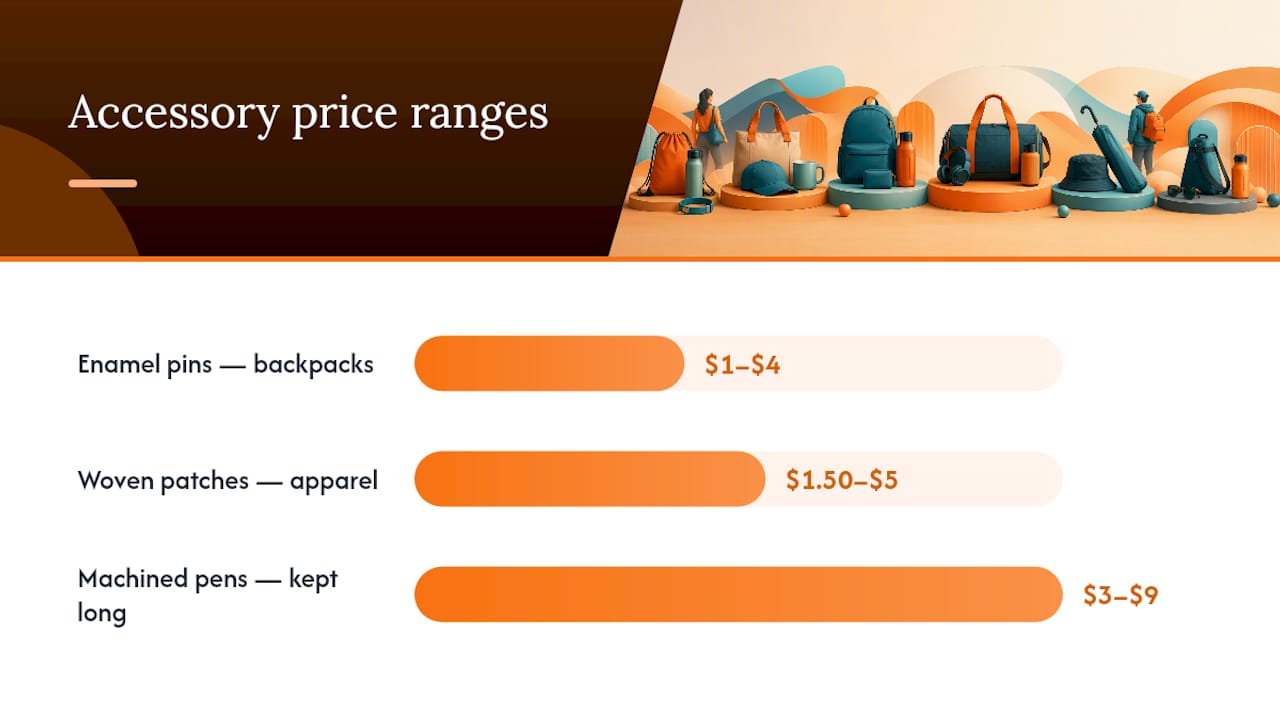
Enamel pins, woven patches, and machined metal pens punch above their price. A pin costs $1 to $4 at volume but gets pinned to backpacks and lanyards for years. Woven patches ($1.50 to $5) work particularly well for team apparel, spirit wear, and any brand leaning into a badge or crest aesthetic. Machined pens ($3 to $9) still outperform plastic pens in every study of item retention, mostly because they feel like something worth keeping.
7. Limited-Edition Drops and Streetwear Pieces
Small-batch, numbered-run apparel drops create urgency that a standard order form never will. Limited-volume apparel drops create urgency and appeal among engaged audiences. This works especially well for gyms, teams, and brands with an engaged following that treats merch as identity, not just uniform.
8. Digital and Experience-First Merch
Not every giveaway needs a box. Digital asset packs, subscription passes, and virtual-experience access cost close to nothing to distribute and carry zero shipping risk, which makes them a smart complement to physical merch for budget-conscious promo programs. Pair a digital pass with one physical item rather than a pile of throwaway extras, and the perceived value goes up while your cost stays flat.
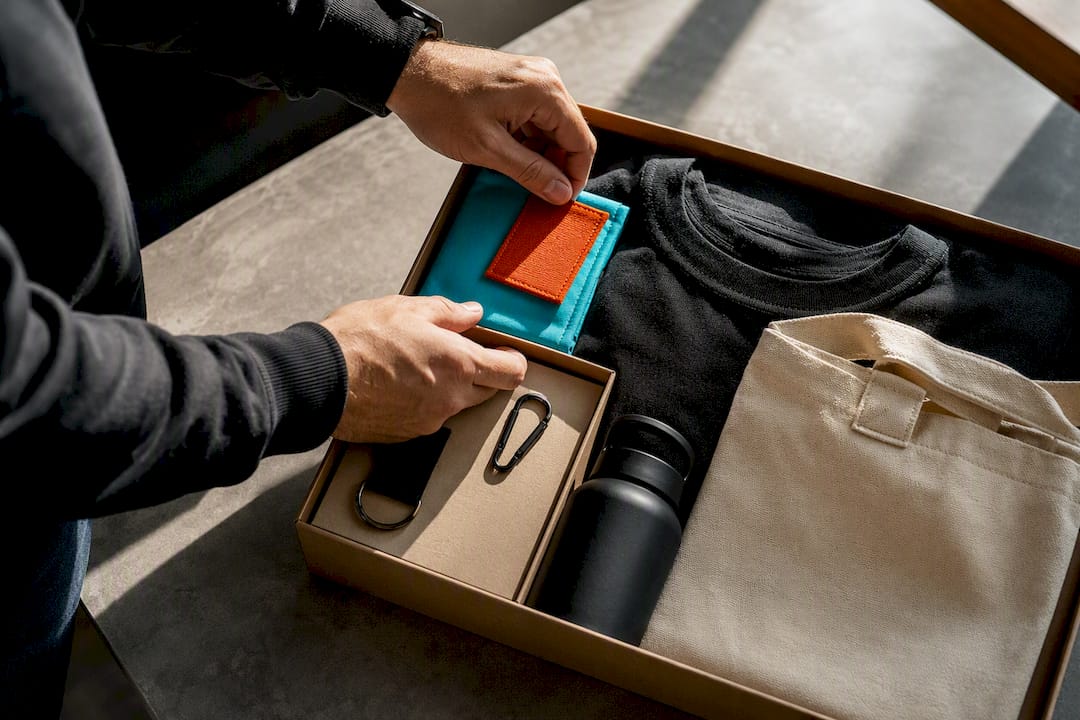
Across every category, the same rule holds: bundle a hero item with one or two supporting pieces into a kit rather than piling on five cheap extras. That approach shows up repeatedly in swag program breakdowns for 2026, and the kit templates later in this article build directly on it.
How to Choose the Right Branded Merchandise for Your Goals
Picking an item because it looks good in a catalog is how dead stock happens. Run every idea through four filters before you commit to an order.
- Audience fit: Does this item match how your specific recipient actually lives and works, not just a generic “everyone likes this” assumption?
- Utility: Will they use it weekly, or does it sit in a drawer after the first use?
- Visibility: Does it get seen by other people (a bag, a bottle, a jacket) or stay private (a mousepad under a monitor)?
- Budget realism: Does the per-unit cost match the impression value, or are you overspending on something that gets tossed?
Distribution matters as much as the item itself. Items shipped direct-to-home tend to get used more than items handed out at a check-in table, according to swag program data from FLYP’s 2026 company swag guide, which found direct shipping reduces the “grab and forget” pattern common at events. If you’re planning an event handout, favor compact, immediately useful items (a sticker, a small bottle) over anything that requires the recipient to carry it around all day.
Sizing deserves its own line item. Apparel that only comes in a narrow size range guarantees leftover stock in the sizes nobody ordered. Confirm your vendor’s size chart before finalizing quantities, and order a broader spread of mid-range sizes than you think you need. The Promotional Products Association International points to poor sizing and quality mismatches as recurring reasons promotional apparel programs underperform.
Before signing off on quality, request a physical sample. Feel the fabric weight, check the print or embroidery for fraying or cracking, and confirm the logo placement looks intentional rather than centered by default.
Pro Tip: Track reuse rate over the first 90 days, not just at handout. If you can, ask a sample group to snap a photo wearing or using the item a month later. Low reuse at the one-month mark is the earliest, cheapest signal that an item needs to be swapped out of your program.
Measuring success afterward comes down to four signals: reuse rate, user-generated content mentioning the item, redemption rate if it was tied to a code or offer, and repeat purchase behavior among recipients. If an item hits none of those, drop it from next year’s order regardless of how much you liked the design.
Budget Bands, Production Methods, and Cutting Waste
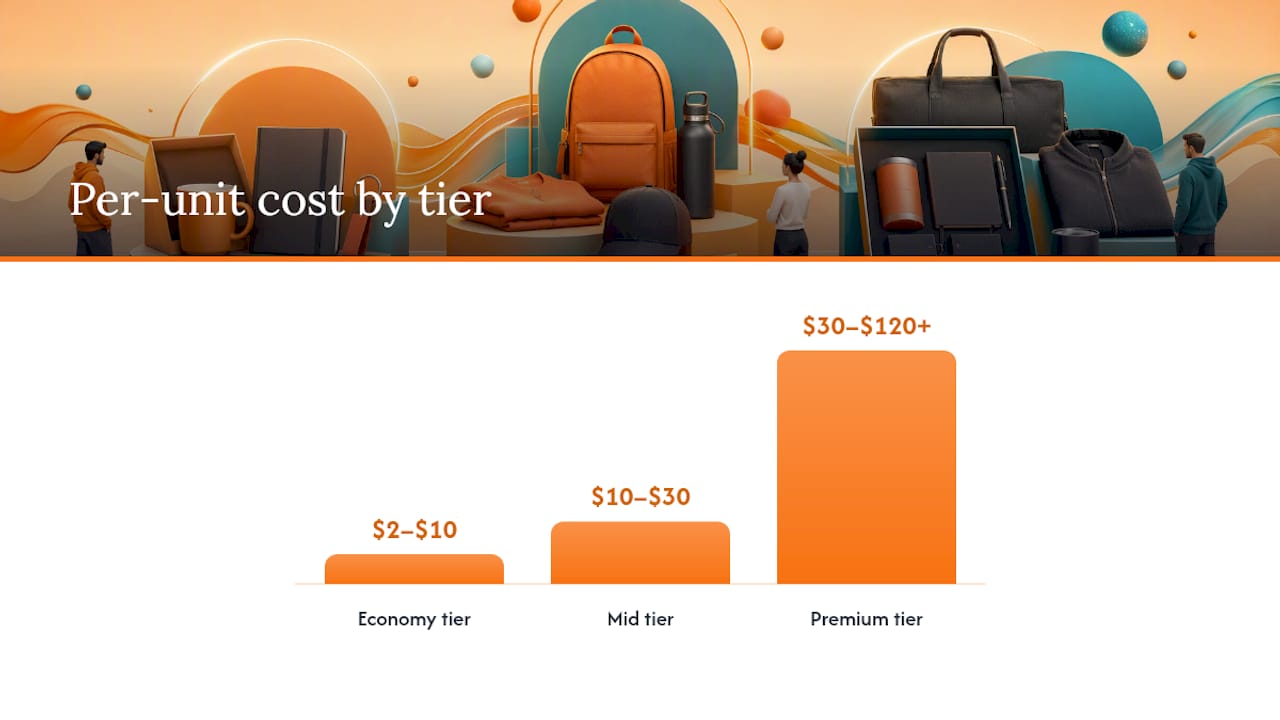
Per-unit costs vary widely by quality tier, and most buyers underestimate how much the difference between economy and premium actually shows up in perceived brand value.
- Economy tier: $2 to $10 per unit (basic tees, plastic pens, printed tote bags)
- Mid tier: $10 to $30 per unit (heavyweight tees, standard hoodies, insulated bottles, wireless chargers)
- Premium tier: $30 to $120+ per unit (garment-dyed hoodies, engraved drinkware, leather goods, tech bundles)
Production method changes both cost and durability. Screen printing remains the most cost-effective option for large runs of simple one- or two-color designs. Embroidery costs more per unit but holds up through years of washing, which is why it dominates caps, polos, and outerwear. DTF (direct-to-film) transfers bridge the two, handling detailed, full-color designs on small or mixed-size runs without the setup cost of screen printing. Laser etching suits drinkware and metal goods where a printed logo would wear off within months.
The bigger cost decision is on-demand versus bulk ordering. Bulk pre-order lowers per-unit price but risks dead stock in unpopular sizes or colors sitting in a closet for years. On-demand production costs more per unit but eliminates that risk entirely, and it’s the model most 2026 swag programs are shifting toward specifically to avoid overproduction.
A single considered item, per one operational swag guide, works better than a bag of five cheap extras, both for budget and for how much of it actually gets used. Practical kit budgets and apparel-only budgets vary depending on quality and item selection.
Reducing waste isn’t only a sustainability talking point. Minimal packaging, certified organic or recycled materials, and on-demand fulfillment all cut your actual spend on stock that never gets claimed.
Ready-to-Use Kit Templates by Use Case
Instead of designing a merch program from scratch, start from one of these six templates and adjust the items to your budget.
- Welcome/onboarding kit — hoodie or tee, notebook, enamel pin, and a printed welcome letter. Goal: retention and first-week brand impression. Budget: $40 to $90 per kit.
- Remote-employee kit — insulated bottle, felt desk mat, cable organizer. Goal: daily visibility on video calls and at-home retention. Budget: $35 to $65 per kit.
- Event attendee kit — canvas tote, tee, sticker sheet, compact umbrella or small bottle. Goal: acquisition and immediate on-site utility. Budget: $15 to $35 per attendee.
- VIP appreciation kit — premium jacket, leather-bound notebook, engraved pen. Goal: relationship-building and a lasting impression with top clients or long-tenure staff. Budget: $80 to $200 per kit.
- Influencer PR kit — limited-edition tee, product samples, unboxing-friendly packaging designed to photograph well. Goal: user-generated content and organic reach.
- Retail-ready merch drop — a small capsule of premium hoodies and tees in a limited numbered run. Goal: direct revenue and deepening fan loyalty.
Each kit type aligns with a stage of the customer or employee relationship. Mismatched quantities and goals often cause leftover swag.
A Working Perspective on Executing These Ideas
Good merch ideas die in execution more often than they die on the whiteboard. Here’s what actually determines whether a kit ships on time and looks right when it arrives.
Every professional background credential and case study reference in this section is a placeholder pending review:.
A supplier that controls in-house screen printing, embroidery, DTF, and custom patch production under one roof removes the back-and-forth of coordinating three vendors for one kit. That control is what turns a six-week timeline into something closer to two.
Jam4apparel runs exactly that kind of in-house setup, handling corporate apparel programs, embroidered goods, and custom patches from a single production floor. Before placing a bulk order with any vendor, run through this checklist:
- Request a physical sample, not just a digital mockup, before committing to quantity.
- Confirm the sizing chart against your recipient list before finalizing counts.
- Build a two-week buffer into your timeline beyond the vendor’s quoted turnaround.
- Ask for a digital proof with exact logo placement and thread or ink color matched to your brand guide.
Pro Tip: Ask any vendor for their standard lead time on a rush order, not just their standard order. A vendor who can quote a rush timeline confidently usually has the in-house capacity to hit your regular deadlines too.
What Actually Matters When You Cut Through the Noise
Most merch advice still treats quantity as the goal: order enough tees for everyone, hit a headcount, call it done. That thinking is backwards. A single well-made hoodie that someone wears every weekend beats a bag of five items that get sorted into a donation pile within a week, and the budget data on considered single items versus bulk giveaways backs that up directly.
The overrated move is chasing novelty. Fidget gadgets and gimmick items generate a laugh at the table and nothing after that. The underrated move is picking one genuinely useful item and spending the saved budget on making it feel premium, whether that means heavier fabric, embroidery instead of print, or packaging that doesn’t scream “bulk order.”
If you take one thing from this, prioritize fit and finish over quantity. Order fewer items, spend more per unit on the ones you choose, and lean on on-demand production so you’re never sitting on boxes of the wrong size in the wrong color.
— Adam
Get a Quote and Bring These Ideas to Life
Reading a list of merch ideas is the easy part. Getting a design proof back in days instead of weeks, avoiding a minimum order that doesn’t fit your headcount, and having one vendor handle screen printing, embroidery, DTF, and custom patches under one roof is where most companies actually get stuck.
A supplier with in-house production can keep turnaround fast and pricing predictable whether you need a dozen pieces or a few thousand. Browse industry-specific apparel solutions to see examples close to your business type, or check the screen printing service page if you’re weighing production methods for a bulk apparel run. Teams building performance-apparel programs alongside their branded merch can also look at The Sport Factory’s endurance sports gear for reference on athletic-quality finishing.
Ready to move from idea to order? Request a free design proof and quote through Jam4apparel and get a real turnaround estimate before you commit to quantities.
Sources
- 70 Premium Branded Merchandise Ideas Employees Love | Imprint Engine
- 25 Company Swag Ideas Employees Actually Use in 2026 | FLYP
Recommended
Ready to print your design?
Screen print, embroidery, and DTF — no minimums on many styles.