Branded Apparel for Construction Crews: A Manager's Guide
July 26, 2026
Branded Apparel for Construction Crews: A Manager’s Guide
Branded apparel for construction crews is custom-designed workwear that combines your company logo, durable fabrics, and safety-compliant features into a single uniform system. Done right, it does three things at once: it keeps your crew identifiable on a busy job site, signals professionalism to every client who walks through the gate, and satisfies OSHA PPE requirements that mandate protective clothing be provided, used, and maintained in reliable condition. Here is what to know before you order:
- Branded workwear makes crew members instantly recognizable, which speeds up emergency response and tightens site security
- High-visibility materials, reflective striping, and durable fabrics can all be incorporated without sacrificing your logo placement
- Common items include safety vests, work shirts, hoodies, jackets, hard hat covers, and polos
- Customization methods range from embroidery and screen printing to DTF transfers and custom patches
- Jam4apparel handles all production in-house, which means tighter quality control and faster turnaround than most outsourced alternatives
Table of Contents
- What types of branded construction apparel are available?
- Why branded workwear pays off on every job site
- How to order and customize your crew’s apparel
- Custom construction apparel: what the full picture looks like
- Jam4apparel outfits construction crews across Chicagoland
- Key Takeaways
What types of branded construction apparel are available?
Construction crews need more than a logo on a t-shirt. The range of garments and decoration methods is wide, and matching the right combination to your site conditions makes a real difference in both compliance and crew comfort.
Common apparel categories:
- High-visibility jackets and vests rated to ANSI/ISEA 107 standards
- Work shirts and polos in moisture-wicking or flame-resistant fabrics
- Hoodies and fleece layers for cold-weather sites
- Work trousers and coveralls in ripstop or canvas
- Hard hat accessories and branded safety helmets
- Branded gloves, beanies, and outerwear
Materials and fabric technology matter more on a construction site than almost anywhere else. Ripstop nylon resists tearing under physical stress. Moisture-wicking polyester blends keep workers cooler during summer pours. For sites with arc flash or fire risk, NFPA 70E-compliant flame-resistant (FR) cotton is the standard choice.
Customization methods each have a different durability profile. Embroidered branding holds up through hundreds of industrial wash cycles without cracking or fading, which is why it tends to be the preferred method for construction uniforms. Screen printing works well for larger, multi-color logos on t-shirts and hoodies. DTF transfers handle complex artwork on performance fabrics where embroidery needles would compromise the weave.
One detail that trips up a lot of orders: embroidery on high-visibility garments must be placed so it does not block reflective tape or fluorescent panels. Your decorator should flag this before production, not after.
Why branded workwear pays off on every job site
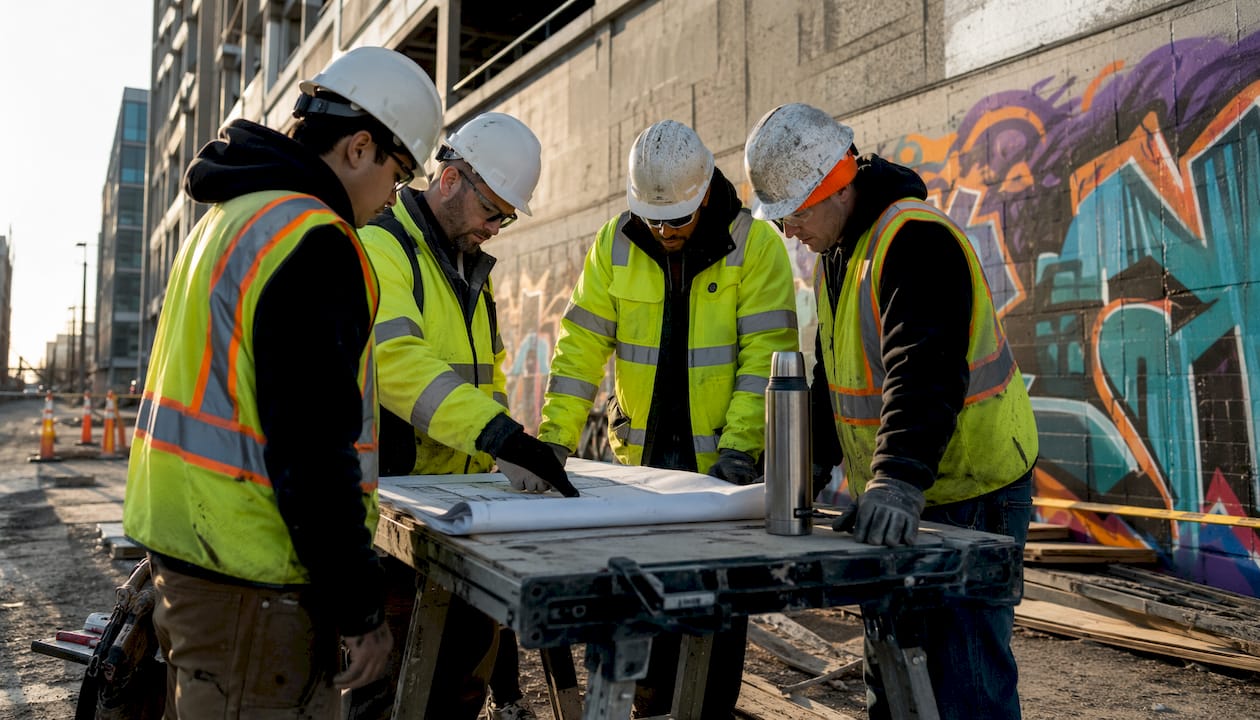
The safety argument is straightforward. When every crew member wears the same identifiable uniform, supervisors can spot who belongs on site and who does not. During an emergency, that visual clarity matters. Branded safety gear also personalizes the safety message, giving workers a sense of ownership over their PPE that supports both protocol adherence and retention.
The business case is just as strong. A consistent, disciplined uniform appearance signals to clients and partners that your operation runs to a high standard. That impression is formed in the first few minutes of a site visit, long before anyone reviews your safety record or project timeline.
Beyond the job site itself, your crew becomes a mobile advertisement. Branded apparel acts as passive marketing, extending your company’s visibility at supply yards, on the road, and at neighboring properties without any additional spend.
A few more advantages worth noting:
- Team cohesion: A unified look reduces the “us vs. them” dynamic between subcontractors and your direct employees
- Recruitment signal: Crews that look professional attract workers who take the job seriously
- Durability = cost control: Quality construction workwear, properly decorated, outlasts cheap alternatives and reduces how often you replace it
How to order and customize your crew’s apparel
Getting the order right the first time saves money and avoids the headache of a re-run. Work through these steps before you submit anything.
1. Audit your crew roles. A site supervisor standing in a client meeting needs a different garment than a laborer running a jackhammer. Map your roles first, then assign apparel categories to each.
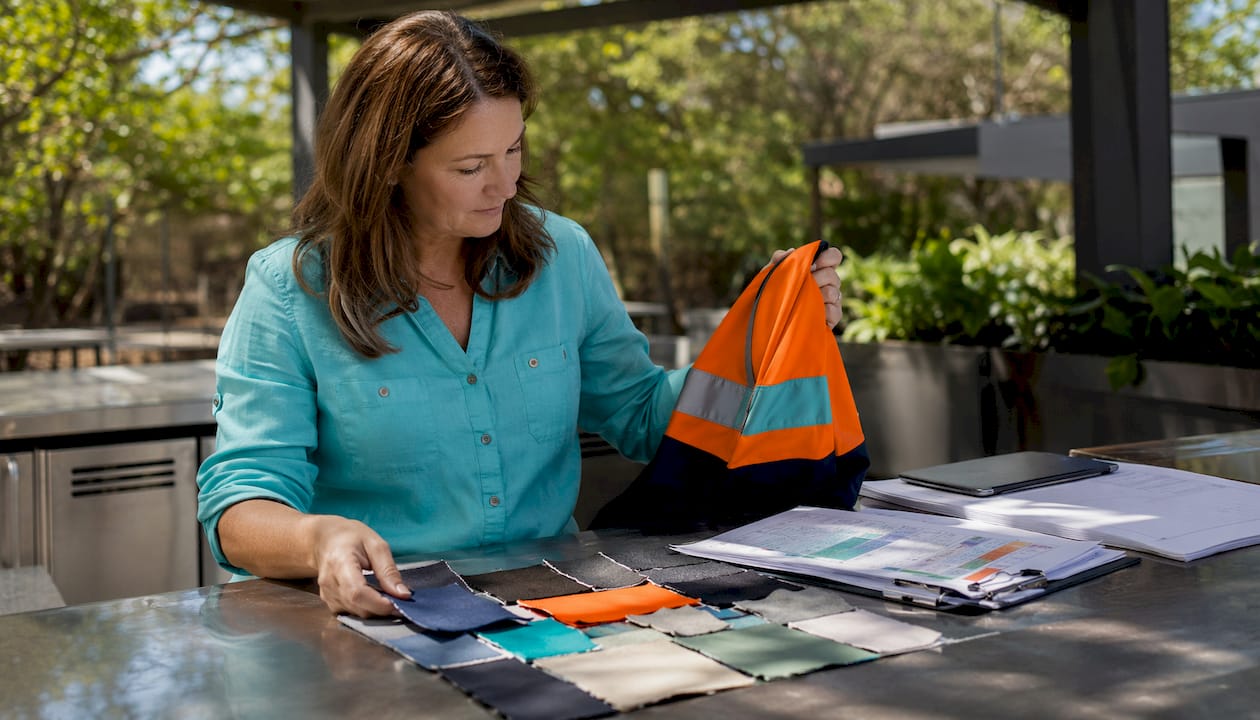
2. Confirm safety compliance requirements. Under 29 CFR 1926.95, employers must provide PPE that is properly designed and fitted for the work being performed. High-visibility garments for road-adjacent sites need to meet ANSI Class 2 or Class 3 ratings. Get those specs confirmed before you choose a garment.
3. Size for mobility, not just fit. Proper size selection is critical on a construction site. A shirt that pulls across the shoulders when a worker reaches overhead is a hazard, not just an annoyance. Order a size run sample before committing to bulk quantities.
4. Choose your decoration method. Embroidery for polos, jackets, and vests. Screen printing for bulk t-shirts and hoodies. DTF for performance fabrics or complex artwork. Patches work well for hard hats and bags. Jam4apparel offers all four methods in-house, so you are not bouncing between vendors.
5. Plan logo placement carefully. Front chest and left sleeve are standard for most construction workwear. On high-vis vests, keep branding away from the reflective banding. Back placement works for jackets but confirm it does not interfere with any harness attachment points.
6. Order in bulk. Bulk custom apparel orders reduce per-unit cost, lock in consistent branding across your crew, and simplify reorders when you hire new workers. Most decorators lower setup fees significantly at higher quantities.
7. Confirm your timeline. Standard production for embroidered or screen-printed construction uniforms typically runs one to two weeks after artwork approval, depending on order size. Jam4apparel’s in-house production keeps that timeline tight. If you have a project start date or a new hire onboarding date, build in a buffer and communicate it upfront.
Pro Tip: Bundle your branded apparel order with your PPE onboarding kit. New hires who receive a complete, branded kit on day one, including their hard hat, vest, and work shirt, show up to their first shift already looking like part of the team.
Custom construction apparel: what the full picture looks like
Custom construction apparel is not a single product. It is a coordinated system of garments, each decorated consistently and selected for the specific demands of your site and crew. The goal is a look that holds up through a full season of heavy use while keeping your brand visible and your crew compliant.
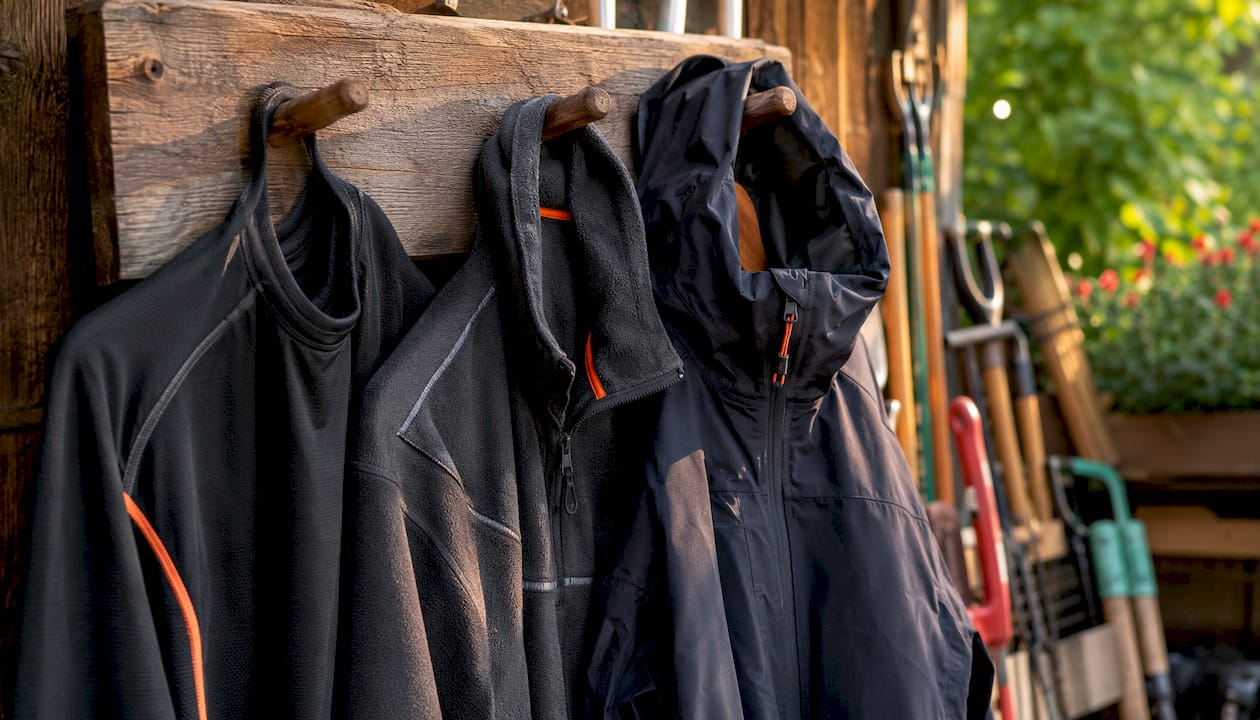
A well-built program typically covers three layers. The base layer handles moisture management: branded moisture-wicking t-shirts or long sleeves. The mid layer adds warmth and visibility: branded hoodies, fleece pullovers, or insulated vests. The outer layer handles weather and high-visibility requirements: branded rain jackets, work jackets, or ANSI-rated safety vests.
Accessories round it out. Branded hard hats, beanies, and work bags create a cohesive look that extends beyond the uniform itself. When every touchpoint carries your logo, the cumulative effect on client perception and crew pride is significant. For a deeper look at how custom apparel builds lasting brand identity, the connection between consistent workwear and long-term brand recognition is well established.
The ordering process is also more straightforward than many contractors expect. You can order custom work uniforms for a crew of five or five hundred using the same basic workflow: select garments, confirm sizing, submit artwork, approve a proof, and receive production.
Jam4apparel outfits construction crews across Chicagoland
When you need construction company custom apparel that holds up on real job sites, Jam4apparel delivers it without the delays that come from outsourced production. Everything, from embroidery and screen printing to DTF transfers and custom patches, is handled in-house at their Lake in the Hills, Illinois facility.
That in-house setup matters for construction orders specifically. You get consistent quality across every piece in a bulk run, faster turnaround when a project start date is locked in, and a single point of contact who can flag compliance issues with logo placement before the order goes to production. Jam4apparel serves contractors, small businesses, and growing brands throughout the Chicagoland area, whether the order is 12 vests for a small crew or 500 shirts for a large commercial project. Browse their industry-specific apparel solutions or request a quote directly to get your crew outfitted before the next job kicks off.
Key Takeaways
Branded construction workwear works best when it combines OSHA-compliant safety features, durable decoration methods, and consistent logo placement across every garment in the system.
| Point | Details |
|---|---|
| Safety compliance first | PPE must meet OSHA and ANSI standards; logo placement must not obstruct reflective tape or safety features. |
| Embroidery for durability | Embroidered branding outlasts screen printing on frequently washed construction uniforms. |
| Bulk orders cut costs | Ordering in bulk reduces per-unit cost and simplifies reorders as your crew grows. |
| Size for mobility | Ill-fitting uniforms restrict movement on site; always sample a size run before committing to bulk quantities. |
| Jam4apparel for construction crews | In-house production in Lake in the Hills, IL means faster turnaround and consistent quality for construction crew apparel orders. |
Recommended
Ready to print your design?
Screen print, embroidery, and DTF — no minimums on many styles.