
Sell More, Store Less: 5 Booster Club Store Ideas for Low Risk Profit
September 1, 2026
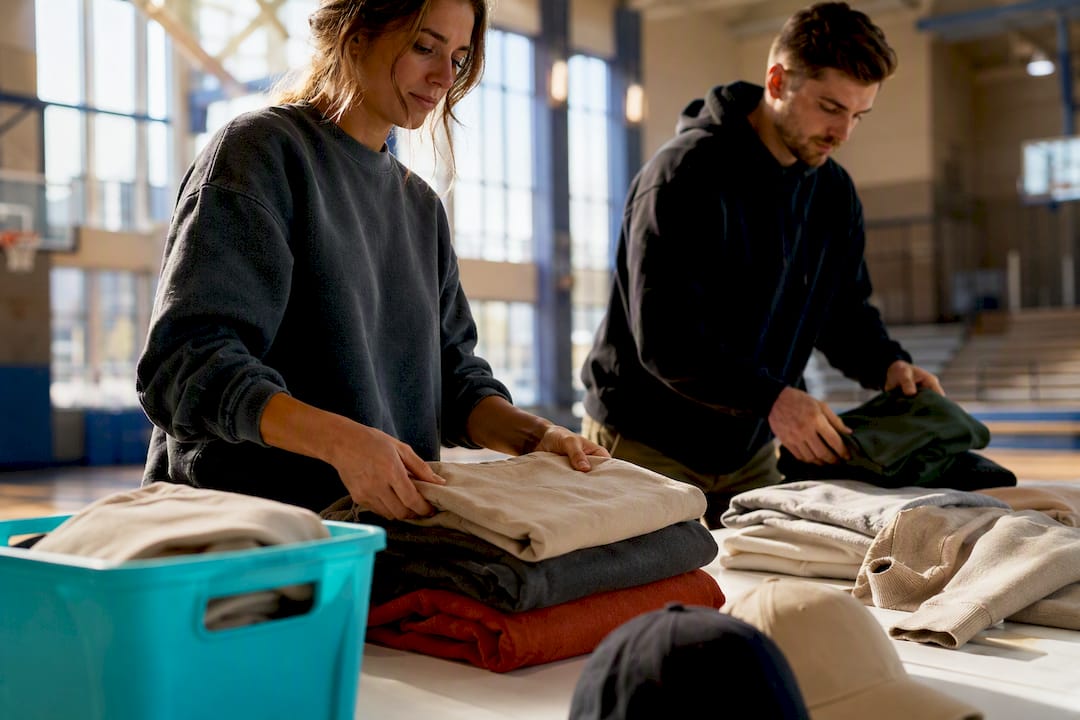
Sell More, Store Less: 5 Booster Club Store Ideas for Low Risk Profit
Prioritize five core categories: t-shirts, hoodies, hats, decals, and water bottles, then run everything through an online spirit store with print-on-demand or a limited pre-order window. This approach effectively minimizes leftover inventory, keeps your treasurer’s books clean, and lets volunteers focus on selling instead of counting boxes. Set your assortment this week and open pre-orders around the next big game or event.
TL;DR:
- Most booster clubs should focus on a limited selection of core products, such as T-shirts, hoodies, hats, decals, and water bottles, to maximize sales and simplify inventory management.
- A 70/20/10 merchandise rule helps maintain a balanced catalog, with 70% evergreen items, 20% seasonal designs, and 10% trial products to keep sales stable and fresh.
- Pre-order models reduce inventory risk and allow accurate ordering based on demand, with quick turnaround times generally between two to four weeks.
- Pricing strategies should include bundling, Scarcity tactics like limited editions, and ongoing promotion to boost sales and order values.
- An online store ensures better inventory management, expands reach to out-of-town buyers, and simplifies payment reconciliation, with platforms like Jam 4 Apparel offering full production support.
Table of Contents
- Booster Club Store Ideas: The SKUs Worth Stocking First
- How Should a Booster Club Structure Its Merchandise Mix?
- Bulk Orders, Print-on-Demand, or Pre-Orders?
- Pricing and Promotion Tactics That Actually Move Product
- Setting Up a Low-Risk Online Spirit Store
- A Practical Partner for Getting Spirit Wear Made
- A One-Week Checklist Before You Launch
- Why Jam4apparel Fits a Booster Club’s Spirit Wear Needs
- Sources
Booster Club Store Ideas: The SKUs Worth Stocking First
Not every spirit item deserves shelf space. The clubs that make real money pick a tight lineup and repeat it every season, tweaking colors and slogans instead of reinventing the whole catalog. Here’s what consistently earns its spot.
- T-shirts — the anchor product for almost every fundraiser, cheap to produce, easy to personalize by grade or team, and the item most guides point to first for a reason: high demand, low complexity.
- Hoodies — your highest-margin staple once the weather turns; parents buy these for warmth as much as spirit, which pushes average order value up fast.
- Hats and beanies — one-size-fits-all means no sizing headaches, and they work as both merch and a low-cost giveaway.
- Decals and window clings — near-zero unit cost, ships flat, and turns every parent’s minivan into a rolling billboard.
- Water bottles or tumblers — a practical item people actually use daily, which keeps your logo visible long after the season ends.
- Lanyards and keychains — impulse-buy price points under $10 that move fast at the merch table.
- Rally towels — cheap to produce in bulk and perfect for playoff games where energy (and spending) peaks.
- Stickers — the lowest price point in your store, great for rounding out an order or adding at checkout.
Beyond the staples, seasonal and milestone items create urgency that evergreen products can’t match. Senior night gear, homecoming shirts, and playoff-specific designs sell in short windows because supply is genuinely limited. A “Class of 2026” senior hoodie or a one-time playoff shirt with a countdown deadline gives buyers a reason to act now instead of “maybe next month.”
For price-sensitive buyers, keep a few items under $15: stickers, buttons, and basic tees. For the parents who want to show up, hoodies and embroidered items in the $30 to $45 range give them a premium option without pushing your average customer away. A tailored spirit wear ideas guide can help you match designs to what actually moves at your specific school or club.
How Should a Booster Club Structure Its Merchandise Mix?
Most booster stores fail not because the designs are bad, but because the catalog is too big. Volunteers try to stock everything, then spend all their time managing inventory instead of promoting sales. The fix is a ratio, not a guess.
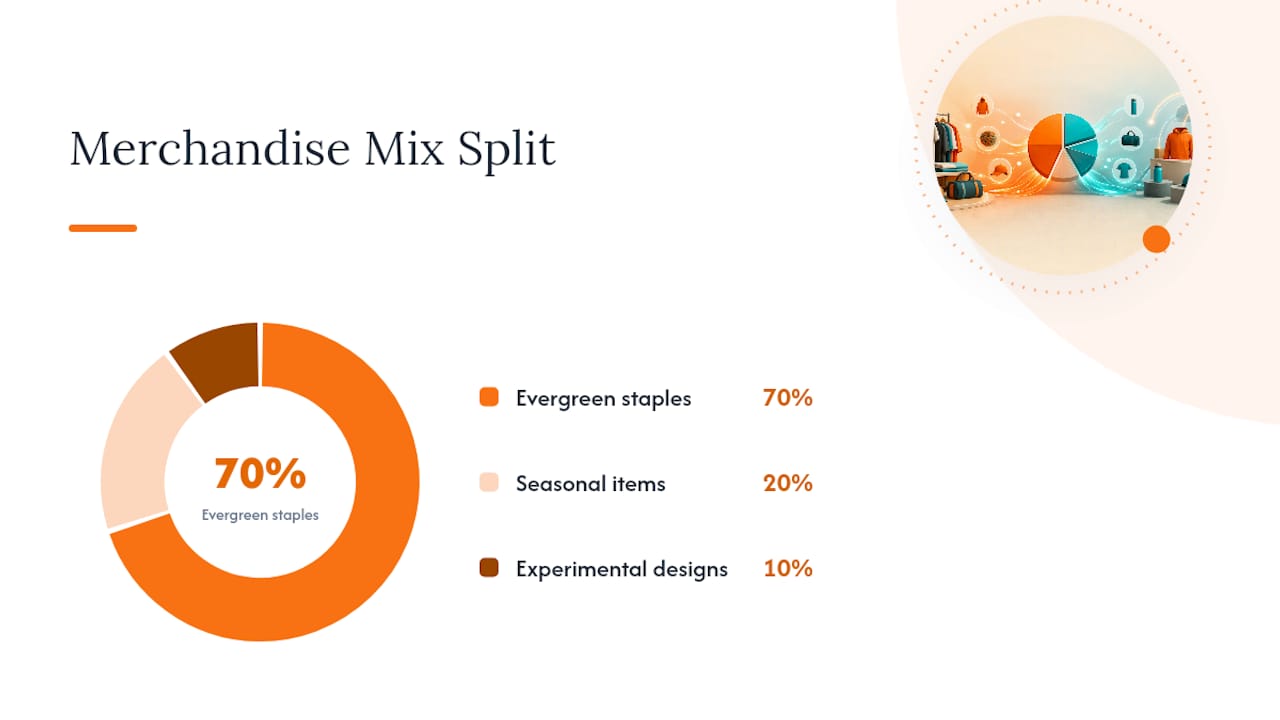
Follow the 70/20/10 merchandise rule: 70% of your catalog should be evergreen staples (basic tees, hoodies, caps), 20% seasonal items tied to a specific event, and 10% experimental designs you’re testing for the first time. This split keeps your core revenue stable while still leaving room to try something new without betting the whole budget on it.
Keep your active SKU count between eight and twelve. Beyond that range, promotion gets diluted, tracking gets messy, and unsold inventory piles up in someone’s garage.
A simple calendar keeps the whole thing on rails:
- Back-to-school — launch your evergreen staples plus one new seasonal design.
- Homecoming — add a limited-run item with a hard cutoff date.
- Playoffs — push rally towels and playoff-specific shirts through pre-order only.
- Senior night — release a senior-only product line weeks in advance so families can plan.
Booster clubs that keep “testing” the same underperforming design for three years are the ones stuck with boxes of shirts nobody wants.*
Bulk Orders, Print-on-Demand, or Pre-Orders?
Each fulfillment model trades cost against risk, and the right answer depends on how much volunteer time your club actually has this season.
Bulk ordering gets you the lowest per-unit price, but you’re guessing at sizes and quantities months ahead, and someone has to store, sort, and distribute every piece. Print-on-demand flips that: zero upfront inventory risk, but a higher cost per item and longer shipping times. Pre-orders split the difference. You collect real demand first, place one accurate order, and distribute at a single pickup event.
Before committing to any supplier, ask:
- What’s the realistic turnaround time for a batch of 50 to 100 units?
- Can they send a physical sample before you commit to a full run?
- What decoration methods do they offer (screen printing, embroidery, DTF), and does that match your design?
- Do they handle shipping directly to buyers, or does your club need to manage distribution?
- What are the minimum order quantities, and do they shrink for reorders?
Pricing and Promotion Tactics That Actually Move Product
Price with a buffer built in. Add a fixed per-item amount for shipping materials, volunteer time, and payment processing fees before you set the sticker price, or you’ll come up short at reconciliation even after a “successful” sale.
Price stickers and decals affordably and t-shirts and hoodies at moderate price points typical for fundraising programs. Bundle popular items into packs priced slightly below buying each piece separately to raise average order value without feeling like an upsell.
- Bundle senior gear with a keepsake item (a photo card or button) for graduation weekend.
- Offer a limited-edition color only during playoffs to create real scarcity.
- Put a QR code on programs, banners, and the merch table linking straight to your online store.
- Send a reminder email the week before a big game rather than one push and silence.
Best-practice playbooks recommend promoting a launch 7 to 15 times across channels before it fades, not once and done.
Setting Up a Low-Risk Online Spirit Store
An online store solves the two biggest headaches booster treasurers face: inventory sitting in someone’s garage and cash that’s hard to reconcile. Moving sales online also opens the door to alumni and out-of-town grandparents who’d never show up to a merch table but will happily order a hoodie from their phone.
- Choose a POD storefront or a platform built for spirit wear fundraising if you want built-in production support.
- Keep payment processing tied directly to your booster club’s bank account, not a personal one, to protect 501©(3) transparency.
- Set clear delivery expectations on the store page (typically two to four weeks for pre-order batches) so buyers aren’t left guessing.
- Export order and payment records after every sale window instead of waiting until tax season to reconcile everything at once.
A Practical Partner for Getting Spirit Wear Made
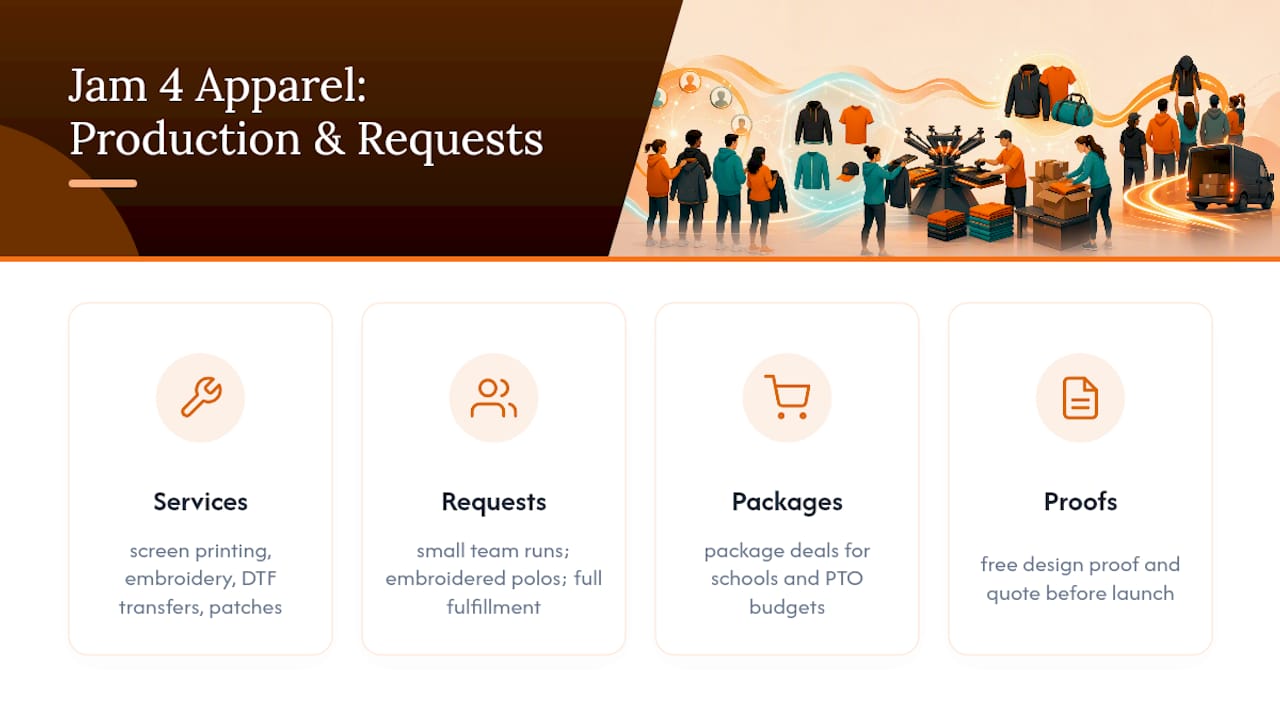
Jam 4 Apparel handles the production side so your volunteers don’t have to become screen printers overnight. In-house screen printing, embroidery, DTF transfers, and custom patches cover everything from a 24-shirt senior order to a full spirit store catalog, with package deals built for schools and PTO groups running tight budgets.
Common requests include small custom runs for a single team, embroidered polos for coaches and staff, and full fulfillment support for an active spirit store. Request a free design proof, review the package options, or reach out directly for a quote before your next launch window.
A One-Week Checklist Before You Launch
Pick your core SKUs this week, not next month. Decide between bulk, print-on-demand, or pre-orders based on your actual volunteer bandwidth. Then open the store or pre-order form tied to your nearest event, and let real demand tell you what to reorder.
— Adam
Why Jam4apparel Fits a Booster Club’s Spirit Wear Needs
Running a spirit store shouldn’t mean a volunteer treasurer drowning in boxes of unsold mediums. Jam4apparel is built for exactly the workflow this article just walked through: small or large runs, fast in-house production, and package deals that make sense for a club watching every dollar.
Whether you need 30 embroidered polos for coaching staff, a bulk t-shirt run for the whole roster, or ongoing fulfillment support for a spirit store that stays live all season, the industry-specific services page breaks down exactly what fits your situation. Fast turnaround out of Lake in the Hills means you’re not waiting weeks past your event date to get product in hand. Request a free design proof and get a quote before your next fundraiser deadline locks in.
Sources
Recommended
Ready to print your design?
Screen print, embroidery, and DTF — no minimums on many styles.